
Episcopal Passage
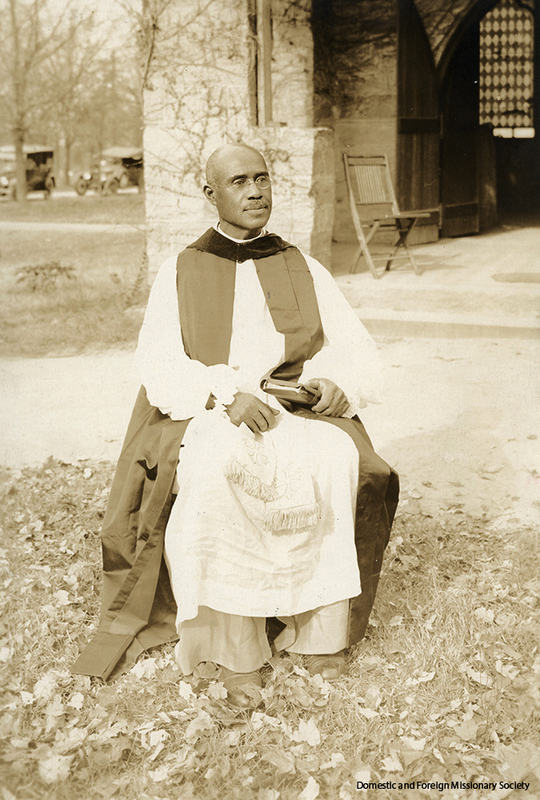
In 1918, the Rt. Rev. Henry Beard Delany was elected the bishop for Negro Work in the Diocese of North Carolina. Delany was the first African American suffragan bishop in the United States, c. 1920.
While the Episcopal Church struggled with the idea of Black bishops for Black Episcopalians in the United States, it was more accepting of Black bishops for Black Episcopalians overseas. In 1874, the Rt. Rev. James Theodore Holly was consecrated Bishop of Haiti, making him the first Black bishop in The Episcopal Church. He was followed in 1885 by the Rt. Rev. Samuel David Ferguson, who was consecrated Bishop of Liberia.
United States citizens would not see their own Black bishops for another thirty-three years, when the first bishops suffragan were consecrated in Arkansas (Edward Thomas Demby) and North Carolina (Henry Beard Delaney). Despite having bishops suffragan to oversee Black parishes, many Black Episcopalians viewed it as a symbolic gesture by a segregated church instead of a real step towards equality. Enforced subordination to white authority cost the Black suffragans the freedom to shape and guide the church’s Black communities, and consequentially, diminished their overall leadership role in The Episcopal Church.
The Episcopal Church maintained “separate but equal” as did the nation. Even the suffragan bishop plan did little to advance Black leadership in the church; the majority of candidates were white, except for three Black clergy consecrated as bishops for service in Liberia. They would not advance to the highest levels of leadership in The Episcopal Church until the Civil Rights Movement.
As the Civil Rights Movement pushed for equality in the United States, a similar push occurred in the church. For the first time, Black bishops suffragan were elected for more than “colored work.” In the Northern dioceses, the bishops suffragan had authority over white congregations. The first of these was the Rt. Rev. John M. Burgess, first consecrated in 1962. Eight years later, in 1970, he became the first Black diocesan bishop in The Episcopal Church when he was consecrated Bishop of Massachusetts. At the same time, Black Episcopalians continued to be selected for overseas service in dioceses where The Episcopal Church served a predominately Black population, including Haiti, Liberia, the Virgin Islands, Panama, Honduras, Dominican Republic, and Nicaragua.
Election of Black bishops continued into the 1980s in the dioceses of Long Island, Connecticut, Ohio, and Pennsylvania. The decade was also marked by the consecration of two Black priests, Orris G. Walker, Jr. (Long Island) and Herbert Thompson, Jr. (Southern Ohio) as bishop coadjutors, a distinction in jurisdiction which did not require service of a suffragan bishop. The 1980s culminated in the consecration of the first Black woman to the episcopate, Barbara C. Harris, as Bishop Suffragan of Massachusetts in 1989. It was more than a symbolic victory for women and Black Episcopalians. Barbara Harris’ election forced the church to engage in an extended reexamination of the authority of its teaching in matters where polity intersected with scriptural literalism. In 2015, a Black bishop finally reached the highest leadership position in The Episcopal Church with the election of the Rt. Rev. Michael Curry as its 27th Presiding Bishop.
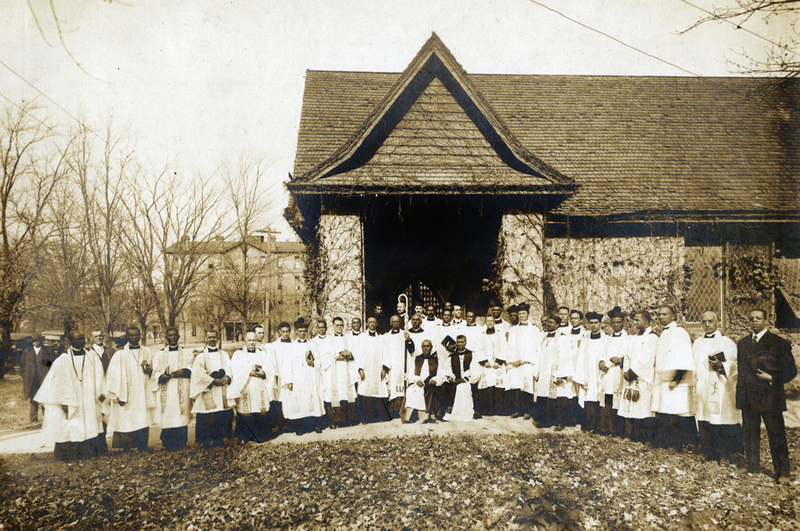
The first two black bishops of the United States, the Rt. Rev. Delany (left) and the Rt. Rev. Demby (right), following Delany's consecration at St. Augustine's College, 1918. Photo courtesy of St. Augustine's College, Raleigh, North Carolina.
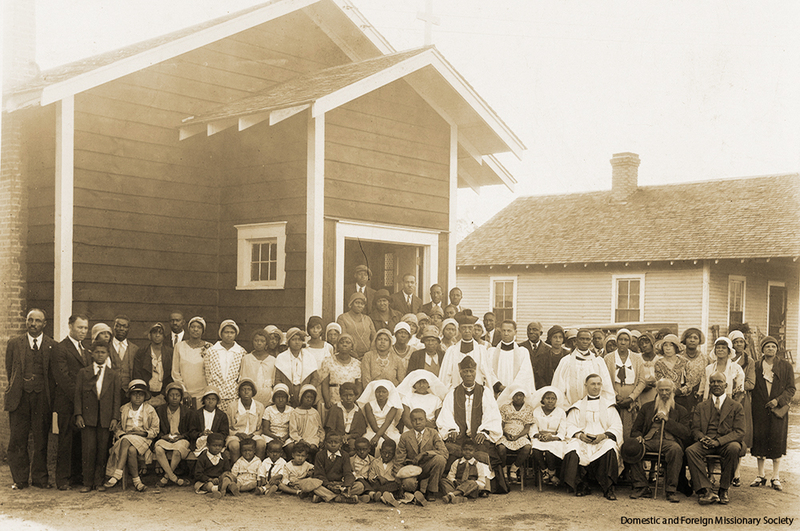
The Rt. Rev. Edward Thomas Demby (seated in center) at the end of a preaching mission following the confirmation of 4 girls, 3 boys, and 4 adults in Forrest City, Arkansas, c. 1930.