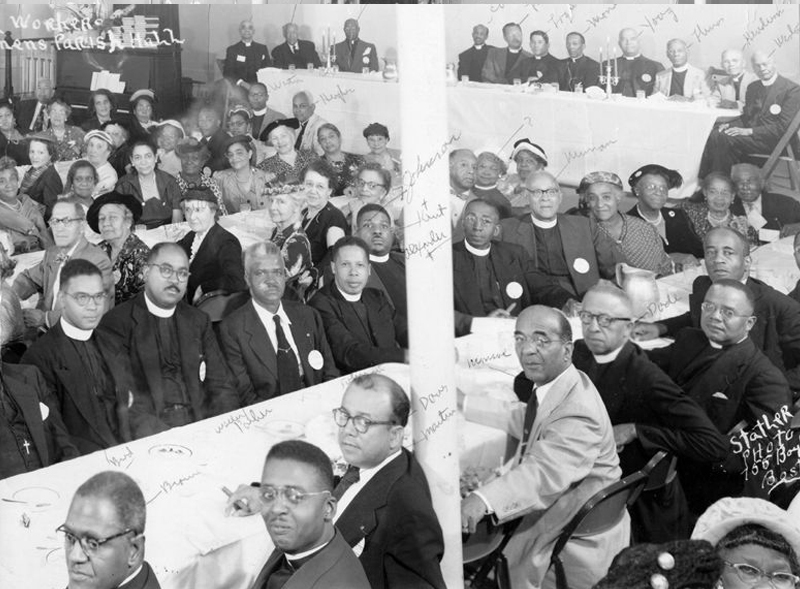
Conference of Church Workers Among Colored People
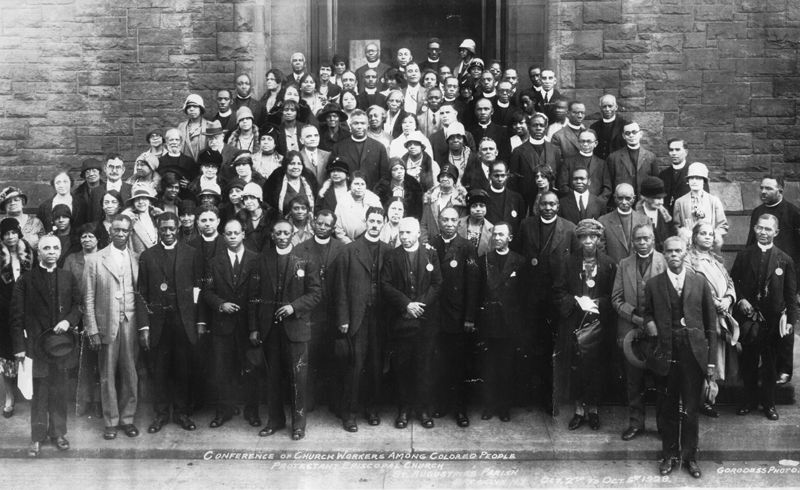
Conference of Church Workers, 1928.
From the establishment of the first Black churches, Black Episcopalians pressed dioceses and the whole of The Episcopal Church for full inclusion and equality in church governance. The first Black parish, the African Episcopal Church of St. Thomas, was not officially admitted into the Diocese of Pennsylvania until 1863, despite having committed to following Episcopal Church doctrine in 1794. St. Stephen’s Church, Petersburg, petitioned the Diocese of Virginia for admission as an independent congregation in 1869. Instead, it was placed under the oversight of the Committee on Colored Congregations. Black churches and clergy struggled for acceptance as equals because white church leaders feared such equality would upset the social order.
In 1883, Southern bishops and clergy met in the “Sewanee Conference” and decided that there should not be a separate missionary jurisdiction for Black Episcopalians, which would give them an independent bishop with voice and vote at General Convention. Instead they should be overseen by diocesan missionary organizations under the charge of the diocesan bishop, a white man. In response, Rev. Alexander Crummell and John Peterson, a teacher and deacon at St. Philip’s Church in Harlem, called Black clergy and laity together in a conference at the Church of the Holy Communion, New York City. The goal of this Conference, initially called “The Negro Conference,” was to “prevent any color-line legislation” and advocate for the full inclusion of Black Episcopalians in the church and its leadership. They formed the Conference of Church Workers Among Colored People (CCWACP) to coordinate their work.
Although the CCWACP succeeded at defeating the efforts of the Southern bishops at the 1883 General Convention, the Southern Bishops prevailed in the long term. General Convention remained unwilling to open a pathway for Black representation. As Rev. George Freeman Bragg, Jr. observed in his book, History of the Afro-American Group of the Episcopal Church, the actions of the church closely paralleled the actions of the Southern states at the time, which were increasingly legislating to disenfranchise Black voters. While he “[did] not mean to imply the two things had any connection,” he did note that “many Southern laymen who were prominent in State affairs were likewise prominent in the affairs of the Kingdom of God.”
For the next twenty years, the CCWACP fought General Convention for voice and vote. In 1910, General Convention responded by creating the position of suffragan bishop as an assistant to the diocesan bishop. The suffragan bishop would have a seat in the House of Bishops, but neither vote nor the right of succession. In terms of representation, Black suffragan bishops would be firmly subordinate to white diocesan bishops.
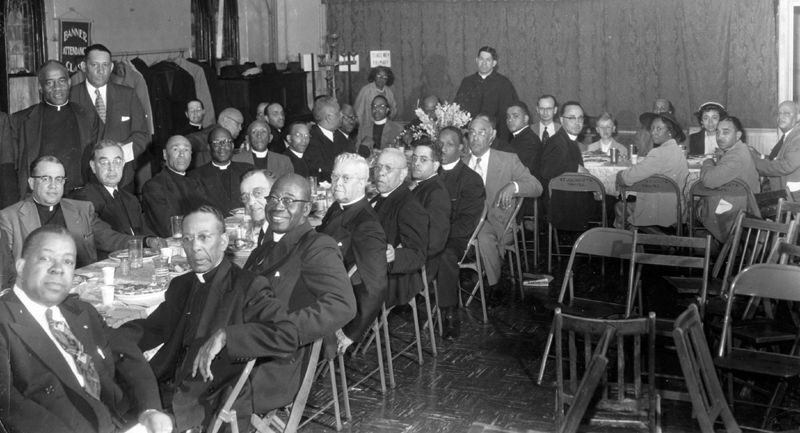
Conference of Church Workers, c. 1960.; Read the minutes from the 1954 Special Meeting of the Triennial Conference of Episcopal Church Workers.
Although initially proposed to achieve a “racial episcopate,” the first dioceses to elect suffragan bishops in 1912 were not looking to diversify their leadership. Instead, they were the large, rural dioceses of Minnesota and Iowa, looking to improve their administration. In Bishop Edsall of Minnesota’s view, the suffragan bishop limited the creation of new missionary districts within state lines when dioceses reached the limits of their financial and administrative ability. Furthermore, the role both preserved diocesan unity but also limited the growth of General Convention. In other words, the role of the suffragan bishop allowed diocesan bishops to expand their territorial control beyond the capacity of a single person without diluting each individual’s authority in the House of Bishops. The December 1912 issue of Spirit of Missions enthusiastically predicted that if the suffragan experiment in rural dioceses succeeded then it would lead to a large expansion of the suffragan episcopate throughout the church.
Equal representation through a missionary bishop for Black Episcopalians was defeated once again in 1916, this time in part because the role of suffragan bishop existed. In its report to the 1916 General Convention, the Joint Commission of the Racial Episcopate argued that a separate bishop for Black Episcopalians would “[destroy] the unity of the church under one bishop;” lead to other racial minority groups in the United States demanding bishops of their own; cost Black people the support of their white neighbors; and divide the church. As the report stated, “the Southern white man could not and would not serve the church under a negro Bishop.” Instead, it resolved that the “Suffragan Episcopate...[afforded] the best method of providing for a Racial Episcopate,” allowing Black Episcopalians to occupy positions of dignity and responsibility in the church without too greatly upsetting the status quo.
After this defeat, the CCWACP decided to sit back and see how well the Suffragan plan worked. Two years later, in 1918, Edward Thomas Demby, principal of Hoffman-St. Mary’s Industrial School and an archdeacon in the Diocese of Arkansas, and Henry Beard Delany, a teacher at St. Augustine’s Normal and Industrial School and archdeacon in the Diocese of North Carolina, were consecrated Bishop Suffragan for Colored Work in their respective dioceses.
In addition to CCWACP’s efforts towards a more just church, the annual conferences united and connected Black clergy and laity. Members networked, learned from, and drew hope and inspiration from their fellowship. As the organization matured, its efforts extended beyond the church to improving social conditions for Black Americans throughout the country. In the 1960s, the organization’s work was taken up by the Union of Black Clergy and Laity (UBCL), later renamed the Union of Black Episcopalians (UBE).
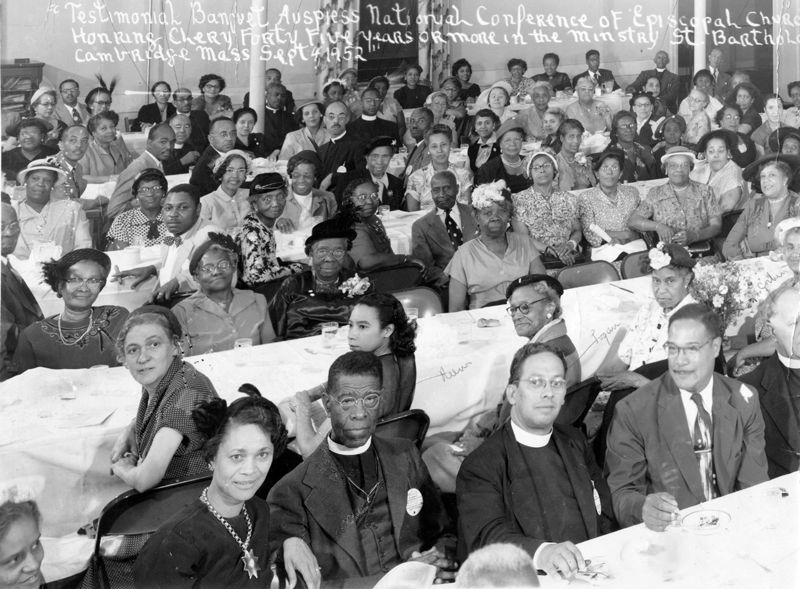
National Conference of Church Workers, 1952.