
The Reverend George F. Bragg, D. D., 1863-1940
Such was inevitable under a system which failed to take note of the imperative requirements of the new trend of racial life. The colored people eagerly availed themselves of whatever educational opportunities that were presented. But with respect to their organized life as a body of Christians no organization could prevail among them which did not enter into their entire life, social, civil and intellectual. They wanted to rise. They had ambition to be everything that other people were. They may have been wrong, but from their point of view none but their own leaders could guide them to the haven where they would be.
- The Reverend George F. Bragg
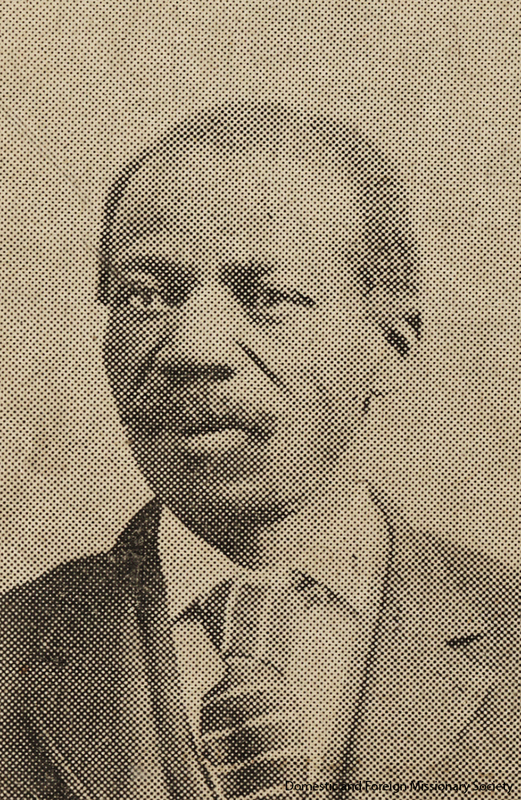
Rev. George F. Bragg, 1908.
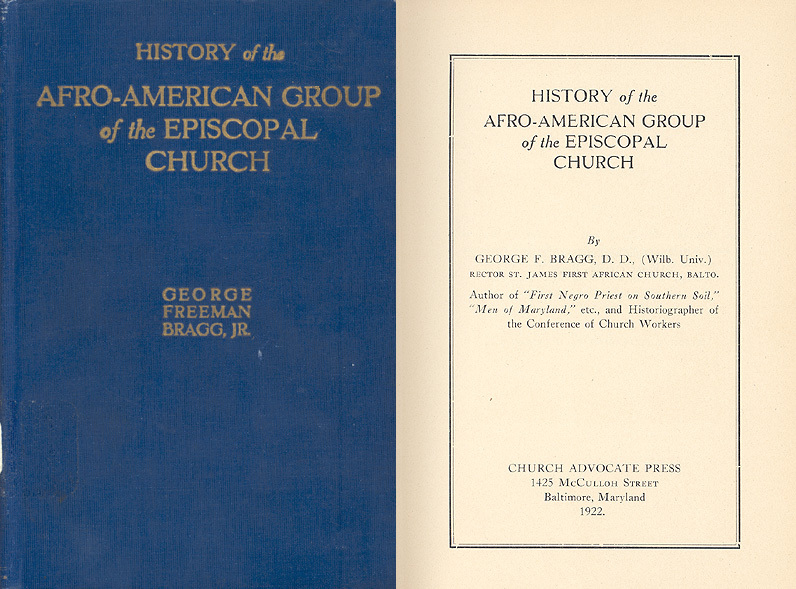
History of the Afro-American Group of the Episcopal Church , George Bragg, 1922, Church Advocate Press, Baltimore, MD. View the full text of this volume at the University of North Carolina's "Documenting the American South" project.
George F. Bragg, Jr. was born on January 25, 1863 in Warrenton, North Carolina, although he was raised in Petersburg, Virginia, where his family had deep ties to St. Stephen’s Church. His grandmother, Mrs. Caroline Bragg, an enslaved woman, was one of the church’s founding members, and his father, George F. Bragg, Sr., was a junior warden. Bragg received both a religious and secular education at the St. Stephen’s school, calling himself “the very first of the first fruits of St. Stephen’s.”
In adulthood, Bragg worked for the full inclusion of Black people in the United States. In 1879, he campaigned for Virginia’s Readjuster Party. This political party endorsed Black voting and state-supported higher education for Black students. In 1881, Bragg was appointed a page and postmaster in the Virginia House of Delegates. He began publishing a secular weekly for Black readers, “The Lancet,” the following year.
In 1885, Bragg was called to continue his service to The Episcopal Church through ordained ministry and entered the Bishop Payne Divinity School. That year he retitled his paper “The Afro-American Churchman.” Two years later, in 1887, Bragg was ordained a deacon. Continuing his work for full inclusion of Black people in the church, he successfully challenged the diocese’s practice of keeping Black men in deacon’s orders for five or more years and was ordained to the priesthood in 1888. Bragg served as rector of St. James First African Church from 1891 until his death in 1940. During his appointment, he fostered the vocations of many Black clergy, including the Rev. Tollie Caution. He also opposed the exclusion of Black Episcopalians from The Episcopal Church’s work and leadership, serving as the secretary of the Conference of Church Workers Among the Colored People (CCWACP) from 1882 to 1917.
Bragg served the CCWACP not only as its secretary but also as its historiographer. He was an historian without whom the early history of Black Episcopalians would be lost to The Episcopal Church. The 19th century and early-20th century church was not only uninterested in allowing Black members full equality in church leadership; it was not only uninterested in supporting Black congregations, leaving them to survive on the limited resources of their communities; it was uninterested in recording their history, particularly in their own voices. Bragg did so, writing multiple books and pamphlets on Black Episcopal History, including “The Story of Old St. Stephens, Petersburg, Virginia” (1906), “First Negro Priest on Southern Soil” (1909), “Men of Maryland” (1914), “Richard Allen and Absalom Jones” (1915), “The Story of Old St. Stephens and the Origin of the Bishop Payne Divinity School” (1917), and “History of the Afro-American Group of the Episcopal Church” (1922).
Bragg’s personal papers are held at the Moorland-Spingarn Research Center at Howard University.
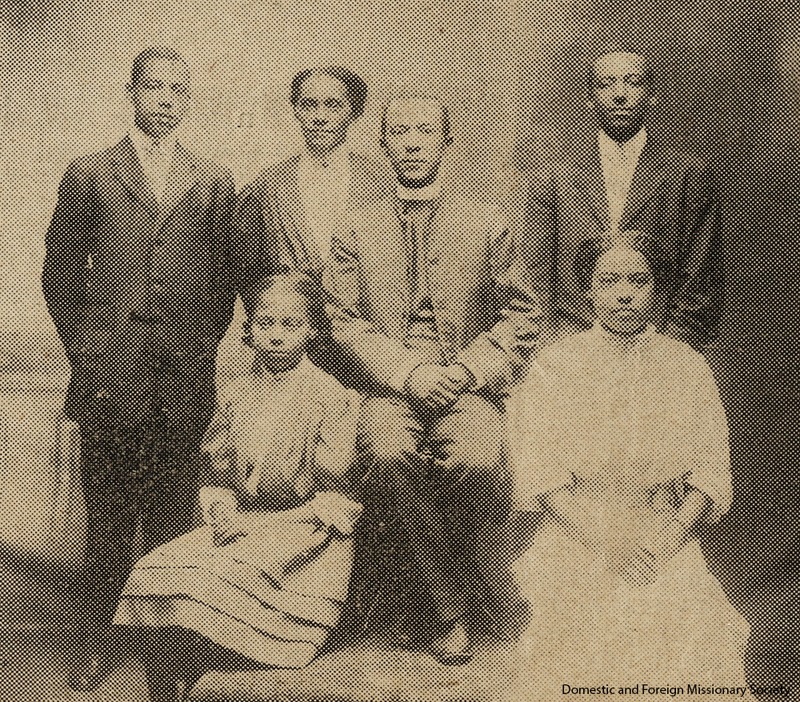
Issue of The Church Advocate newspaper published in February of 1908, featuring the Bragg family.
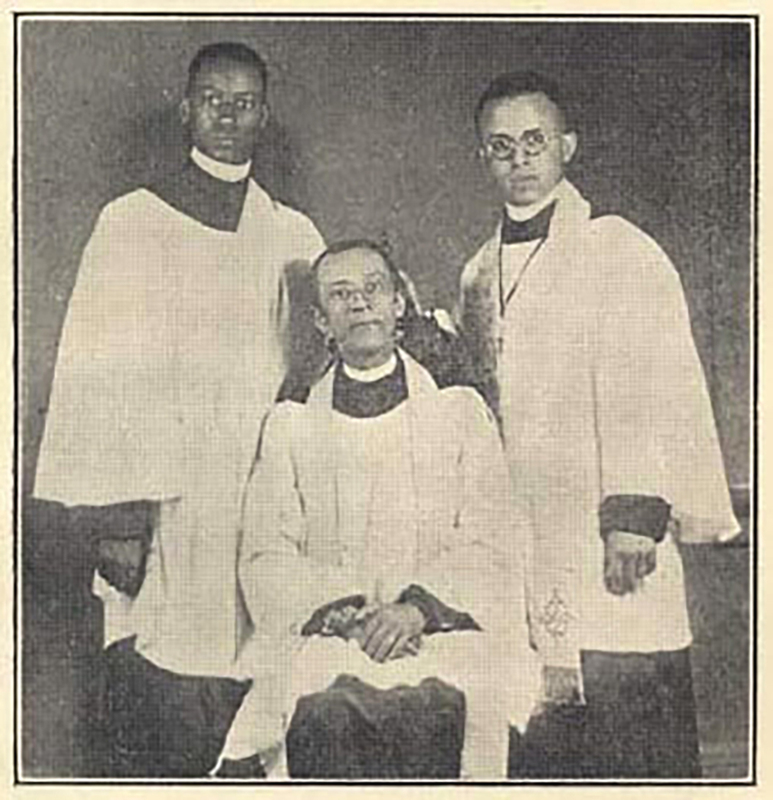
The Reverend George Freeman Bragg and two of his "ministerial sons," 1922.