
Black Power
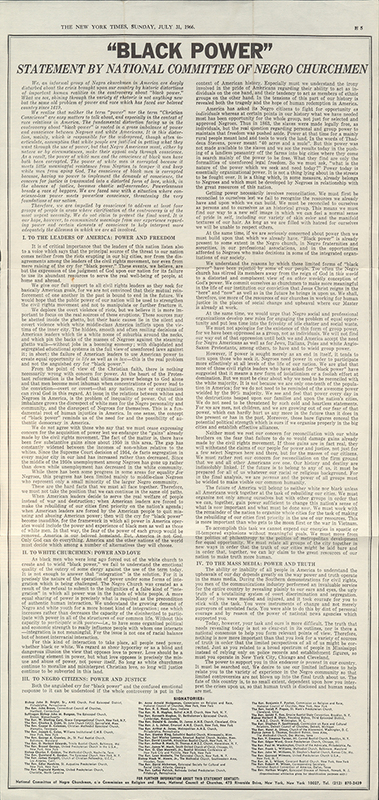
Statement by the National Committee of Negro Churchmen, published in the New York Times, 1966.
In the mid-1960s, a new generation of Black Civil Rights activists sought to reclaim Black history, culture, community, and control over their own lives. The Black Power movement, a movement of self-determination, resonated among Black Episcopal priests who, despite General Convention’s resolutions, still struggled to be hired at white parishes and for diocesan and leadership roles in the wider church. It also resonated among Black Episcopal communicants, whose parishes were the ones closed by dioceses in the name of integration.
The beginning of Black Power was the beginning of the end for the Episcopal Society of Cultural and Racial Unity (ESCRU). John Morris, the organization’s white leader, and its largely white membership, struggled with the more radical position of the Black Power movement as compared to the Civil Rights Movement of Dr. Martin Luther King, Jr.; meanwhile, Black members questioned if ESCRU could advocate for their interests. At the same time, the organization struggled to find funding and focus: Should it put its efforts towards the Southern or Northern cities? Should it seeks ways to influence change in the church or in the secular world?
Among disagreements over the answers to these questions and despite ESCRU’s attempt in 1967 to shift to promoting racial and cultural diversity as a critical component of unity and equality, both white and Black membership declined until the organization’s end in 1970. White members left due to its embrace of Black Power; Black members left due to the rise of a new Black-led Episcopal organization to continue advocacy and civil rights work.
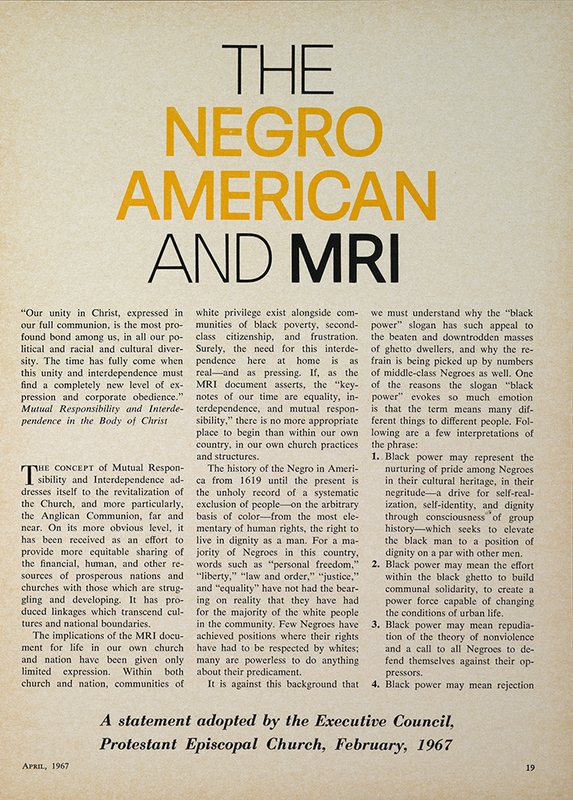
Article published in The Episcopalian regarding the Church’s principle of “Mutual Responsibility and Interdependence”, adopted by Executive Council in February, 1967. Read the full document.
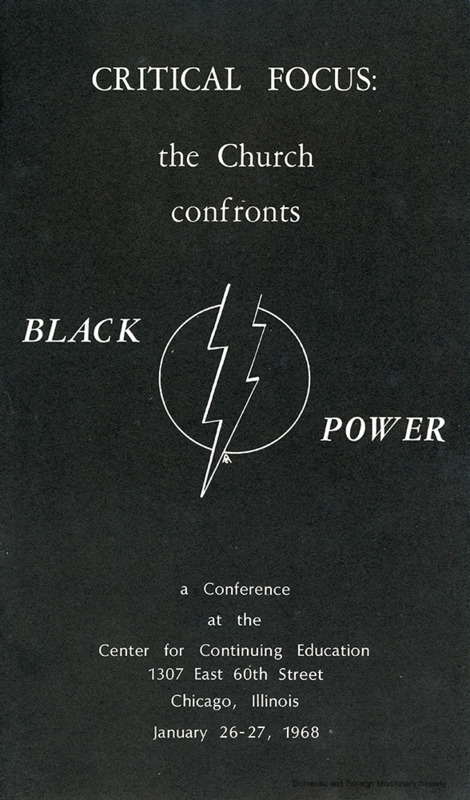
Program from the Church-sponsored conference, Critical Focus: The Church Confronts Black Power held in Chicago, 1968. Read the full document.
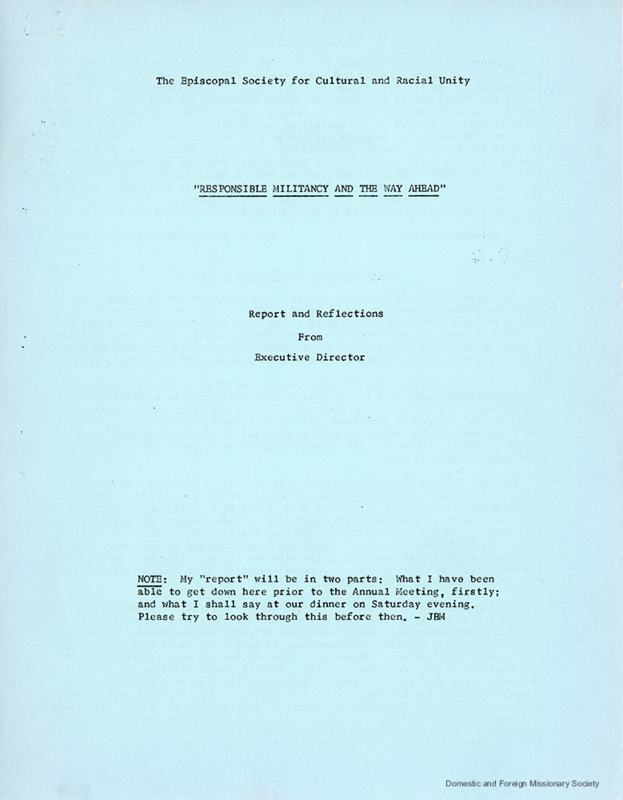
"Responsible Militancy and the Way Ahead" by Rev. John Morris. Read the full document.