
General Convention Special Program
“It is a curious paradox that those who suffer most in our society have the least to say about their own future...
The need therefore is to admit the structured injustice of our society and to do something about it.”
-What good is the General Convention Special Program?
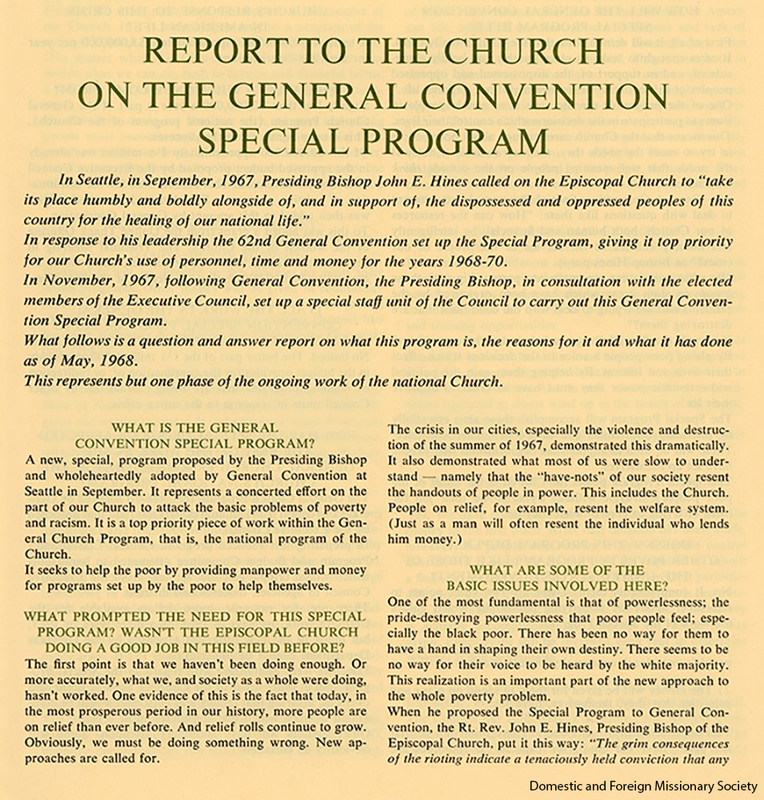
Report produced by the Executive Council of the Episcopal Church updating church members on the GCSP, 1968. Read the full document.
Following an eye-opening tour of Harlem with Black activists, Presiding Bishop John Hines proposed to the 1967 General Convention a “Special Program.” This program was intended to respond to the poverty and injustice of the growing U.S. ghetto by putting social, political, and economic power in the hands of those who lived there. Through the General Convention Special Program (GCSP), the Executive Council redirected the church’s funds to community organizations and grassroots efforts aimed at the urban underclass throughout the United States. This represented a significant break with the status quo and the church’s past philanthropic efforts. However, its potential for change was so great that at the 1967 General Convention, ninety-four Bishops, more than a majority of the House, petitioned Bishop Hines to call a Special Meeting of the General Convention in the summer of 1969 to address it.
The women of The Episcopal Church also recognized the importance of the GCSP and responded favorably to Hines’ expanded concept of the church’s “domestic mission.” Seizing the opportunity to alter power relationships and representation in the church, they raised three million dollars for the program’s support through the venerable United Thank Offering (UTO). In 1967 and 1968, they would raise an additional $820,000 to fund twenty-four UTO grants for programs similar to those funded by the GCSP.
In its first two years, from 1967 to 1969, the GCSP initiated thirty-six new programs and reinforced thirty-one existing programs, serving a recorded 10,000 people by supporting projects on issues such as political engagement, housing support, economic improvement, and legal assistance. By the program’s conclusion on December 31, 1973, due to the creation of a Mission Service and Strategy department to coordinate the church’s programs and grants for racial and ethnic minorities, its $7.5 million in grant funding had supported three hundred community groups. Fears that The Episcopal Church would inadvertently fund violent groups through the program never came to pass.
- Questions and Answers on the Church's Program on the Crisis in American Life, 1967.
- Memo to the Presiding Bishop expressing support for the General Convention Special Program, 1968.
- Letter from Bishop Richard B. Enrich to Presiding Bishop John Hines regarding the Special General Convention, 1969.
- “What Good is the GCSP?”, a brochure from the Executive Council about the Special Program, 1969.
- Press Release for the Special General Convention, 1969.
- "A Declaration, by Priests who are Negroes, on the Personnel Policies and Practices of the Protestant Episcopal Church in the United States of America," c. 1960s.
- A Declaration of Concern, urges for change in hiring black Black clergy, undated.
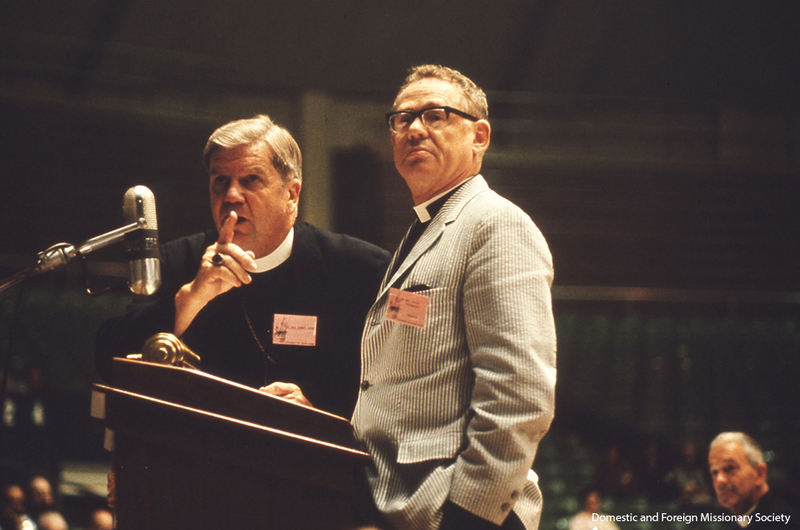
Presiding Bishop John E. Hines speaking at the Special General Convention, 1969.
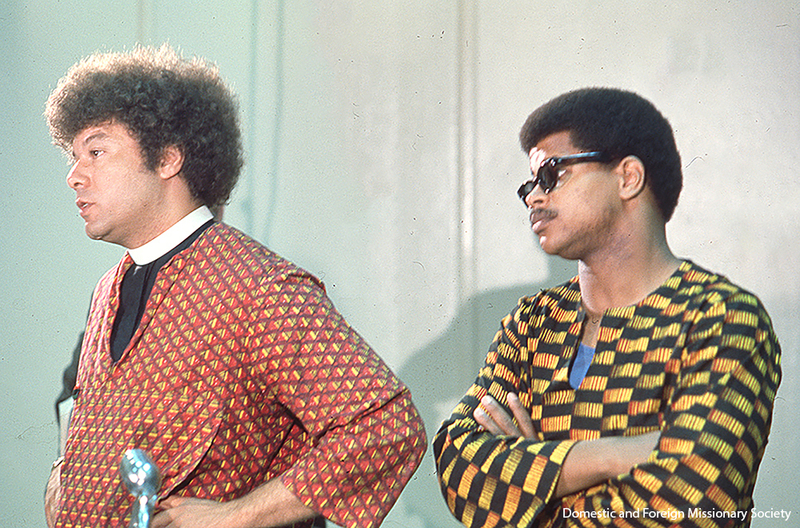
Muhammad Kenyatta (right) civil rights activist and organizer for the Student Nonviolent Coordinating Committee (SNCC), and the Reverend James E. P. Woodruff (left) at the Special General Convention, 1969.
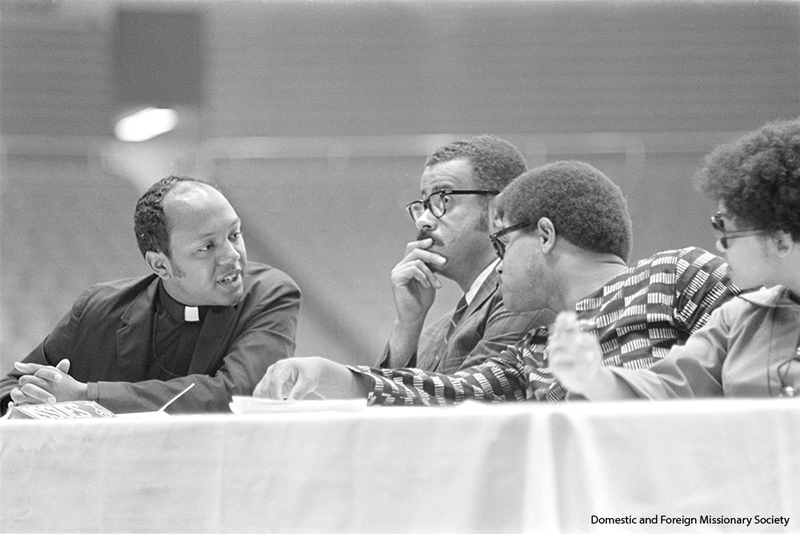
Rev. Frederick Williams, Rev. Joseph Pelham, and Muhammad Kenyatta in conversation at the Special General Convention, 1969.
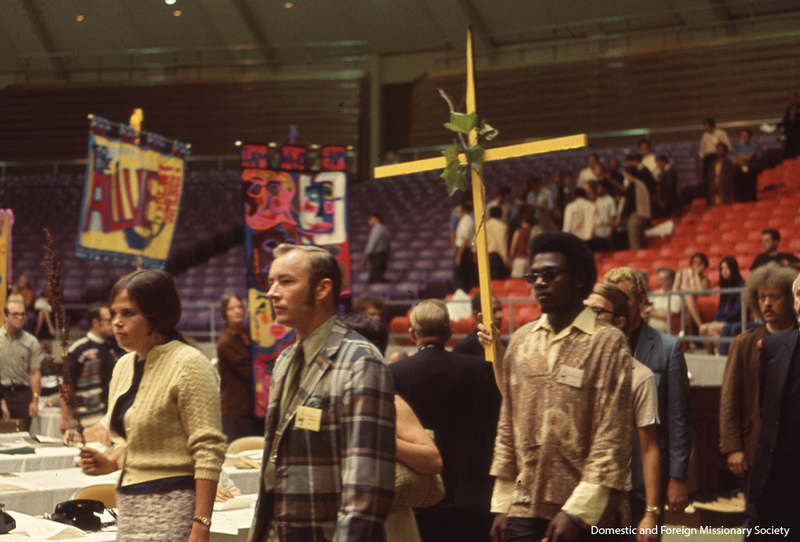
Youth representatives at the Special General Convention held in South Bend, Indiana from August 31 to September 5, 1969.