
Separate But Equal
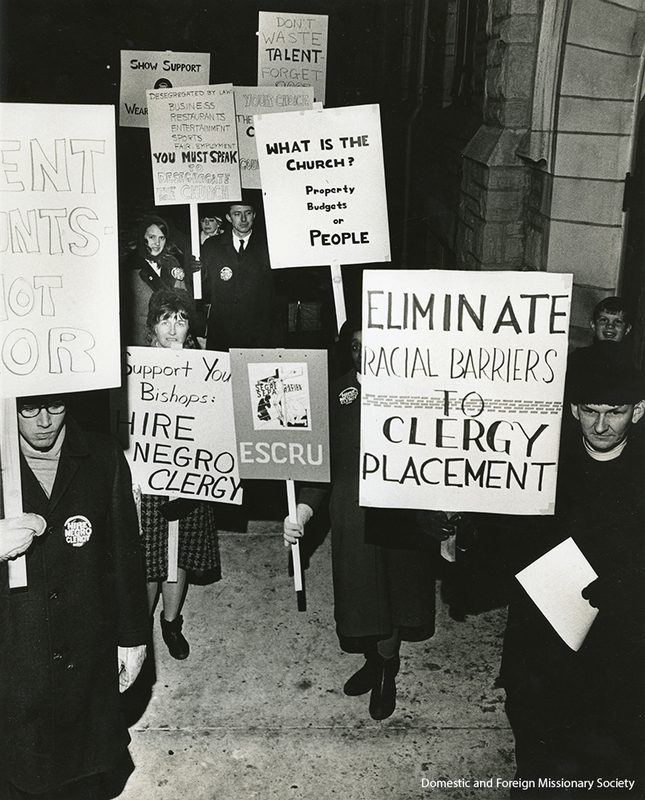
A protest demanding the dissolution of racial barriers in the placement of clergy held in Minneapolis, MN, January 30, 1966.
The Episcopal Church treated Black Americans as a problem: viewing them as culturally and socially separated and inferior, but by baptism, full and equal members of the community. The church tried to mend this breach by ministering to Black Episcopalians separately, consecrating bishops for “colored work”, funding Black schools, establishing Black congregations, and operating a special office for “Negro work.” In short, The Episcopal Church fully embraced the American “separate but equal” construct of race relations. Overcoming this legacy would require the work of all Episcopalians.
The Episcopal Society for Cultural and Racial Unity (ESCRU) was the first outward sign of an institutional rebellion to break from the separate but equal construct. ESCRU’s founding members declared explicitly that Black and white Episcopalians could no longer in practice be separate and that equality could only be achieved by bringing whites and Blacks into a new covenant of unity. This was a radical message of Christian social gospel, and it would require a conversion of the heart. ESCRU’s message was a bold confrontation at the time, and it did, indeed, open the eyes of the power structure of the church.
LISTEN
The Saga of Selma, 1965, Excerpt from "The Saga of Selma," a March 1965 radio program produced by Rev. John Morris, Executive Director of ESCRU, documenting a confrontation in Selma, Alabama, 1965.
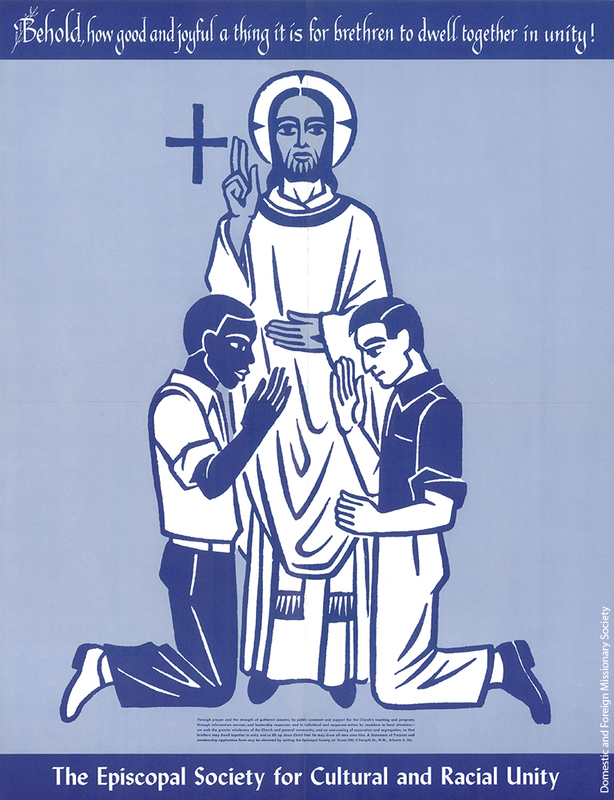
A poster featuring the ESCRU logo.
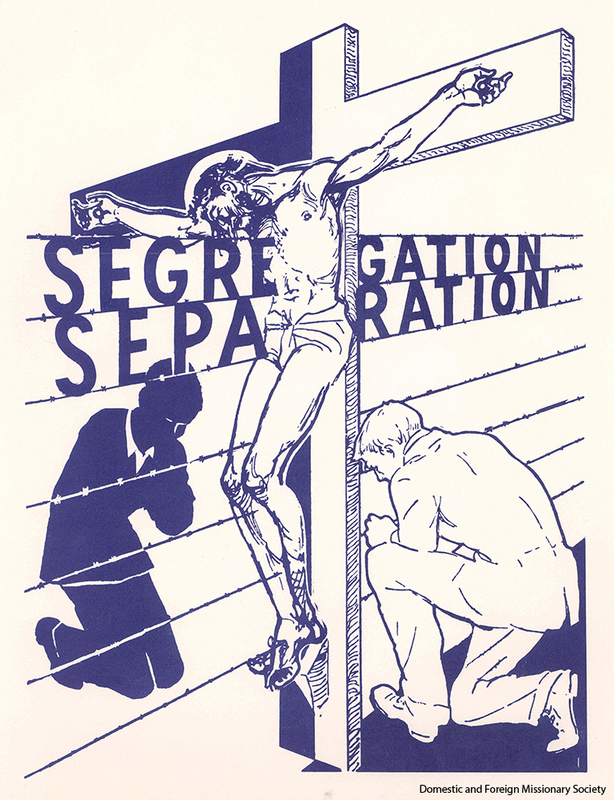
Powerful imagery used by ESCRU, borrowed from the anti-apartheid movement.