
Transitions
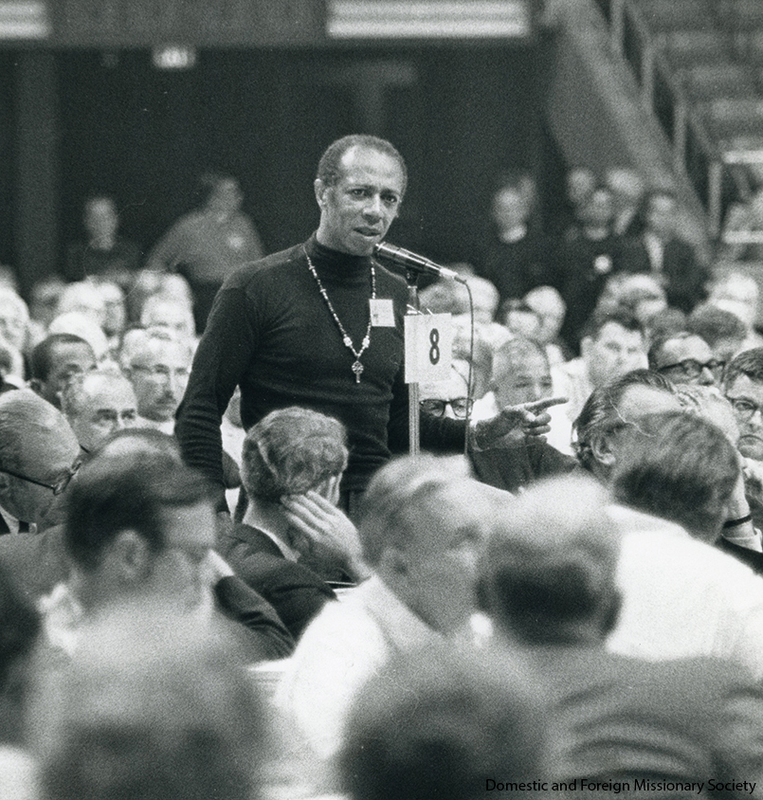
Leon Modeste, Director of the General Convention Special Program, speaks on the floor during debate, 1969.
The United States flourished in the years following World War II. Not only were its industries undamaged by war, the passage of the Servicemen’s Readjustment Act of 1944, known as the G.I. Bill, flooded the economy with government money through programs to assist veterans seeking education and home ownership. Developers raced to build houses for them to buy, and companies, freed from wartime rationing, produced goods in great variety and number to fill the rooms.
However, not everyone benefitted equally from the country’s growth. The South, still in the grip of Jim Crow, oppressed Black Americans with the power of the state. Miscegenation laws governed whom they could love; segregation laws governed their presence in housing, schools, businesses, and jobs; poll taxes and literacy tests stood between them and their Constitutional right to vote. Even in the North Black Americans faced racist discrimination. City councils limited construction of affordable housing through zoning; financial institutions denied Black Americans the low-cost mortgage loans available to white Americans; and developers refused to sell to Black home-buyers.
The mid-twentieth century brought dramatic changes to The Episcopal Church as well. In conjunction with an increase in church participation across the nation, the number of baptized members in The Episcopal Church rose from 2.5 million to 3.3 million in the 1950s. Over subsequent decades, theological understandings of mutual ministry, the liturgical movement, and Prayer Book reform would call for each member to take personal responsibility for the church as it was, is, and would become. For Black members, the mid-century was the time for organizing a new identity as Episcopalians and demanding that the church hold itself accountable and commit to a serious and persistent struggle to end racism in its own house.