
Sewanee, The University of the South
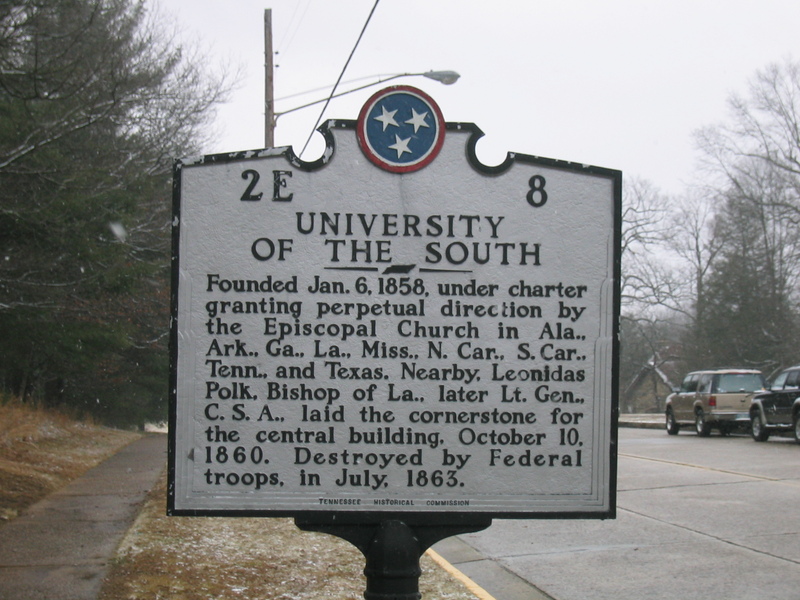
A historic marker denoting the destruction of the central building at Sewanee, destroyed by Federal troops during the Civil War.
The University of the South was founded in 1858 on the cusp of the Civil War by the Episcopal dioceses of ten Southern states who wanted to create a new university to resist influence and control by Northern entities that opposed slavery. Among the founding members of the university were several figures who would become prominent leaders in the Confederacy, including Bishop James Otey, Bishop Stephen Elliott, and Bishop Leonidas Polk. During the 1950s, The University of the South would become the scene of major confrontation over segregation. The School of Theology was integrated by resolution of the provincial synod in 1951. When the Board of Trustees rejected the resolution and refused to integrate the school, almost all of the faculty resigned in protest. The Board’s stance created an uproar that plunged the church, particularly in the South, into crisis, and the Board ultimately rescinded its decision in May of 1953. The undergraduate school still had its segregation policy in place when two events in 1961 again ignited controversy at the University and its affiliated Claramont Restaurant and Sewanee Inn.