
Segregation and Integration
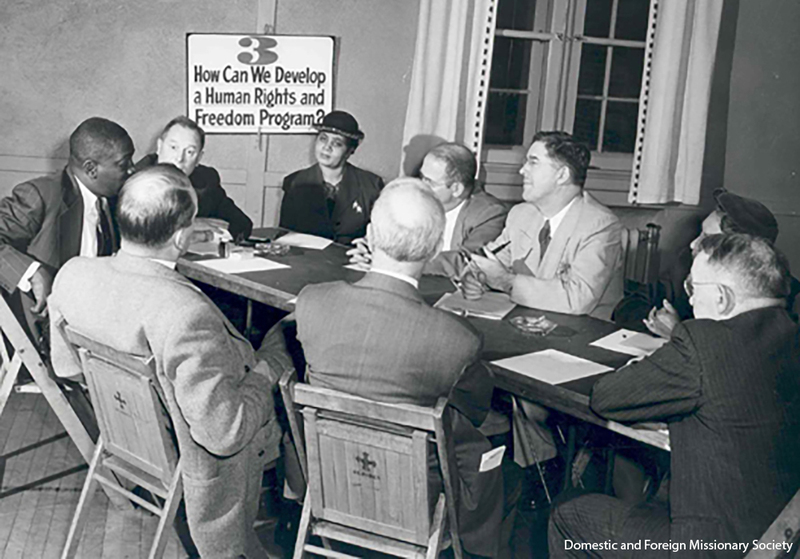
The Ohio Department of Christian Social Relations, 1954.
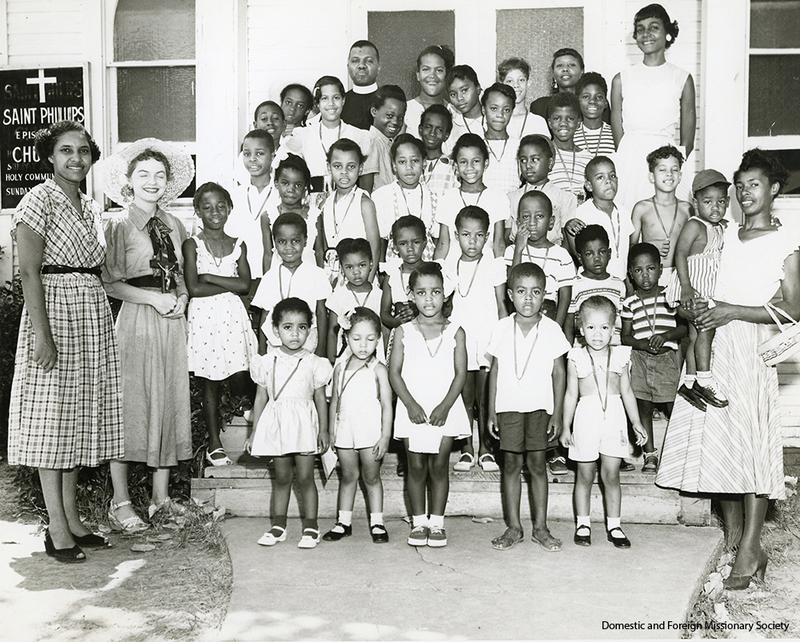
An all-black bible school class in Dallas, 1950.
In an effort to understand how Episcopalians viewed the world, and their place in it, the National Council’s Department of Christian Social Relations undertook a significant study of social education and community action in The Episcopal Church from 1949 to 1951. Its subsequent report, Episcopalians at Work in the World, included a survey of members’ views on a variety of topics, both religious and secular. With respect to equality in the church, the department found that 27% of the laity, 13% of the priests, and 8% of the bishops believed the church should be segregated.
The 1952 General Convention did not agree. Addressing the “controversy” over integration at Sewanee, delegates affirmed that “no branch of the Christian Church can rest content while injustices in the form of racial segregation obtain in parishes, schools and agencies under her control or associated with her.”
Three years later, the 1955 General Convention urged the people and clergy of The Episcopal Church to support the 1954 Supreme Court ruling in Brown v. Board of Education that ended segregation, echoing the Anglican Congress’ statement that “in the work of the church we should welcome people of any race at any service conducted by a priest or layman of any ethnic origin, and bring them into the full fellowship of the congregation and its organizations.” General Convention continued its call for church members to work to end discrimination in education, housing, and employment in 1958. In 1961, it acknowledged the church’s complicity in racial discrimination and segregation, recognized the need for equality at national, diocesan, and parochial levels, and stated “prejudice is inconsistent with the Gospel of Jesus Christ.”
While The Episcopal Church advocated for integration at a policy level, grass roots organizations within the church, particularly in areas of social services, Christian education, and youth ministries, advocated for integration at a local level. Alongside urban parishes, the City Mission Societies, which served people “forgotten” by society – those incarcerated, institutionalized, hospitalized, or homebound – were prominent in pushing for racial justice.
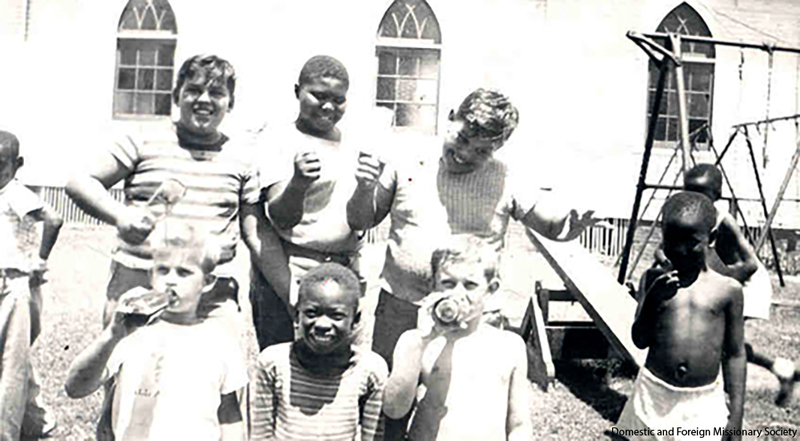
An integrated group of children at St. Augustine’s Church Summer Camp in Galveston, Texas, 1947.
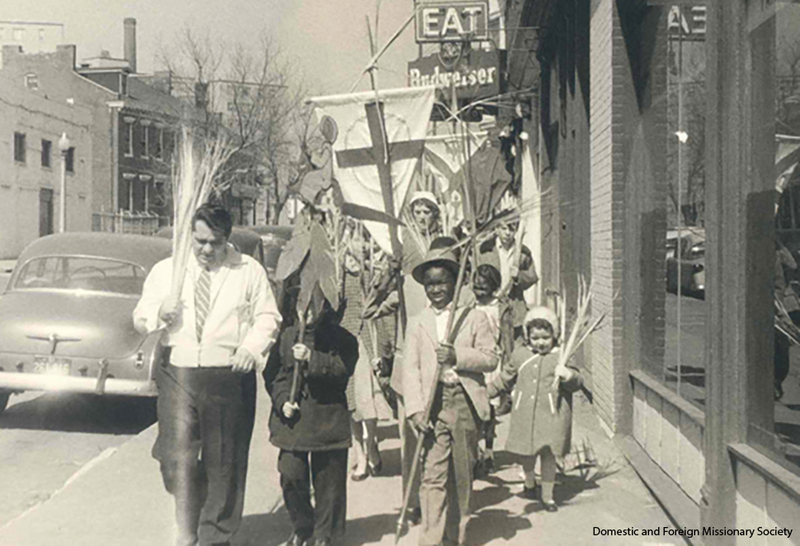
A group from the integrated church of St. Stephen’s celebrating Palm Sunday in St. Louis, Missouri, 1957.