
The Reverend Edward Willis Rodman, 1942-2024
Do we have the courage to face our history of racism and hysteria borne out of "our" fears of those who
have been excluded, or will we succumb to them? Can we act on those lessons from our past
and resist the mentality that is returning to a "my country, right or wrong" attitude?
- Edward Willis Rodman
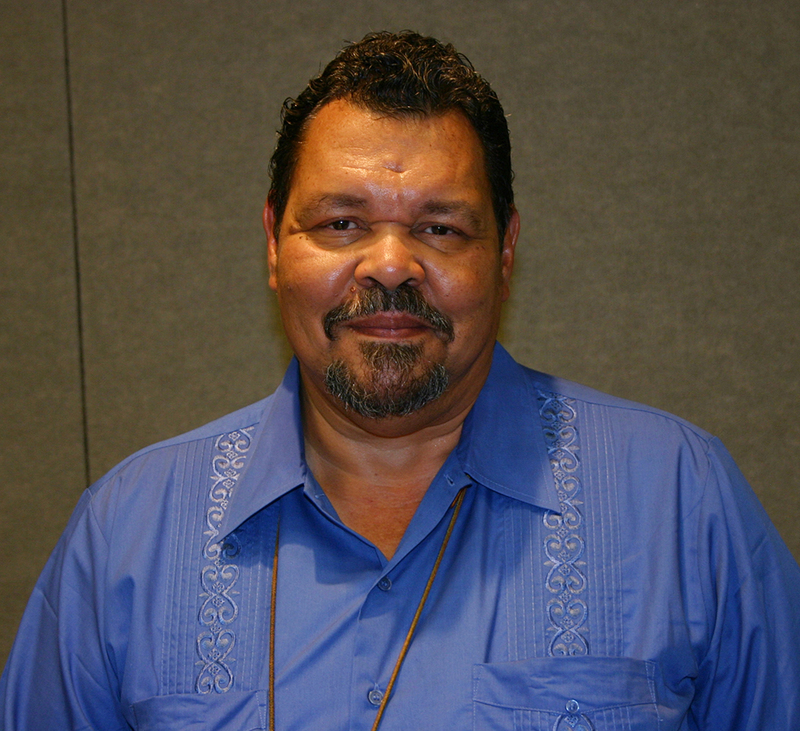
The Rev. Edward Rodman at the 75th General Convention in Columbus, Ohio in 2006.
Edward Rodman was an ardent proponent of social change and the church’s role in changing lives and overcoming racism. He served as president of the Massachusetts Council of Churches and was elected to two terms on the Executive Council of The Episcopal Church. He was also a professor of pastoral theology and urban ministry at Episcopal Divinity School in Cambridge, Massachusetts.
As a high school student, Rodman had his first experience in activism when he led the only successful sit-in movement in Portsmouth, Virginia. While attending Hampton Institute, he volunteered with the Congress of Racial Equality (CORE) as field secretary and became a founding member of the Student Nonviolent Coordinating Committee (SNCC). He was a long-standing member of the Union of Black Episcopalians and also served as the Urban Hearings Coordinator for the Episcopal Urban Caucus, which formed in 1980. At Episcopal Theological School and Yale University City Planning Department, Rodman completed appointments as an Adjunct Professor. He served two terms as a member on the General Convention’s Board of Archives (1994-2006).
Rodman held degrees from Hampton Institute and Episcopal Theological School, and honorary degrees from Saint Augustine’s College and Episcopal Divinity School. Ordained a deacon in 1967 and a priest the following year, his first assignment was as Assistant Minister at St. Paul’s and St. James in New Haven, Connecticut from 1967 to 1971. In 1980, he was appointed Canon Missioner at Saint Paul’s Church in Boston, Massachusetts and became a consultant in the organization-wide anti-racism program of The Episcopal Church in 1999. Over a thirty-year period, he served as assistant to five consecutive diocesan bishops in the Diocese of Massachusetts.
Edward Rodman’s published works include: “Soul Sisters: The Emergence of Black Women’s Leadership” in Deeper Joy: Laywomen and Vocation in the 20th Century Episcopal Church; “Evangelism Among African-American Youth” in Disorganized Religion: the Evangelization of Youth and Young Adults; “Seeking to Hear and to Heed in the Cities: Urban Ministry in the Post-War Episcopal Church” in Churches, Cities, and Human Community; “A Lost Opportunity? Open Letter to the Leadership of the Episcopal Church” in To Heal the Sin-Sick Soul; “Walk About Zion: Issues Affecting Urban Ministry in the Black Episcopal Church” in the Anglican Theological Review; “Why We Need Culturally/Racially Specific Youth Programs” and “Youth Ministries and the Needs of African-American Youth” in Resource Book for Ministries with Youth and Young Adults; True to Our God, True to Our Native Land (Episcopal Urban Caucus pamphlet); “Faith and Social Ministry: A View of the Episcopal Church” in Faith and Social Ministry: Ten Christian Perspectives; and Let There Be Peace Among Us: A Story of the Union of Black Episcopalians.
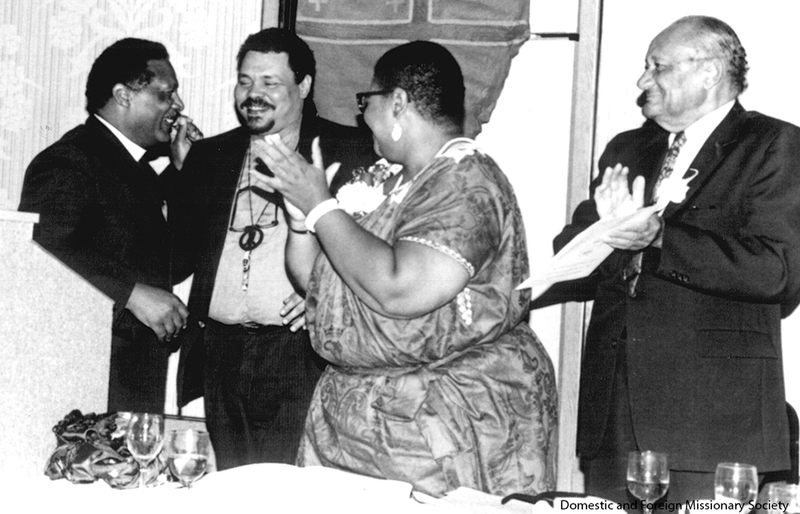
Rev. Rodman (center) is honored by the UBE at its annual conference, 1987. Making the presentation are the Rev. Franklin Turner (left), Dr. Deborah H. Hines, president of UBE (right), and Dr. Earl H. McClenney, UBE treasurer.
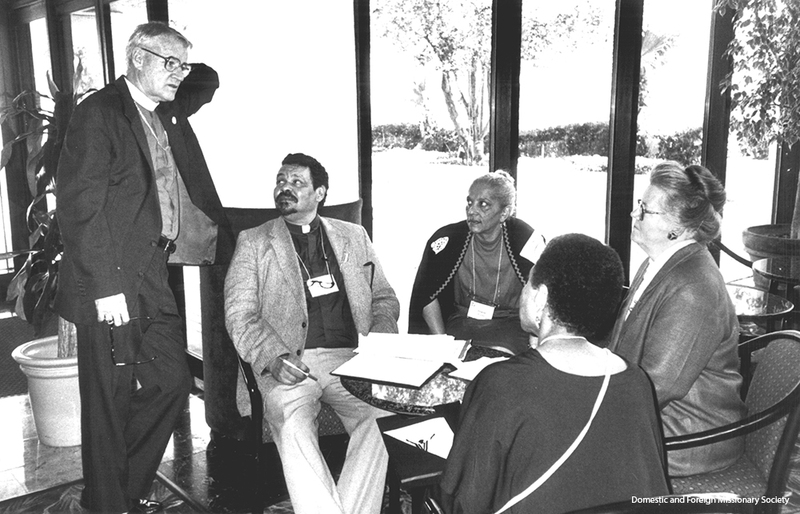
Byron Rushing served for over thirty years in the Massachusetts Legislature, advancing the cause of civil rights, undated. Photo courtesy of Harvard University.