
Confronting Institutional Racism
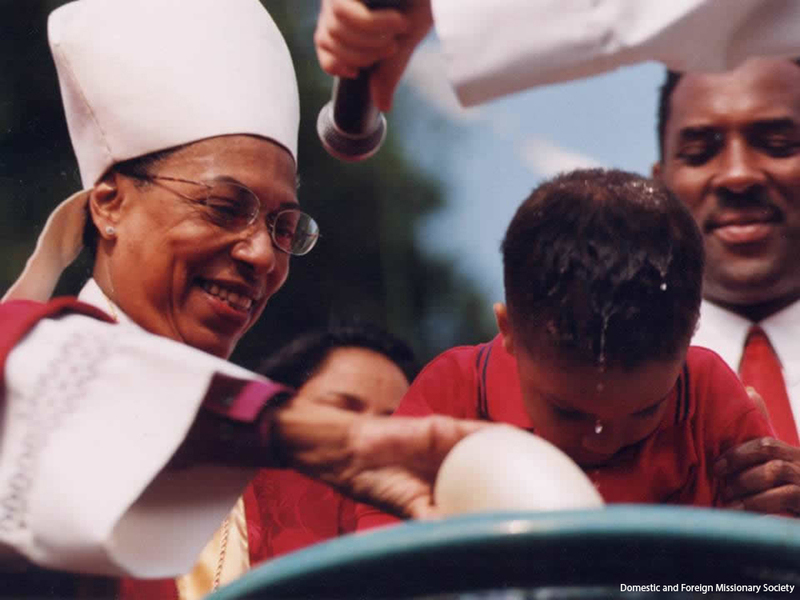
Bishop Harris performs a baptism at St. John and St. James Church in Roxbury, Massachusetts, June 11, 2000. Photo courtesy of the Diocese of Massachusetts.
Although overshadowed at times by both women’s ordination and the full participation of LGBTQ+ people in the church, in the years following the Civil Rights Movement, The Episcopal Church continued to confront institutional racism in different ways. Perhaps the most visible of these actions was the adoption of affirmative action. In 1979, General Convention acknowledged a “moral imperative” to practice nondiscriminatory employment and directed the Executive Council to develop and implement an affirmative action program by 1981 as well as develop an accompanying education program for congregations (Resolution 1979-B093 and 1979-D083). Throughout the 1980s, General Convention mandated the national church adopt an affirmative action program for clergy and laity; encouraged affirmative action programs for dioceses, congregations, and Episcopal institutions; and examined its vendors for affirmative action programs of their own (Resolutions 1982-A152; 1982-D078; 1985-A078; 1985-A140; 1985-C023; 1988-A092). In 1988, the same year in which General Convention reaffirmed the church’s commitment “to a vigorous affirmative action program in all institutions in society as a remedy to historical, racial, and sexual injustices,” the Rt. Rev. Barbara Harris was elected Suffragan Bishop of Massachusetts, becoming the first woman bishop and the first Black woman bishop in both The Episcopal Church and the Anglican Communion (Resolution 1988-A112).
While much of General Convention’s focus was on rectifying inequality in church employment, it did not ignore wider concerns in society, even though those concerns were harder to address. The 1979 General Convention condemned the resurgence of the Ku Klux Klan and similar racial hate and white supremacist groups, urging Episcopalians to “be alert to the threats to democracy and to Christ’s kingdom on earth presented by such groups” and to oppose them where possible (Resolution 1979-D066). General Convention also urged Episcopalians to be aware of the different forms of violence in their lives “and in the institutions of church and society,” which included sexism and racism, and learn how to actively oppose them (Resolution 1985-D021). To support these efforts, which included supporting desegregation in communities, educating people on racism, and advocating for reforms, General Convention encouraged dioceses and congregations to establish Committees on Racism (Resolution 1982-A062). In 1988, General Convention established the national church’s own Commission on Racism to offer dioceses and congregations assistance in developing and evaluating affirmative action and anti-racism programs (Resolution 1988-A092).
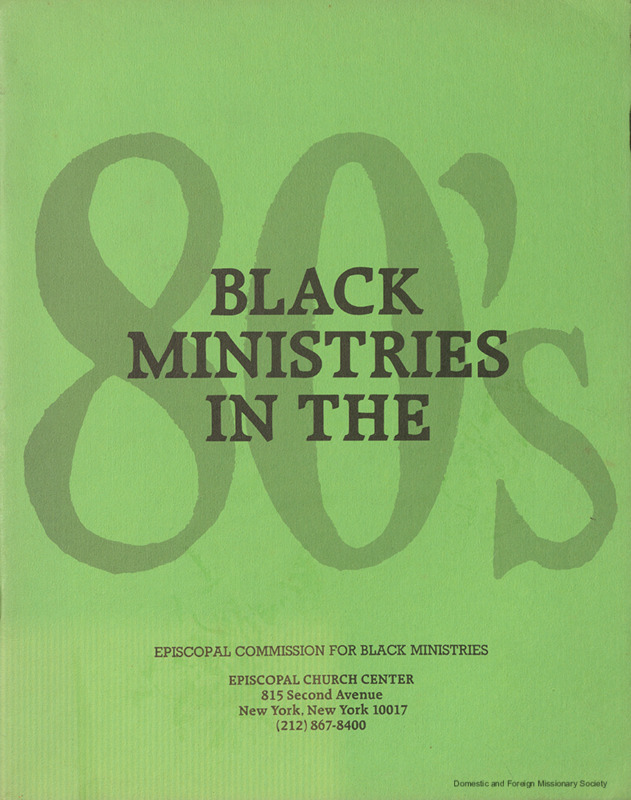
Booklet that speaks to the agenda for Black Ministries, produced by the Episcopal Commission for Black Ministries, c. 1980s.
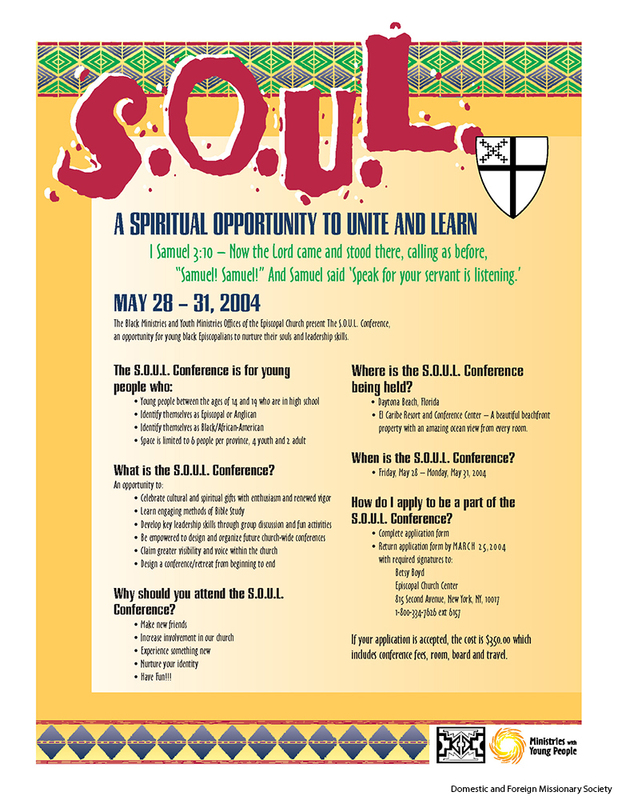
Flyer from the S.O.U.L. Conference sponsored by the Black Ministries and Youth Ministries Offices of The Episcopal Church, 2004.
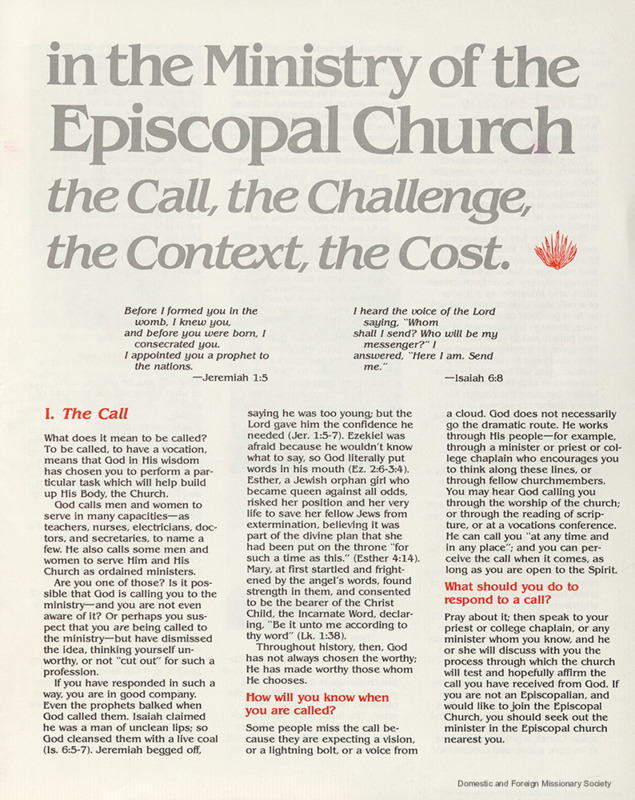
Black priests, including Bishop Barbara Harris and Presiding Bishop Michael Curry, describe their vocation as ordained clergy, 1983.
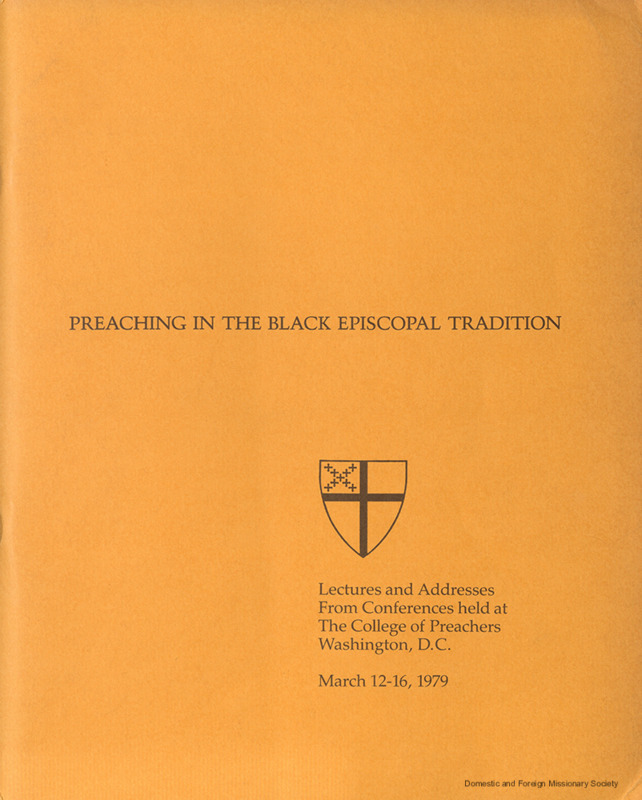
Presentations from a conference on reclaiming Black religious heritage as part of the Episcopal tradition, 1979.