
The Reverend Peter Williams, Jr., 1786-1840
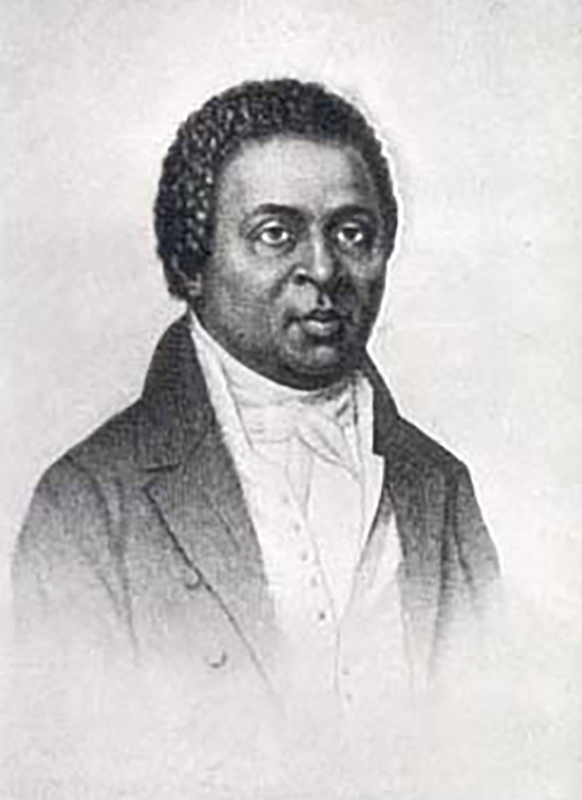
Reverend Peter Williams from The History of the Negro Church, by Carter Godwin Woodson, published in 1921. Print courtesy of UNC and "Documenting the American South" project.
Peter Williams, Jr. was the first Black Episcopal priest in New York. He was born into a Methodist family, his father was a member of the John Street Methodist Church and co-founder of the African Methodist Episcopal Zion Church. Williams was educated at the African Free School, which was established in 1787 by the New York Manumission Society, and tutored by Episcopal Reverend Thomas Lyell.
It is not known why or when Peter Williams, Jr. joined The Episcopal Church, although it is possible he was influenced by Thomas Lyell, a white Methodist who himself became an Episcopalian and served as Rector of Christ Episcopal Church in New York from 1804 to 1848. However his conversion occurred, Williams joined with other New York Episcopal African Americans in the African Catechetical Institution, which met in a room of the African Free School. In 1809, they approached the Diocese of New York and requested the ordination of a person of African descent. While the Diocesan Convention agreed to appoint a lay reader and catechist, it delayed granting their request for a priest. In 1813, Peter Williams, Jr., as a spokesman for the African Catechetical Institution, again petitioned the Convention to allow Blacks to form their own church and to be ordained.
Led by Williams, the African Catechetical Institution built a church in the Five Points neighborhood of lower Manhattan in 1819. It was consecrated as St. Philip's Church on July 3 by Bishop John Henry Hobart, who also admitted Williams as a candidate for the priesthood that year. In 1826, Hobart ordained Williams a priest. He was the second Black to be ordained a priest in The Episcopal Church, following Absalom Jones who was ordained in the Diocese of Pennsylvania in 1804. Williams served as rector of St. Philip’s Church from his ordination until his death.
Williams was active in his community as a social leader as well as a spiritual one. He was a member of the American Anti-Slavery Society and co-founded the first Black newspaper in the United States, Freedom's Journal. Despite his achievements as a priest, an orator, and an organizer, he bore the continued slights of racism. In 1834, Williams saw his church and home ransacked and demolished in the four night rampage of the anti-abolition race riot. His daughter Amy Williams Cassey Remond also took up the cause of abolitionism, her two marriages being to prominent anti-slavery activists: Joseph Cassey of Philadelphia, Pennsylvania and Charles Lenox Remond of Boston, Massachusetts.
Peter Williams, Jr. died unexpectedly of pneumonia in 1840. His funeral was a major event attended by most of the white Episcopal clergy with the Bishop of New York officiating. As St. Philip's Vestry memorialized in a letter dated February 1843, St. Philip's “origen [sic] & duration, is indebted (under God's Providence) to the [...] holy zeal and self-sacrificing devotion of the Rev. Peter Williams.” The Church continues its ministry today at its present site at West 134th Street in Harlem, New York.