
Prayer Pilgrimage
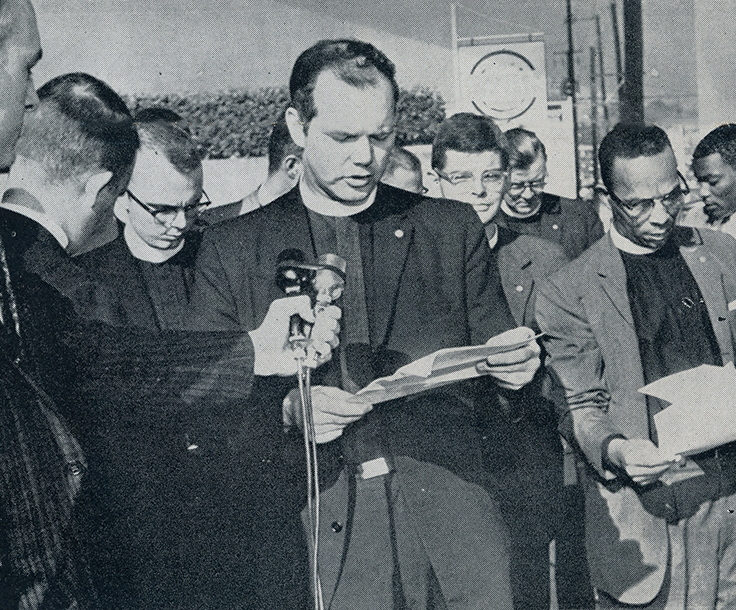
The Reverend Robert Pierson reading a statement in front of the Jackson city jail following his release on bond. He is surrounded by 14 other Episcopal clergyman arrested along with him, September 19, 1961.
Following their release, the fifteen clergy announced their intention to challenge their sentences for disturbing the peace all the way to the Supreme Court of the United States, arguing that three Jackson police officers and a municipal police justice had violated the 1871 Civil Rights Act and were “liable at common law for false arrest and imprisonment.” In Pierson v. Ray (1967), the Supreme Court ruled that judges were immune from liability for official actions and confirmed that police officers could defend themselves from liability on the grounds of good faith and probable cause, making it a significant ruling in the development of qualified immunity.
Although they did not raise the issue in court, the clergy also suspected the municipal police justice, Judge James Spencer, an Episcopalian, had violated the separation of church and state provision under the United States Constitution when he lectured them from the bench about contravening the “Articles of Religion” in the Book of Common Prayer. In rebuttal, they pointed to a statement by Presiding Bishop Arthur Lichtenberger, who cited the 1958 General Convention resolution calling upon the church to work towards integration and said of the pilgrimage, “They are doing the right as they see the right. Whether they have chosen the right way to bear witness to their convictions, time alone will tell.”
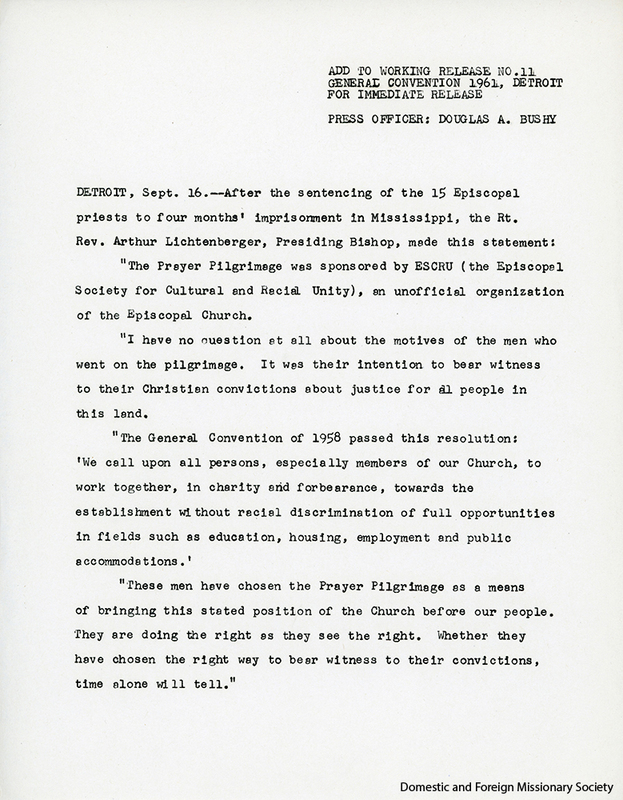
A statement released by Presiding Bishop Lichtenberger regarding the Prayer Pilgrimage, September 16, 1961.
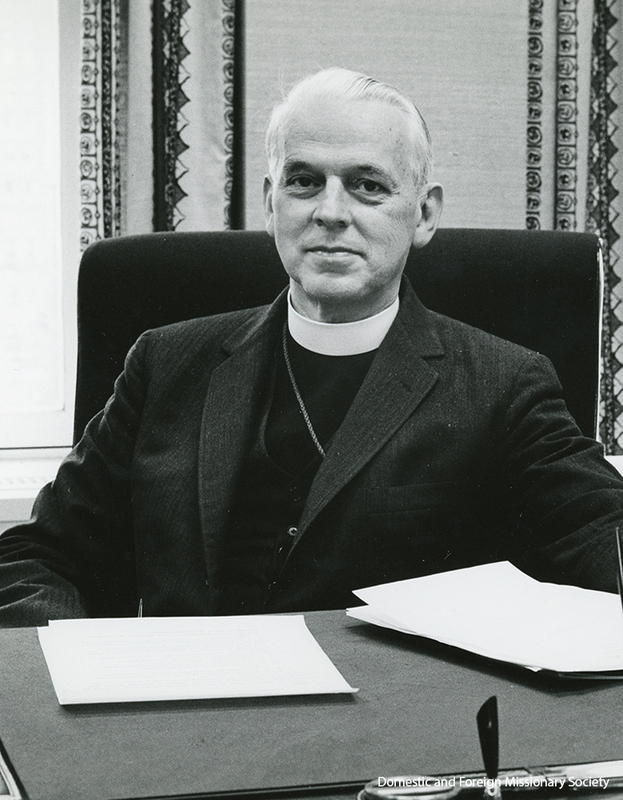
Presiding Bishop Arthur Lichtenberger, c. 1961.
- Statement by Rev. V. Powell Woodward after being released from jail in Jackson, Mississippi, 1961.
- A letter to Pilgrim Priests after the arrest from ESCRU Director John Morris, October 18, 1961.
- A letter expressing support for the prayer pilgrimage, September 15, 1961.
- The initial complaint filed in the Southern District of Mississippi in the case of Pierson v. Ray, 1962.
- Comments on the lawsuit (Pierson v. Ray) by civil rights activists, 1962.