
The Reverend Daisuke Kitagawa, 1910-1970
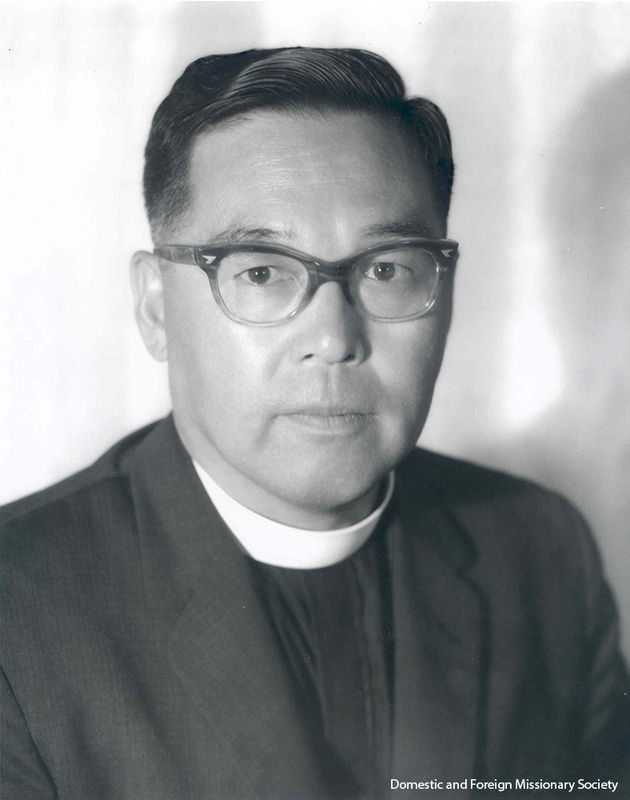
The Reverend Daisuke Kitagawa, c. 1962.
Born in Taihoku, Japan on October 23, 1910, Daisuke Kitagawa graduated from St. Paul’s (Rikkyo) University in Tokyo in 1933. He emigrated to the United States in 1937 and attended General Theological Seminary. Together with his younger brother Joseph, who followed him to the United States a few years later, the Kitagawas were transitional figures in the Japanese American community.
Daisuke Kitagawa began his ministry in 1938 in the Diocese of Olympia at St. Peter’s Mission in Seattle, Washington and St. Paul’s Mission in Taylor, Washington. In the spring of 1942, when the United States government imprisoned people of Japanese descent in concentration camps, Kitagawa became priest-in-charge of Episcopalians at the Tule Lake Relocation Center in Newell, California where he observed critically, but without bitterness, the camp’s devastating impact on the Nisei, the young Japanese. He developed from the experience a lasting belief in the universal church's agency in a vital gospel ministry of social and cultural healing. His internment gave him a global perspective on racism that transcended domestic racial issues. For him, the missionary obligation to oppose racism was the same at home and abroad.
Before the war’s end, Kitagawa arrived in Minneapolis, Minnesota having married Fujiko Sugimoto in Chicago, Illinois in 1944, where he ministered to both displaced communicants and the Military Intelligence Service School’s bilingual soldiers. Among his earliest experiences in inter-denominational cooperation was when he was appointed director of the Minneapolis Council of Churches, which organized the churches’ response to the thousands of Japanese Americans who were released from the various internment camps. In 1949, Kitagawa became director of the Japanese American Community Center, established with the assistance of The Episcopal Church and the Diocese of Minnesota. The Community Center hosted the activities of the Japanese American community, including weekly church services for the Japanese-speaking older generation as well as social activities for the Nisei. The Center was also used by the Indigenous community of the Twin Cities, which held weekly pow-wows there on Sunday afternoons.
Daisuke Kitagawa served for several years on the Mayor’s Council on Human Relations, during which time he organized the Rainbow Club. The members of the Rainbow Club were from various racial backgrounds and met as families in the hope that both children and adults would develop friendships across racial lines.
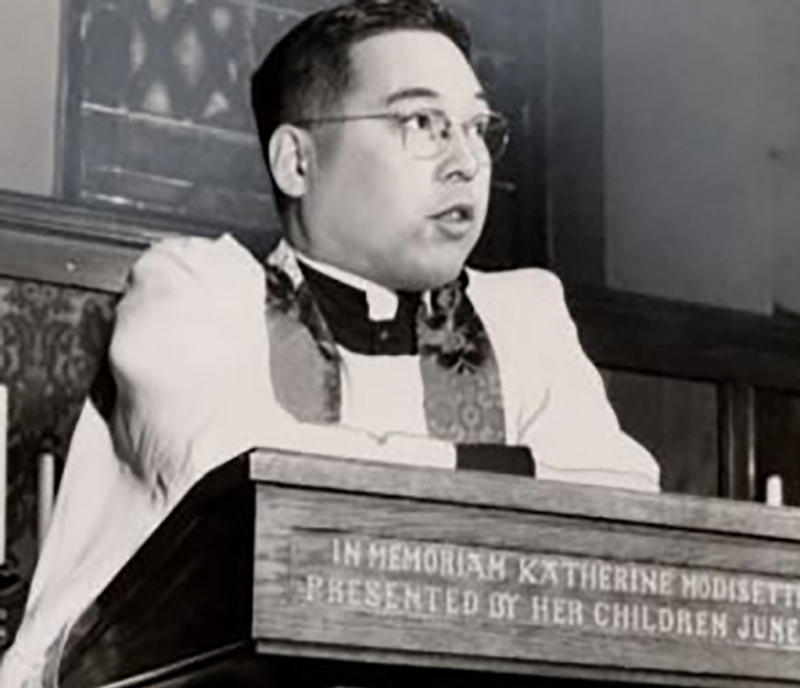
The Reverend Daisuke Kitagawa speaking at St. Mark’s Church, Minneapolis, c. 1949.
Kitagawa remained in Minneapolis until 1954, when he resumed doctoral studies at the University of Chicago. In 1956, he began the first of his two associations with the World Council of Churches (WCC), serving in the Department of Church and Society in the Division of Studies and as Secretary of Racial and Ethnic Relations from 1960 to 1962. In 1962, Kitagawa served The Episcopal Church as Executive Secretary of the Division of Domestic Mission. Six years later, he was appointed the Secretary for Urban and Industrial Mission Program in the Division of World Mission and Evangelism of WCC. He traveled extensively in Africa and Asia and authored of several books, including The Pastor and the Race Issue, Race Relations and Christian Mission, and Issei and Nissei: The Internment Years.
The Kitigawa Family Papers are housed at The Archives of the Episcopal Church.
LISTEN
Father Kitagawa reflects on the ability of otherwise kind and rational people to be swayed by mob prejudices, connecting his own internment during World War II to the problem of racism in the 1960s, 1965.
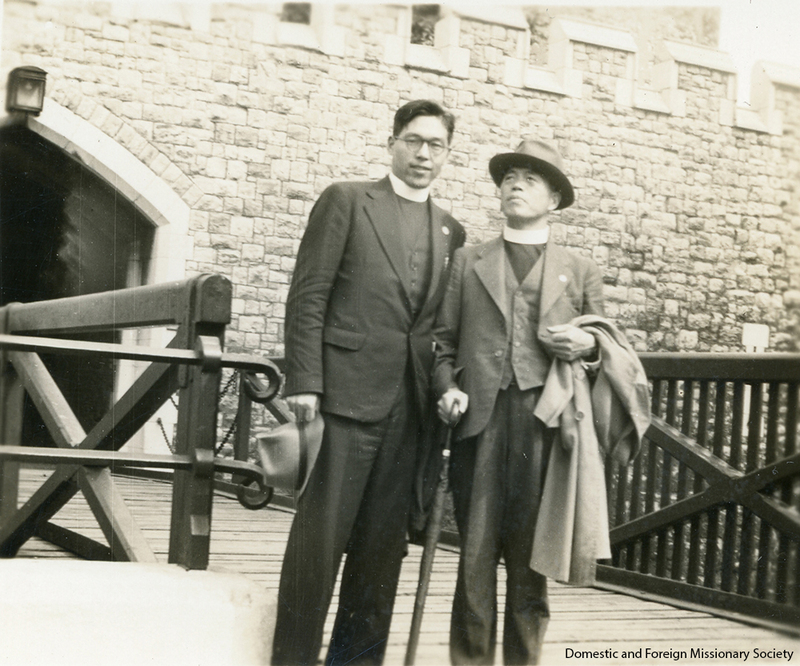
Kitagawa traveled extensively during a long career dedicated to racial and social justice and ecumenism.
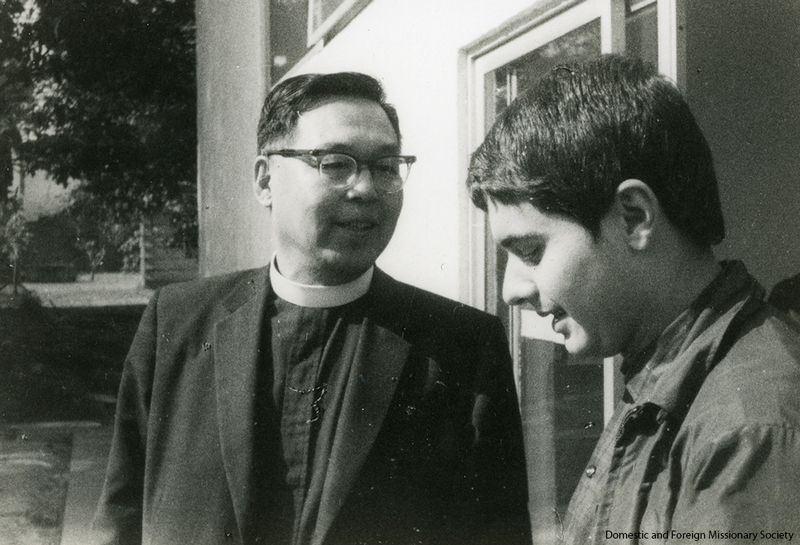
Father Kitagawa speaks with José Dori in Brazil, undated.
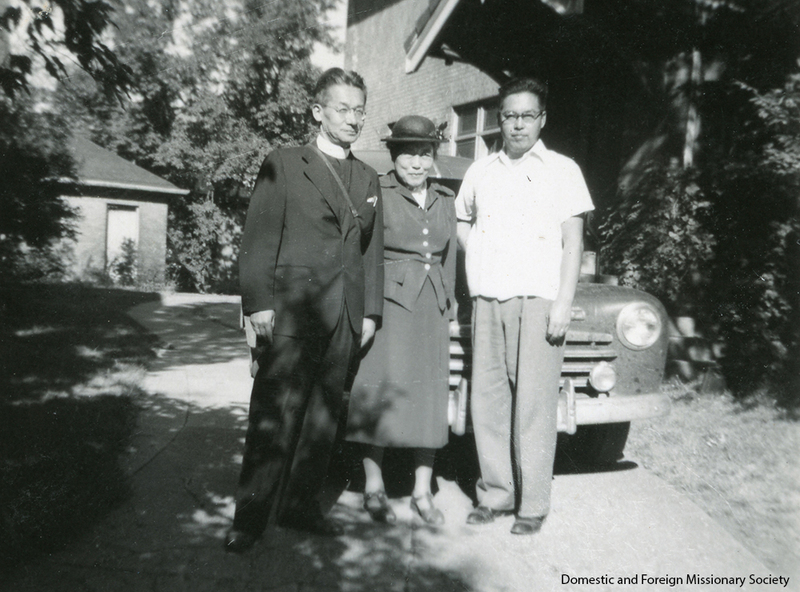
Father Kitagawa with Dr. and Mrs. Kan, of Tokyo, in Minneapolis, 1949.