
The Murder and the Trial
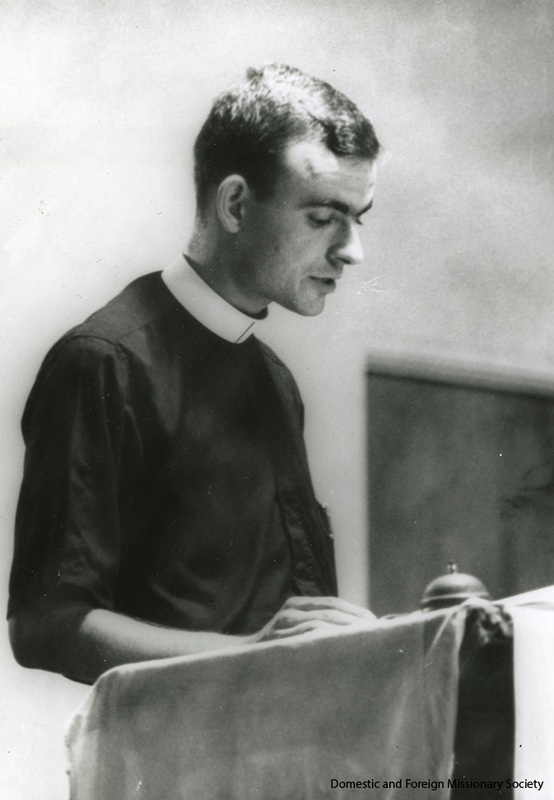
Jonathan Daniels, undated.
After his release on August 20, Daniels walked with Richard Morrisroe (a Roman Catholic priest) and Ruby Sales and Joyce Bailey (two Black women working for the Student Nonviolent Coordinating Committee) to Varner’s Cash Store to purchase cold drinks. Sales testified later that as they approached the door, a middle-aged white man with a shotgun rushed to block their entrance, yelling that the store was closed and to leave the property before he “[blew their] G** d*** brains out.” Before they had the chance to turn, the man, Thomas Coleman, fired.
Daniels collapsed, shot in the chest and abdomen; his final act had been to pull Sales out of harm’s way. As Sales and Daniels lay on the ground, Morrisroe and Bailey ran. Coleman pumped his shotgun, aimed, and fired a second shot into Morrisroe’s back.
Immediately after the shooting, local officials intimated to press that Coleman was a deputy sheriff; however, the Federal Bureau of Investigation’s examination of the matter found he was not acting under the color of the law, nor was he even an authorized deputy, although he occasionally “aided the Sheriff’s office in handling police matters and carried a Deputy’s Commission Card in lieu of a gun permit.” Coleman was a highway engineer whose law enforcement duties were limited to contact with convict laborers, one of whom he shot “in connection with a rebellious incident” in 1959.
Although he was initially arrested on a charge of first-degree murder, the Lowndes County grand jury only indicted Coleman, who claimed self-defense and that “he did what he had to do,” on a charge of manslaughter. Concerned by the grand jury’s decision to downgrade the charges, Alabama Attorney General Richmond Flowers took over the prosecution. He asked Judge T. Werth Thagard for a postponement of the trial, arguing that Father Morrisroe, still hospitalized with serious injuries, was a key witness. With no explanation, the judge refused his request and, on the first day of the trial, replaced him as prosecutor with Circuit Solicitor Arthur E. Gamble, Jr., a friend of Coleman’s. Furthermore, despite Lowndes County having a Black majority population, twelve white jurors were seated for the trial. Some of these men were on convivial social terms with Coleman. One was seen to wink at him during the trial, and afterwards, another said, “Now we can go on that dove shoot this weekend.” Moreover, Coleman had given a job to a relative of the judge, and the court clerk was Coleman’s cousin’s wife.
Coleman’s defense rested on his assertion that Daniels had been armed with a knife and Morrisroe with a gun when they came to the store. However, only his friends corroborated his claims on the witness stand, offering as an explanation for the lack of weapons found on the two priests that they had been taken after the shooting by two unidentified Black men. Morrisroe, Bailey, and Sales testified they had been unarmed. The jurors deliberated for 1 hour and 43 minutes before returning their verdict: Not Guilty.
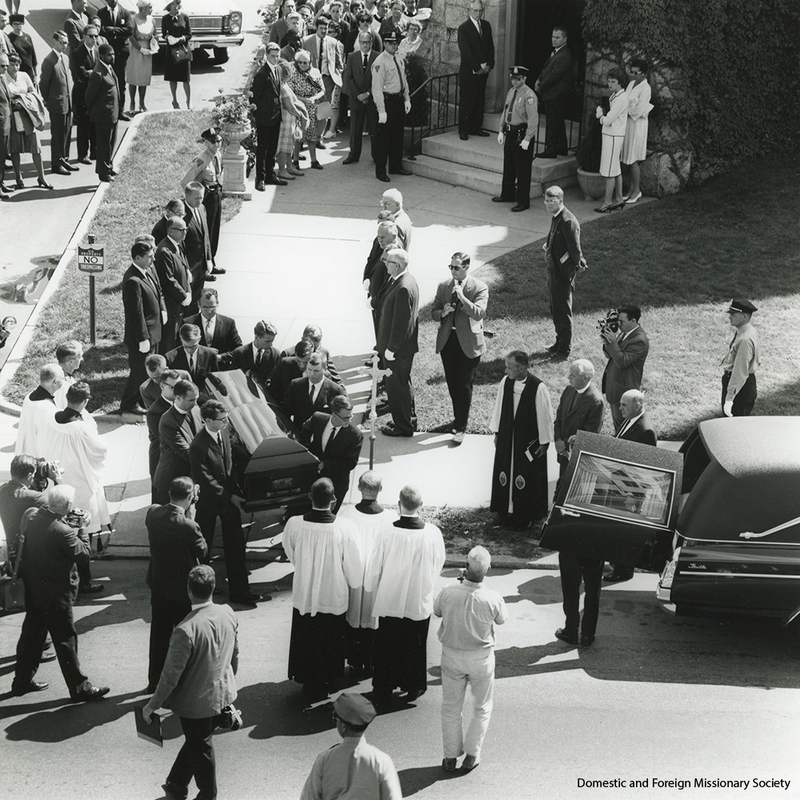
At Daniels' funeral, more than a thousand mourners paid their respects, 1965.
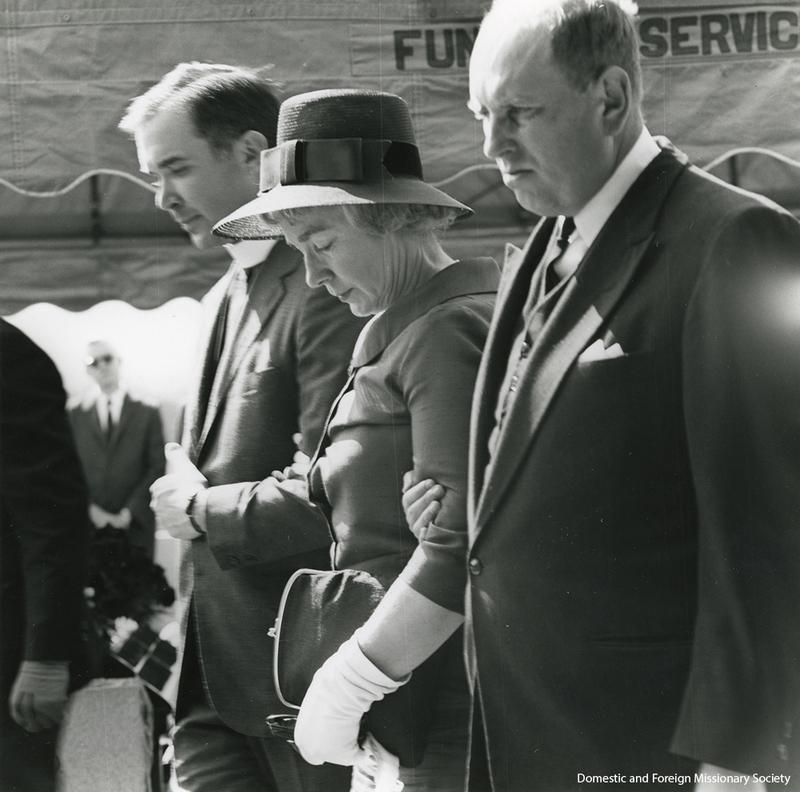
Jonathan Daniels' family at his funeral; Jonathan's mother is in the center, 1965.
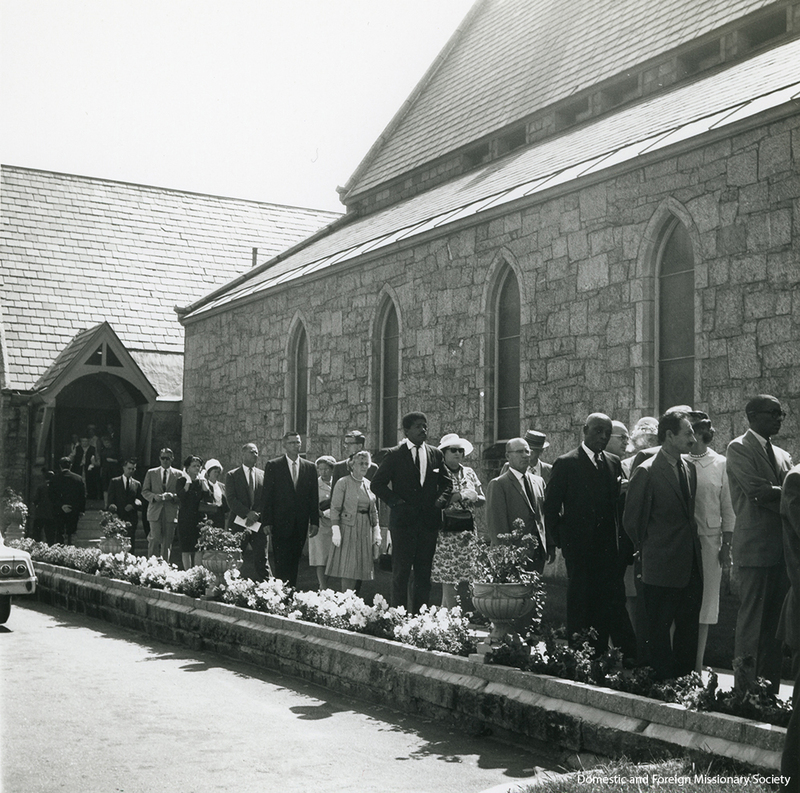
Mourners at Jonathan Daniel's funeral departing the church, 1965.
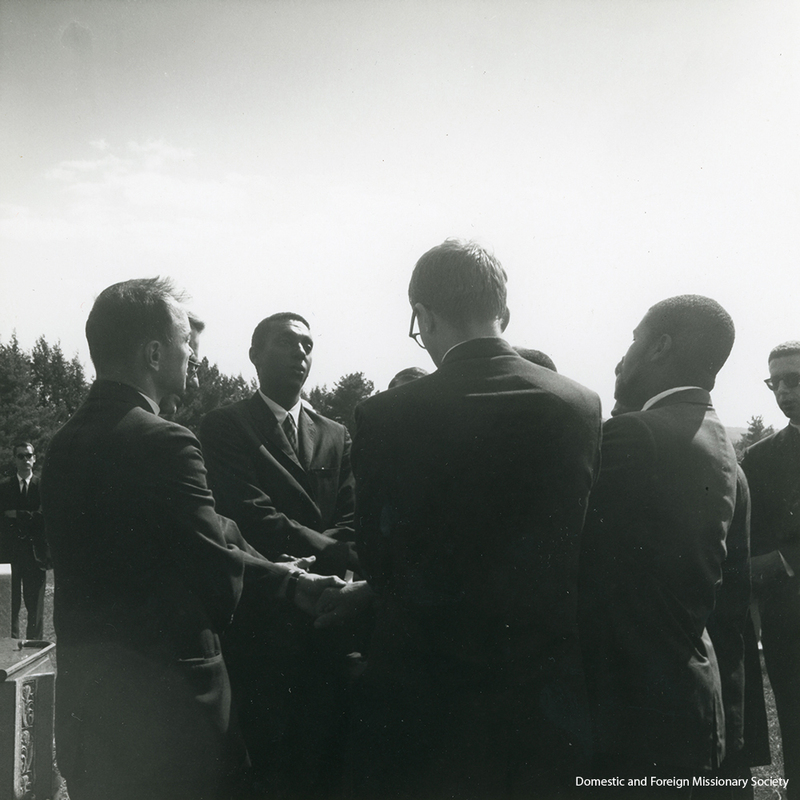
A group gathers and, holding hands, prays near the gravesite. Stokely Carmichael is second from left, facing the camera, 1965.