
The Right Reverend Duncan Montgomery Gray, Jr., 1926-2016
For these are times which not only try men’s souls, but also infect and poison them.
The seeds of anger and hatred, bitterness and prejudice, are already widely sown, and as Christians,
we need to do our utmost to uproot and cast them out.
- Duncan Montgomery Gray, Jr.
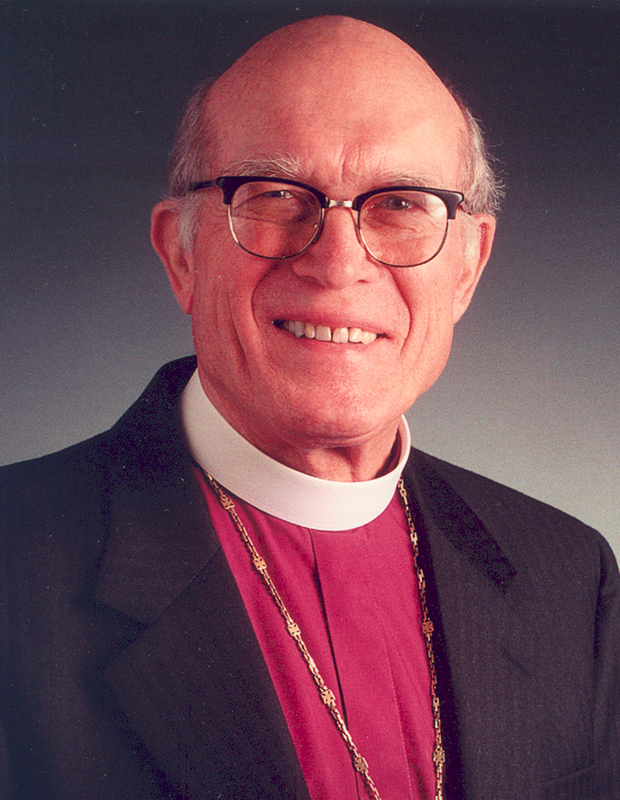
The Rt. Rev. Duncan Montgomery Gray, Jr. followed in his father's footsteps by also serving as the Bishop of Mississippi, undated.
Duncan Montgomery Gray, Jr. was born in Canton, Mississippi on September 21, 1926 to the Reverend Duncan Montgomery Gray and Isabel McCrady. He attended high school in Greenwood, Mississippi before graduating in 1944 from Central High in Jackson, Mississippi. Upon graduation, he entered the United States Navy and was sent to Tulane University through the Navy’s V-12 College Training Program. Gray spent approximately one year as a commissioned officer in the Navy before receiving his Bachelor of Electronic Engineering degree in 1948. That same year he married Ruth Spivey of Canton with whom he had four children.
Gray began a secular career at Westinghouse Corporation. After almost three years there, he left a promising career and entered seminary at the University of the South in Sewanee, Tennessee, graduating with a Bachelor of Divinity in 1953. (The same institution awarded him an Honorary Doctor of Divinity in 1972, a rare honor bestowed upon a parish priest.) While in seminary, Gray traveled to Cuba where he learned first hand about poverty and race in a setting outside the American apartheid system. The experience confirmed his decision to become a priest and further strengthened his commitment to social reform. Bishop Duncan Montgomery Gray, Sr., Gray’s father and the fifth bishop of Mississippi, ordained his son to the diaconate on April 8, 1953 and to the priesthood in October.
As a fourth generation Mississippian, Gray devoted his pastoral career to the parishes and communities of Mississippi. Between 1953 to 1960, he served as priest-in-charge at the parishes of Grace Church in Rosedale, Calvary Church in Cleveland, and Church of the Holy Innocents in Como. Gray’s next assignment brought him to Oxford where he served as the chaplain to the Episcopal students at the University of Mississippi until 1961 and as rector to the parishioners of nearby St. Peter’s Church from 1957 to 1965. As one of the few white citizens who confronted racism, Gray earned both the respect and the contempt that would shape his legacy as a civil rights advocate within The Episcopal Church. Particularly controversial was his 1954 article entitled “The Church Considers the Supreme Court Decision,” in which Gray used biblical references to support his argument that racial segregation was a sin.
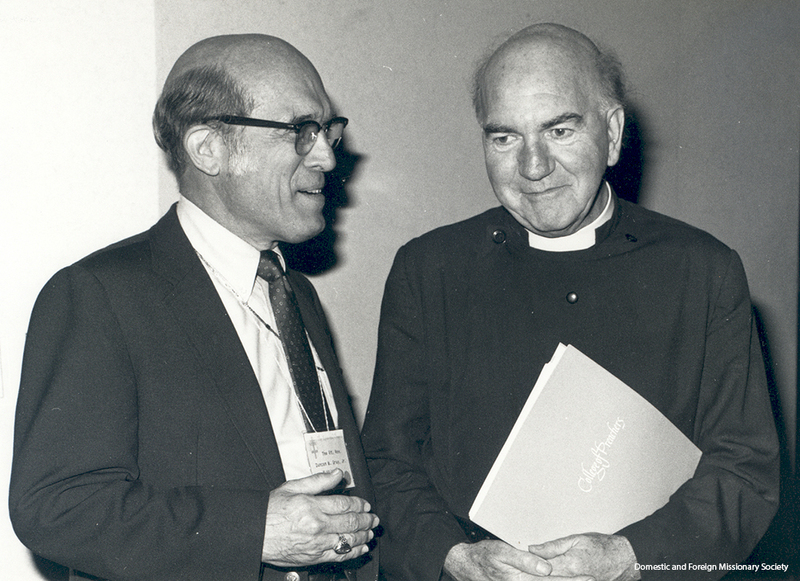
Bishop Gray and his mentor, Anglican theologian and Episcopal priest, Rev. Canon John Macquarrie, 1983.
The University of Mississippi’s decision in September 1962 to enroll James Howard Meredith, the school’s first Black student, became a definitive moment in Gray’s lifelong dedication to improving the lives of the Black minority. Meredith’s admittance stirred the racism of both the campus community and people in the surrounding states. As protest violence swelled, Gray attempted to calm the crowd of rioters as he clung to the Confederate statue in the campus square. Although Gray was not able to squelch the entrenched racism embodied by the unrestrained mob, the event did not extinguish his faith and his commitment to inclusion.
After Oxford, Gray served as rector at St. Paul’s in Meridian until 1974, when he was elected the Bishop of Mississippi, a position he held for twenty years. Gray was a controversial leader who was elected to represent a state still enmeshed in discrimination while The Episcopal Church debated the revisions presented in the upcoming 1979 Book of Common Prayer and the ordination of women. Gray supported these efforts but continued to focus on what he considered the church’s and the nation’s greatest obstacle - racism.
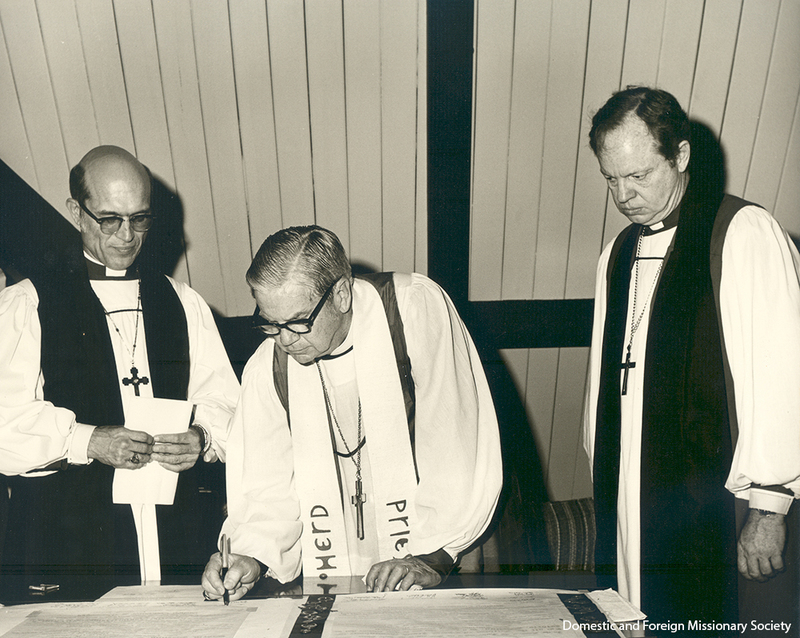
The Reverend Duncan Montgomery Gray, Jr. (left), Presiding Bishop John Hines (center), and Bishop of Mississippi John Allin (right) at Gray's consecration as bishop coadjutor, 1974.
At the time of his election to the episcopate in 1974, Gray was serving the diocese as vice-president of the Diocesan Executive Committee and chairman of the Commission on Ministry. His other diocesan commitments included roles as chairman of the Mississippi Religious Leadership Conference; president of the Standing Committee; and chairman of the departments of College Work, Christian Education, Communications, and Christian Social Relations. He served The Episcopal Church as chairman (1977-1983) and member (until 1986) of the General Convention’s Standing Commission on Constitution and Canons and as chairman of the House of Bishops’ Committee on Canons (1975-1988) and Committee on Rules. For three terms he held the position of vice chairman of the Board of The Archives of the Episcopal Church (1985-1994) and fulfilled duties as deputy to four General Conventions.