
Ethnic Ministries
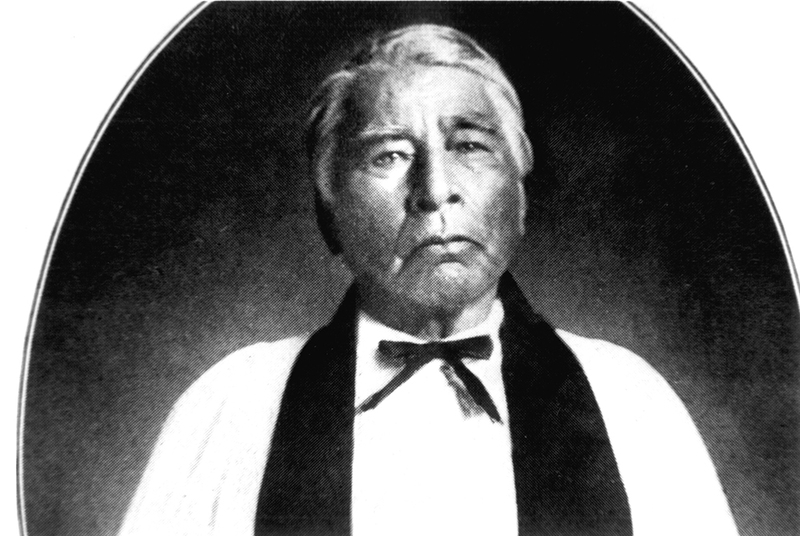
Enmegahbowh (Ottawa), the first Indigenous person ordained in The Episcopal Church in 1859.
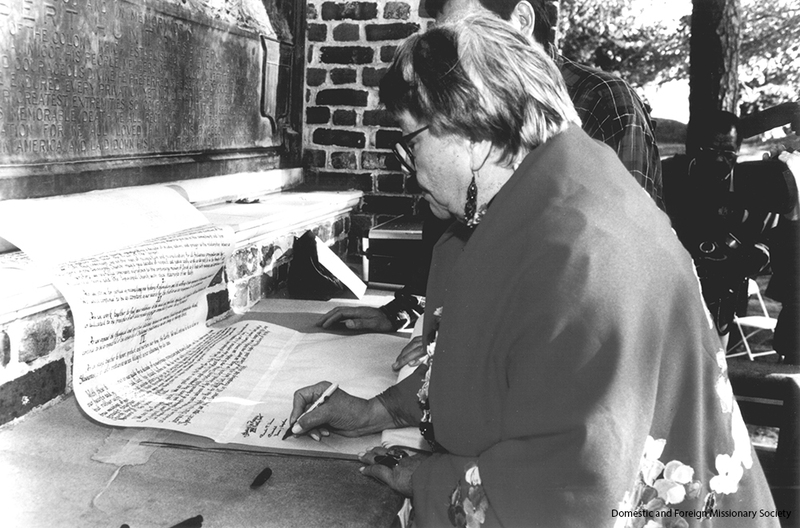
Owanah Anderson, a Choctaw from Oklahoma and director of Native American Ministries, signs the New Jamestown Covenant, the church’s new covenant with Indigenous people, November 1997.
Prior to the 1970s, church programs on topics of race and ethnicity were managed and funded by a number of grants and committees, including the General Convention Special Program, the National Commission on Hispanic Affairs (NCHA), and the National Committee on Indian Work (NCIW). The General Convention Special Program in particular encompassed grants to Black, white, Indigenous, Mexican, Puerto Rican, and Asian communities. At its May 1973 meeting, the Executive Council proposed that the programs all be consolidated into a single agency with a staff drawn from the existing committees. Within the new staff section, grants for non-Episcopal Black communities would be managed by the Community Action and Human Development Committee; grants for Indigenous communities would be managed by NCIW; grants for Hispanic communities would be managed by NCHA; and grants to Black Episcopal congregations would be managed by Ministry with Black Episcopalians. The proposal was adopted by General Convention in October of that year and expanded at that time to include the Asian Ministry (Resolution 1973-B182). This administrative restructuring was more than a consolidation of resources, however. The Executive Council noted in its proposal that “there was a feeling that the ‘special’ designation should be dropped from all programs and they be treated as a part of the ongoing mission of the church.”
Over the following decades, the initial ministries resolved into the four offices that exist today within the Department of Ethnic Ministries: Asiamerica Ministries, Latino Ministries, Indigenous Ministries, and African Descent Ministries, formerly known as Black Ministries. Missioner Rev. Canon Ronald Byrd, Sr., announced the name change in 2022 after a three year discernment process, which included the input of attendees at the 2020 International Black Clergy Conference. The change was made to acknowledge the diverse cultural heritages within the African diaspora and The Episcopal Church; the term “Black” was too synonymous with “African American.” Communities encompassed and celebrated by African Descent Ministries are not only African American, but also include the Afro-Latino, Afro-Caribbean, Afro-Cuban, Afro-Haitian, East African, South African, South Sudanese, West African, and Liberian communities.
The Office of African Descent Ministries (ADM) supports and connects individuals, congregations, and communities. In addition to hosting a number of retreats, workshops, and conferences, it offers a variety of programs, including the Youth Leadership Academy, where high school students can build their leadership skills alongside their peers; professional coaching; a Discernment Academy to develop Black and African Diaspora leaders within The Episcopal Church; and a congregational revitalization program to support ministry, evangelism, and stewardship in communities. ADM also developed the Healing from Internalized Oppression curriculum, which “educates participants about institutional, interpersonal, and internal oppression to facilitate a healing process that empowers people for transformational ministry in the name of Jesus.”
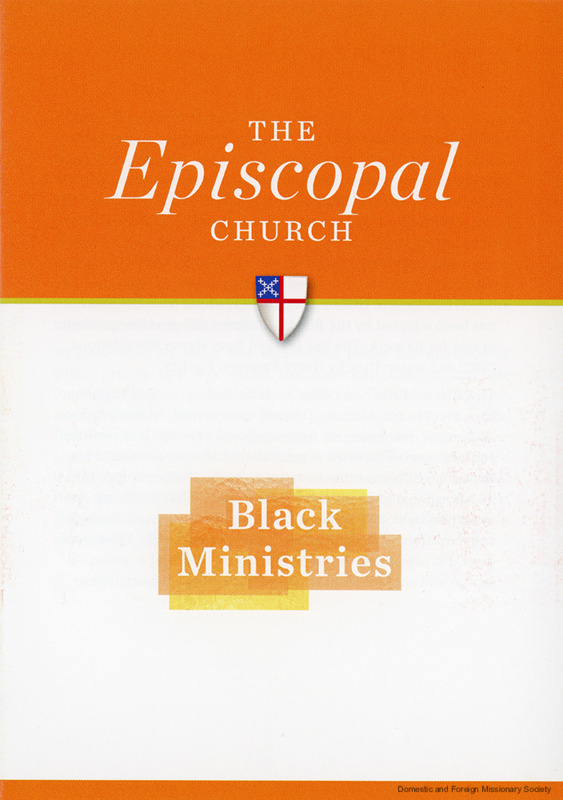
This booklet describes the mission, history, and programs of the Black Ministries Office, 2012.
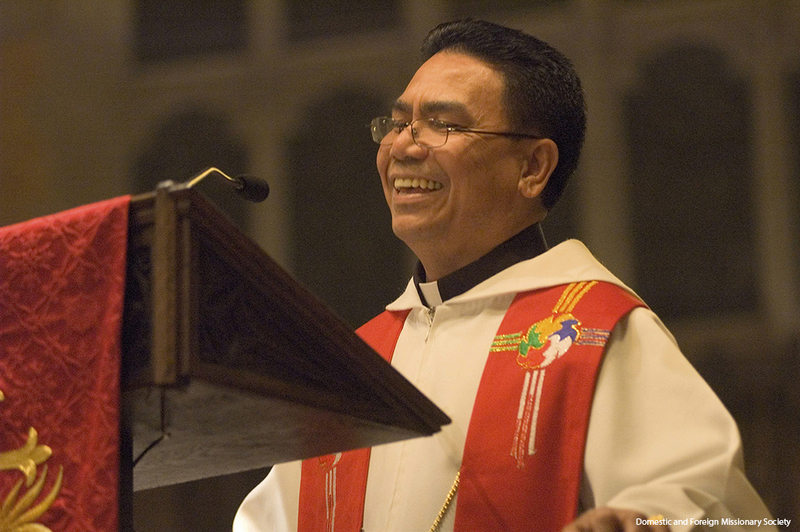
The Rev. Dr. Winfred Vergara, Missioner for Asian American Ministries, preaches at a service for Hmong refugees, November 2005.
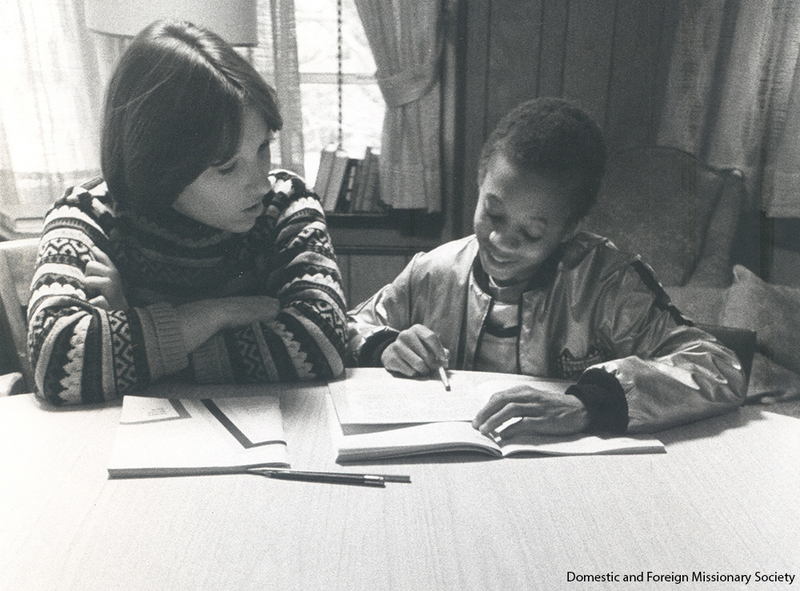
A volunteer, Jane Bentley, of the Black Ministry Office’s Santa Fe Outreach Project assists Dwayne K. Jones, a 9th grade student at Lincoln Sr. High School, 1976.