
The Reverend John Edwin Culmer, 1891-1963
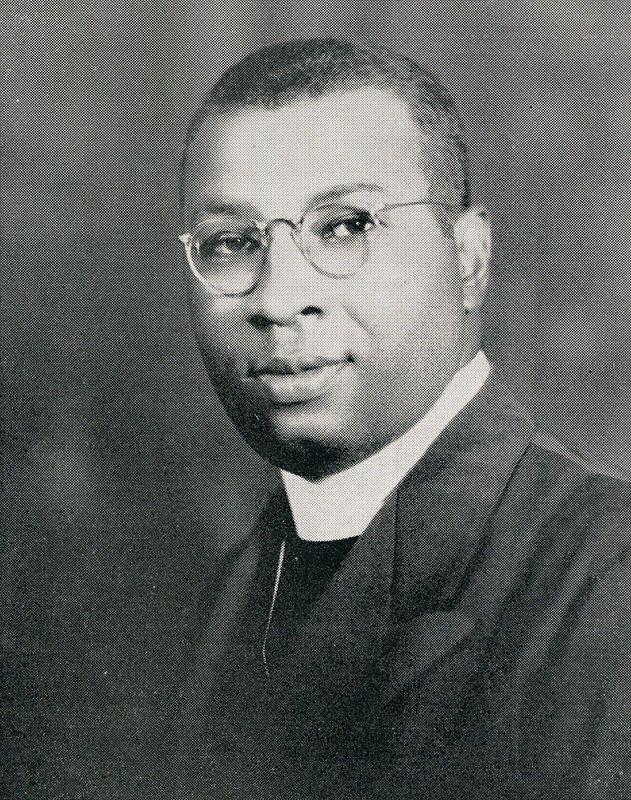
The Reverend John E. Culmer served as priest and rector of St. Agnes' Church in Miami for 34 years, undated.
John Edwin Culmer, the son of Edwin James and Ellen Thompson Culmer, was born May 22, 1891, in Savannah Sound, Eleuthera, Bahamas. At the age of 19, Culmer immigrated from the Bahamas to Miami, Florida, and settled in the Coconut Grove area of the city. Shortly after his arrival, he was confirmed as a member of Christ Episcopal Church, where he served as an organist, choir director, and Sunday school teacher and superintendent. Although well-educated, Culmer initially found work as a common laborer in road construction. He was later employed as a music teacher and superintendent of the pressing, cleaning, and laundry department at St. Alban's Industrial School and as a clerk at the Burdine Outlet Department Store.
Culmer purchased land in Coconut Grove and built a home. Shortly after, in 1914, he married Nancy Elizabeth Taylor. Five years later upon Culmer’s completion of seminary and ordination to the diaconate, the couple relocated to Tampa, Florida where they remained until returning to Miami in 1929. Nancy died in December, 1941. On July 3, 1947, Culmer married Leome Frances Scavella, having five children with her.
Recruited to the ministry by Reverend Benjamin Soper of St. Stephen's in Coconut Grove, Culmer completed the requirements for the Bachelor of Music degree at Oskaloosa College in Iowa and the Bachelor of Divinity degree from Bishop Payne Divinity School in Petersburg, Virginia. Bishop Cameron Mann ordained him as a deacon in August, 1919, and, in March of the following year, a priest.
Culmer’s parochial ministry began at St. James' Church in Tampa, Florida where he served as vicar from 1919 to 1929. During his ten years there, Culmer successfully completed the red-pressed brick church edifice, installed the pews, built the rectory, paid the mortgage indebtedness of $25,000, and nearly doubled the membership. He also started the mission of St. Augustine's Episcopal Church in the neighboring community of St. Petersburg. In 1929, when Culmer was transferred to Miami, the members of the congregation sent letters of protest to the bishop, and Tampa's religious and civic leadership, white and Black, expressed profound regret at the decision.
Culmer was the priest and rector of St. Agnes', Miami, for 34 years, until his death in 1963. During his ministry, the parish hall was remodeled, the rectory was renovated, and a new social hall was built. As the rector, he presented 3,000 for confirmation and baptized a like number of infants and adults. Under his leadership, St. Agnes' membership grew to 2,300 congregants in the 1940s, thus making it the largest Episcopal church of color in the South and the third largest for Afro-Anglicans in the country. From 1944 to 1963, Culmer served simultaneously as the rector of St. Agnes’ and as Archdeacon of the Diocese of South Florida. He also started two missions – the Chapel of the Transfiguration in Liberty City, now known as the Church of the Incarnation, and the Church of the Transfiguration in Opa Locka – and inspired several men to enter the ministry, including the Reverend Canon Theodore Gibson, the Reverend Canon J. Kenneth Major, the Reverend John Jarrett, Jr., and the Reverend James Hall.
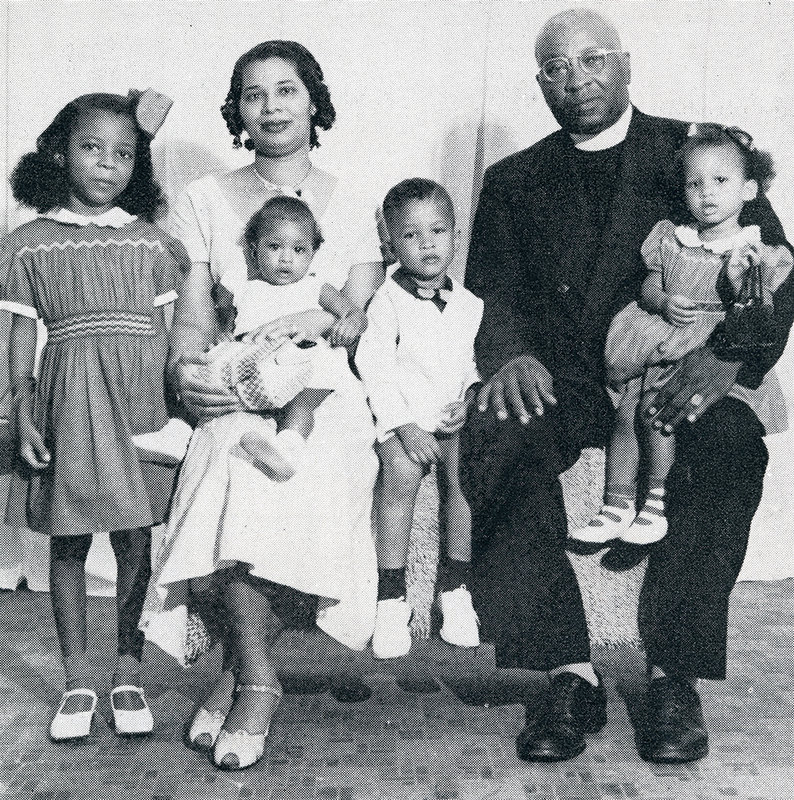
The Reverend John E. Culmer and family, undated.
Within his diocese, Culmer was an early voice for eliminating segregation from church functions. His outspoken opposition to segregation in the church resulted in the outlawing of segregated banquets and integration of church camps in 1954. In the early 1950s, Black clergy were appointed roles at the diocesan conventions in the opening services and Holy Communion liturgy. Culmer also served at both the provincial and diocesan levels as a president of the Conference of Church Workers among Colored People, known today as the Union of Black Episcopalians (UBE), a confederation of chapters and interest groups throughout the United States dedicated to equal representation for the Black ministry in The Episcopal Church.
Culmer was the first Black delegate elected to the Diocese of South Florida Provincial Synod and went on to serve as a delegate more than a dozen times. He was elected as a deputy to General Convention in 1943, 1946, 1955, and 1958. Culmer was one of two Black clerical delegates of twenty total delegates selected to represent The Episcopal Church at the 1948 Church Union International Conference in Surrey, England. He was invited to sit on the dais and was privileged to attend some of the meetings at the Lambeth Conference which followed the Surrey meeting. He attended a Washington Conference at Howard University, sponsored by the Department of Race Relations of the Federal Council of Churches of Christ and was the only Black member of a commission to study race relations within The Episcopal Church. In the late 1950s, he was elected to serve as a member of the American Church Union (ACU).
Committed to quality and service beyond his parish and diocese, Culmer sought to improve the lives of people within the larger south Florida community. During his tenure in Tampa, he served as the Acting Executive Secretary of the Tampa Urban League and the Chairman of the Booker T. Washington Branch of the Tampa Chapter of the American Red Cross. Culmer was a probation officer, counseling male juvenile offenders and men; this work was continued after his move to Miami. He initiated a campaign for better housing and sanitation improvements for Overtown, a Black neighborhood; worked to enforce Black suffrage; participated in the formation of the community's first Black police force, which was designed to cut crime and police brutality by white officers; and was behind the movement to establish the Black police precinct in 1950. He advocated for the Black community’s access to beaches with the Citizen’s Service League and integration of local buses and businesses as part of the Delphian Club.
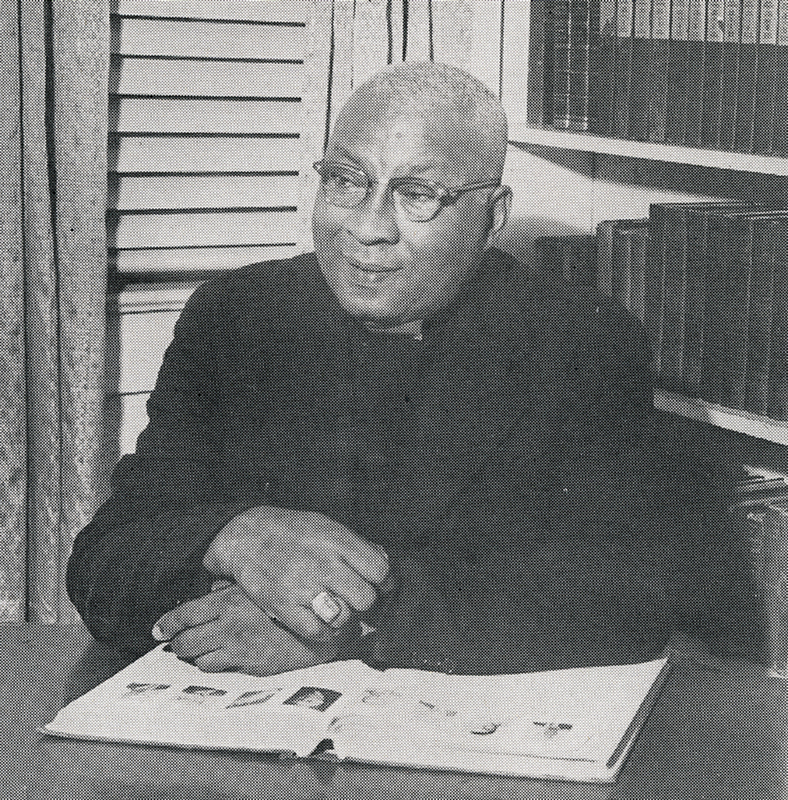
The Reverend John E. Culmer was a popular writer and speaker as well as a civil rights activist, 1958.
Culmer was a regular contributor to The Miami Times, New York Amsterdam, and Palm Branch newspapers. He authored several books, including The Responsibility of the Negro in the Defense Program, Born in a Washtub, and A Manual for Catholic Worship, the latter of which was widely used in Episcopal churches throughout the country. He was a popular public speaker and was the founder and moderator of a local public radio program, “The People Speak.”
For his dedication to civil rights and humanitarian accomplishments, Culmer received numerous awards, gubernatorial appointments, and honorary degrees, including a Certificate of Commendation signed by President Harry Truman.
Written with assistance from Leome S. Culmer, widow of John E. Culmer.