
Becoming a Beloved Community
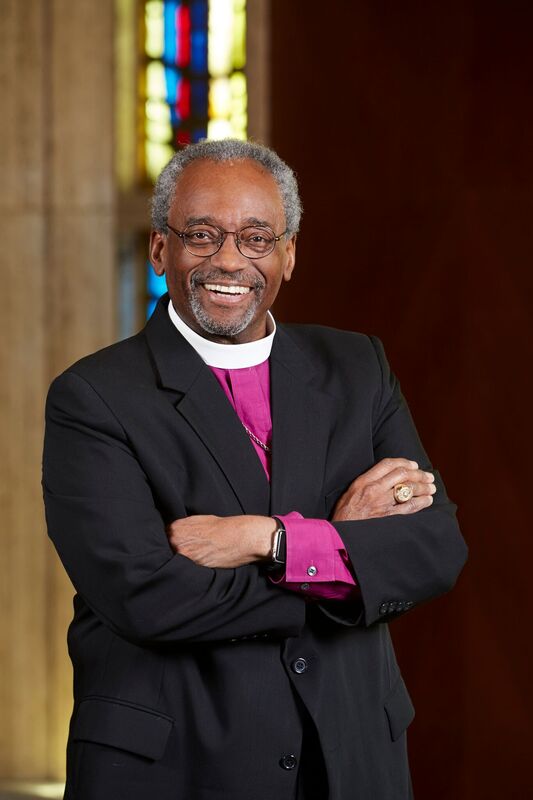
Bishop Michael Curry, the first Black Presiding Bishop of The Episcopal Church.
As the new millennium began, the 2000 General Convention extended its anti-racism commitment for another nine years (2000-A047). It additionally reaffirmed a commitment to urban mission and ministry, strengthened the evaluation of its vendor contracts for anti-racism policies, and required anti-racism training for lay and ordained leadership (Resolutions 2000-D052, 2000-B041, and 2000-B049). Similar resolutions followed in subsequent General Conventions. The anti-racism program was continued each triennium (2003-A010, 2006-A127, 2006-A092, 2009-A118, 2009-A142, 2012-A125, 2012-A127, 2015-A023). In 2018, minimum standards for anti-racism training in the church were set; interim bodies were required to undergo it; and General Convention reaffirmed its importance and urged dioceses, which had undertaken it with varying levels of commitment and enthusiasm, to do likewise (Resolutions 2018-A044, 2018-A015, 2018-A045).
Notably, the 2000s reignited the discussions of reparations from nearly forty years prior. In Resolution 2006-C011, General Convention urged Episcopalians to call on Congress and the American people to study the history and legacy of slavery and propose “monetary and non-monetary reparations” for the descendants of enslaved people. In Resolution 2006-A123, General Convention also acknowledged The Episcopal Church’s own complicity in the institution of slavery and urged the church to examine this history with the goal of determining how the church might achieve healing and reconciliation. In 2022, General Convention directed the development of educational resources on the institution of slavery and reparations for Episcopalians preparing for Confirmation (Resolution 2022-C035). Two years later, the 2024 General Convention created a Task Force on Reparations to study “the historic and ongoing legacy of the displacement of indigenous peoples and of chattel slavery” and make recommendations on reparations, including the establishment of a Reparations Fund (Resolution 2024-A015). As part of this process of reconciliation, the 2022 General Convention also called for an audit of the Domestic and Foreign Missionary Society’s assets with potential ties to enslavement (Resolution 2022-A129). The Church Pension Group released its report in May of 2024, reporting few such links.
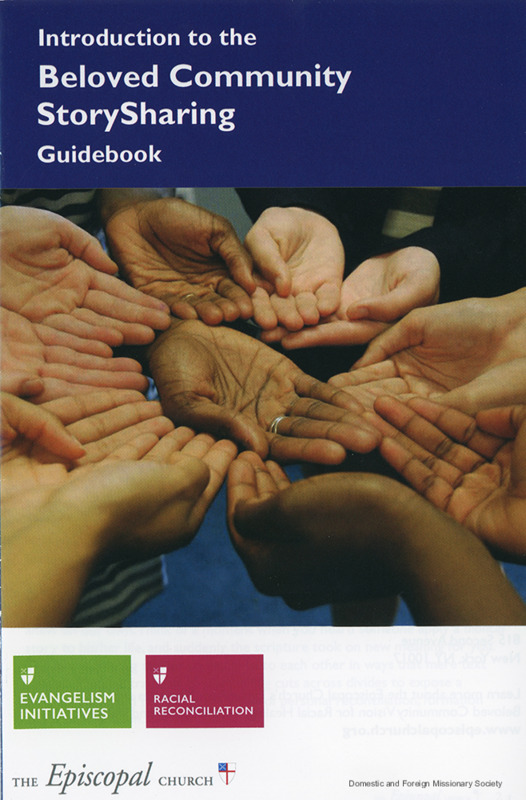
This guidebook seeks to help faith communities and individuals share and receive stories of faith, race, and difference in the context of a Christian life and in your interactions with the world, 2018.
While anti-racism and racial reconciliation work continued in the 21st century much as it had towards the end of the 20th century, The Episcopal Church changed its framing. From the 1970s to the early 2000s, General Convention’s resolutions gave the impression it conceived of anti-racism and racial reconciliation work as the work of a triennium or, at most, a decade. From the 1970s to the early 2000s, General Convention’s resolutions gave the impression of conceiving of anti-racism and racial reconciliation work as the work of a triennium, or at most, a decade. In 2015, Resolution 2015-C019 recognized that, despite church initiatives dating back to 1952, “the abomination and sin of racism continued to plague our society and our church at great cost to human life and human dignity.” It called on the church to make racial reconciliation integral to The Episcopal Church’s witness. At that same convention, the House of Bishops elected the Rt. Rev. Michael Curry the 27th Presiding Bishop of The Episcopal Church. Bishop Curry, the first Black Presiding Bishop, spoke of General Convention’s commitment as part of what he joyfully described as “The Jesus Movement” in his installation sermon preached at Washington National Cathedral on November 1, 2015. The Jesus Movement, in his words, was “People who have been turning the world upside-down, which is really turning it rightside-up,” and those who committed to The Jesus Movement committed “to evangelism and the work of reconciliation, beginning with racial reconciliation.” From Resolution 2015-C019 and The Jesus Movement grew the Beloved Community, a collective journey of truth-telling, proclamation, and formation that recognized the intersection of racial, environmental, and economic justice. From Resolution 2015-C019 and The Jesus Movement grew the Beloved Community, a collective journey of truth-telling, proclamation, formation, and justice that recognized the interplay of racial, environmental and economic justice. However, unlike previous efforts to address these challenges in church and society, with the Beloved Community path The Episcopal Church embraced the work of reconciliation as a spiritual practice that would be the work not of a triennium but of generations.