
American Church Institute
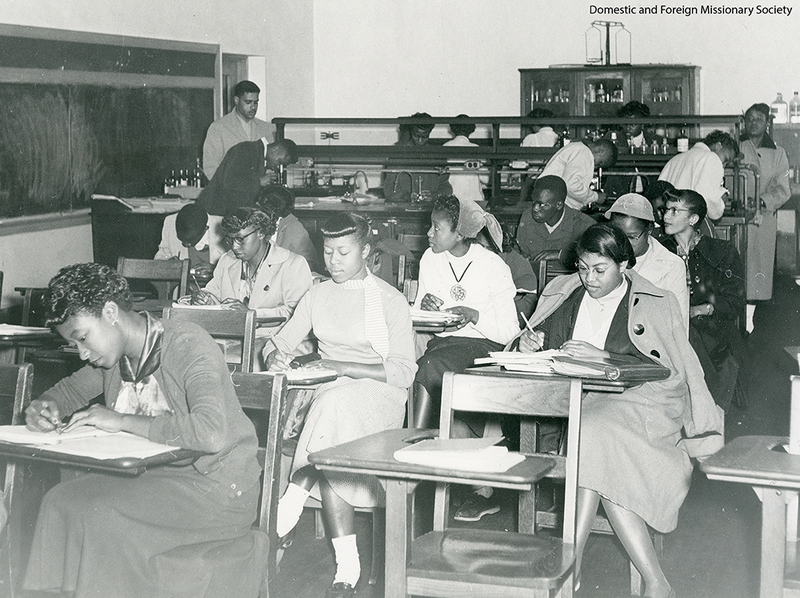
Chemistry lab at Voorhees College, Denmark, South Carolina, 1954. View the full gallery with images from the ACI schools.
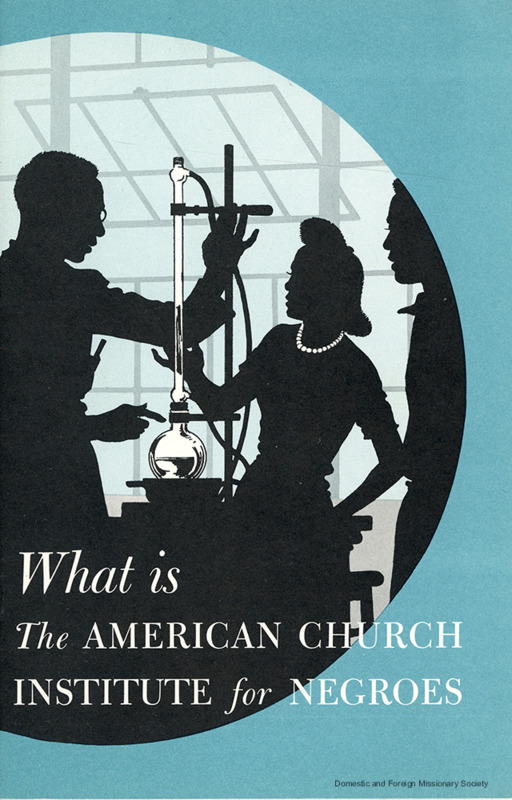
American Church Institute for Negroes pamphlet, c. 1950. Read the full pamphlet.
After the dissolution of Home Missions to Colored People in 1878, funds for educational programs were disbursed through the Board of Mission’s Commission on Work Among the Colored People, also known as “The Colored Commission.” As part of this role, largely with an eye towards economic efficiency, the Commission advocated for the strengthening and centralization of existing schools rather than the founding of new ones. Nevertheless, in 1904, General Convention discontinued the Commission and transferred its responsibilities to the various committees of the Board of Missions.
This commitment to decentralizing the church’s educational work among Black communities lasted only two years. Returning to the idea that evangelism through education would increase membership in the church, the American Church Institute for Negroes (ACIN) was incorporated in Virginia in 1906 to “strengthen the institutions maintained by the Church for the advancement” of Black Americans. At General Convention the following year, Rev. Samuel H. Bishop explained how this was done: schools were gathered under the common management of ACIN with the consent of their trustees and executives, though the day-to-day management of the schools would remain with the school leadership. “Through this coordination,” he said, “it is possible that a stronger presentation of the character and efficiency of the educational work can be made to the Church than if each institution makes its own appeal separately.”
The three schools ACIN selected to begin its program were those it viewed as model schools of their types: St. Augustine’s, Raleigh, NC, as a normal school, providing teacher training; St. Paul’s, Lawrenceville, VA, as an industrial school, providing trades training; and the Bishop Payne Divinity School as a seminary, providing theological training.
While the majority of ACIN’s involvement with the schools was concerned with funding improvements and overseeing general governance, the organization also experimented with topical programs adjusted for the anticipated social roles of the students. A report discussed work in agriculture “conceived in the distinguishing character of each school” according to the instruction of ACIN’s General Agent. At the Bishop Payne Divinity School, students attended lectures on the social and economic aspects of agriculture, with practical instruction in the home garden care. At St. Augustine’s and St. Paul’s, students received more specific instruction according to their discipline, although all learned basic nature-study and agriculture, the teaching candidates studied subjects such as botany and chemistry, whereas the industrial students learned more handicraft in agricultural application.
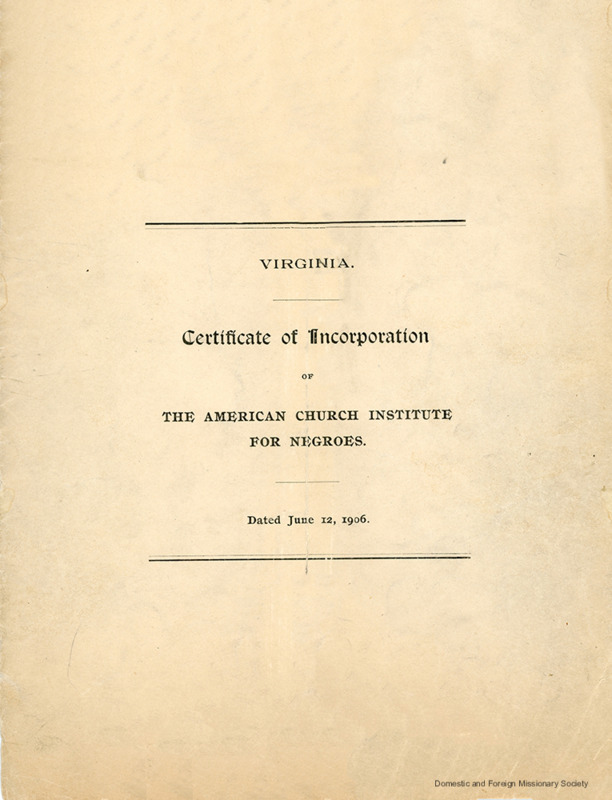
The American Church Institute for Negroes was incorporated in Virginia in 1906, shown in this Certificate of Incorporation.
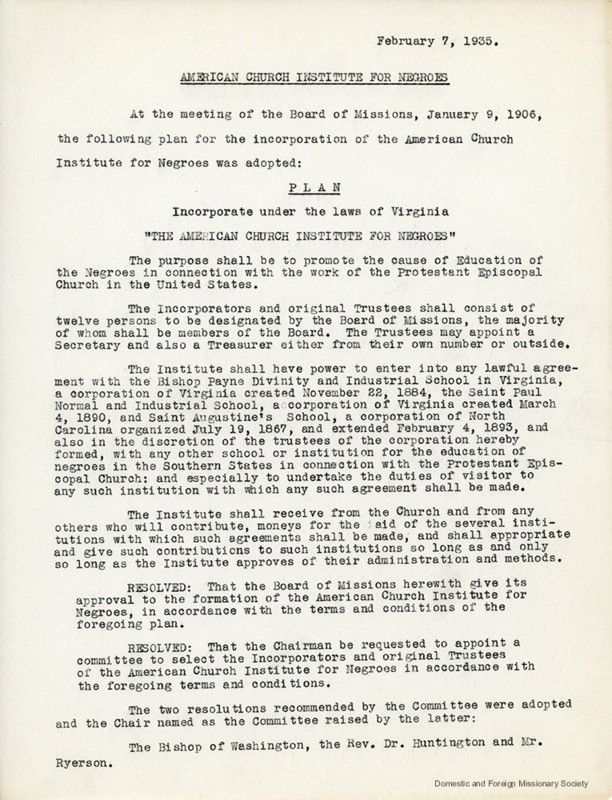
The Board of Missions established ACIN on January 9, 1908.