-
 churchawakens507
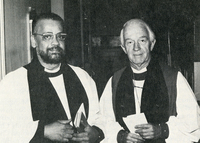
 The Rev. Joseph Pelham was installed as Executive Director of Episcopal City Mission by Bishop John B. Coburn in November, 1982.
-
 churchawakens505
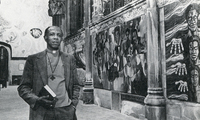
 Father Washington with the murals of the Church of the Advocate, painted by Philadelphia artists Walter Edmonds and Richard Watson, April, 1979. Courtesy of the Philadelphia Evening Bulletin, Urban Archives, Temple University Libraries.
-
 churchawakens504
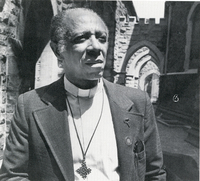
 Father Paul Washington in the courtyard of the Church of the Advocate, June, 1980.
-
 churchawakens503
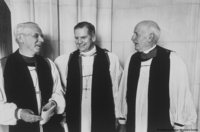
 Bishop Hines visits with former Presiding Bishops Lichtenberger and Henry Knox Sherrill before his installation, 1965.
-
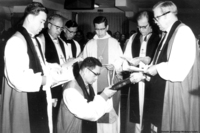 churchawakens502
 The Rt. Rev. John E. Hines presents a Bible to the Rt. Rev. James Te-Ming Pong at his consecration as Bishop of the Missionary Diocese of Taiwan on January 6, 1971.
-
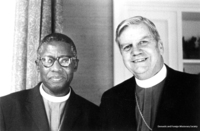 churchawakens501
 The Rt. Rev. John Hines (right), Presiding Bishop of the Episcopal Church, with the Rt. Rev. Alphaeus H. Zulu (left), Bishop of Zululand in South Africa, during his visit to the United States, 1971. Bishop Zulu, one of the six presidents of the World Council of Churches, said, "I can't accept the theory that blacks and whites can't live together. If I did, I would cease believing in God."
-
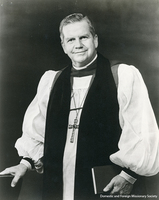 churchawakens500
 As Presiding Bishop of The Episcopal Church, the Rt. Rev. John Hines focused on social justice through the empowerment of community groups, undated.
-
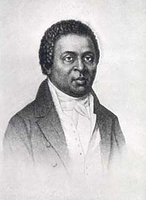 churchawakens499
 Reverend Peter Williams from The History of the Negro Church, by Carter Godwin Woodson, published in 1921. Print courtesy of UNC and "Documenting the American South" project.
-
 churchawakens498
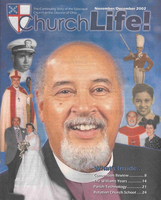
 Arthur Williams’ feature in the November/December 2002 edition of Church Life!, the official publication of the Diocese of Ohio.
-
 churchawakens497
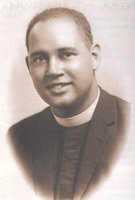
 Bishop Williams’ ordination portrait, 1965. Photo courtesy of the Diocese of Ohio.
-
 churchawakens496
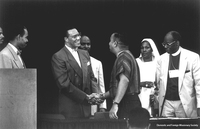
 Controversial Nation of Islam leader Louis Farrakhan is welcomed to the annual meeting of the Union of Black Episcopalians in Chicago by the Rev. Richard Tolliver. Joining them on the podium are the Rev. Darryl James of Chicago, UBE conference dean, and retired suffragan bishop of Chicago, the Rt. Rev. Quinton Primo.
-
 churchawakens494
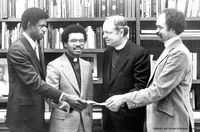
 "Save the Children Weekend" receipts were presented to Presiding Bishop John M. Allin of the Episcopal Church for the Presiding Bishop's Fund for World Relief for world hunger. Designated to purchase two irrigation pumps for drought victims in Niger through Africare. Shown above (left to right) are Vaughn Simkins, youth coordinator of St. Cyprian's; the Rev. Richard L. Tolliver, rector; Bishop Alin ; and Robert Thornell, chairman of the church's world hunger committee.
-
 churchawakens492
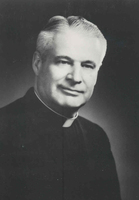
 Rev. Cornelius Tarplee , one of the founding members of the Episcopal Society for Cultural and Racial Unity (ESCRU), undated.
-
 churchawakens491
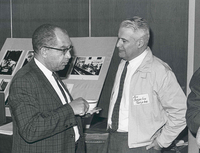
 Rev. Cornelius Tarplee devoted the majority of his career to integration in the United States and The Episcopal Church, undated.
-
 churchawakens490
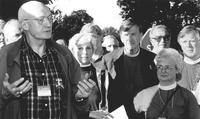
 Bishops of the Anglican Communion, including Primus Richard Holloway of the Episcopal Church of Scotland (left), Bishop Catherine Waynick (center left), Bishop Spong (center right) and Bishop Catharine Roskam (right), object to a Lambeth Conference resolution "rejecting homosexual practice as incompatible with scripture," 1998.
-
 churchawakens489
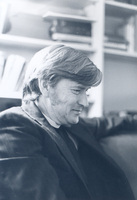
 Promotional photograph of the Right Reverend John Shelby Spong for his book entitled This Hebrew Lord , 1974.
-
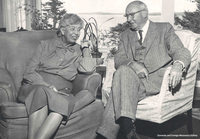 churchawakens487
 Bishop Scarlett with a fellow Episcopalian, Eleanor Roosevelt, at his retirement party in 1952.
-
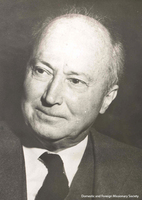 churchawakens486
 The Rt. Rev. William Scarlett committed to serving the impoverished and marginalized during his career, c. 1950.
-
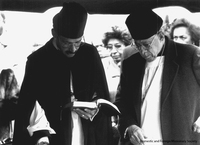 churchawakens481
 The Rev. Thomas Logan, Jr. (left), chaplain at St. Augustine's College, in Raleigh, North Carolina, and his father, the Rev. Dr. Thomas Logan (right), preside over a service, 1999.
-
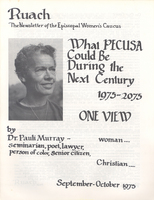 churchawakens485
 “What PECUSA Could be During the Next Century, 1975-2075,” an article written by Pauli Murray for the September/October 1975 issue of Ruach , the Newsletter of the Episcopal Women’s Caucus.
-
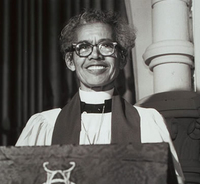 churchawakens484
 The Rev. Pauli Murray speaks in Washington, D. C., c. 1977. Photo courtesy of Potomac Commercial Photographers/Capitol Photo Service.
-
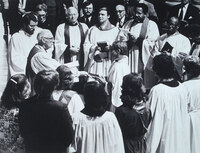 churchawakens483
 A priest hands a Bible to Pauli Murray during her ordination at Washington Cathedral, January 8, 1977. Photo courtesy of Schlesinger Library, Radcliffe Institute, Harvard University.
-
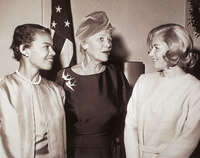 churchawakens482
 Pauli Murray (left) with Sophia Yarnall Jacobs and Rene Louise Price Carpenter at the National Council of Women Conference in 1962. Photo courtesy of Schlesinger Library, Radcliffe Institute, Harvard University.
-
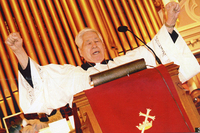 churchawakens172
 Rev. Thomas Logan celebrates his 95th birthday and decades of service to his Philadelphia Community at St. Thomas Episcopal Church, 2007. Image from "Applause for the Logan Legacy," The Philadelphia Tribune.
-
 churchawakens171
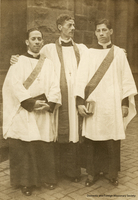
 Reverend John Logan stands with his sons, John Logan, Jr. (left) and Thomas Logan (right), at the Church of the Holy Apostles for the younger Logans' ordiantion to the diaconate, 1938.
-
 churchawakens169
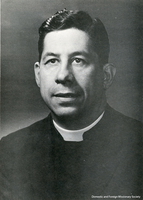
 Rev. Thomas S. Logan, undated.
-
 churchawakens480
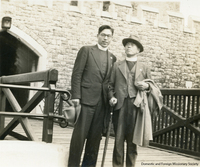
 Kitagawa traveled extensively during a long career dedicated to racial and social justice and ecumenism.
-
 churchawakens479
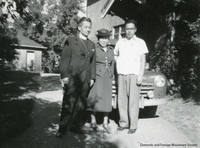
 Father Kitagawa with Dr. and Mrs. Kan, of Tokyo, in Minneapolis, 1949.
-
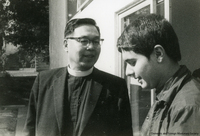 churchawakens478
 Father Kitagawa speaks with José Dori in Brazil, undated.
-
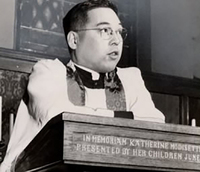 churchawakens475
 The Reverend Daisuke Kitagawa speaking at St. Mark’s Church, Minneapolis, c. 1949. Photo courtesy of Minnesota Public Library.
-
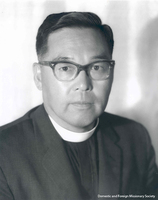 churchawakens472
 The Reverend Daisuke Kitagawa, c. 1962.
-
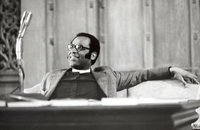 churchawakens471
 Rev. Canon Walter Dennis was active in social justice issues as Canon Residentiary at the Cathedral of St. John the Divine in New York, c. 1967.
-
 churchawakens470
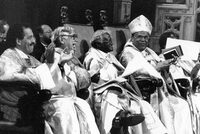
 Bishop Walter Dennis, far right, with colleague and friend, Archbishop Desmond Tutu, second to right, c. 1985.
-
 churchawakens469
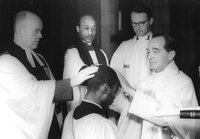
 Tollie Caution (center) looks on as Bishop Donegan ordains the young Walter Dennis, 1958.
-
 churchawakens468
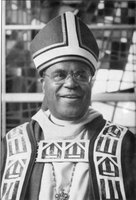
 The Right Reverend Walter Dennis shaped church law as a member, and later Chair, of the Standing Commission on Constitution and Canons, c. 1995.
-
 churchawakens377
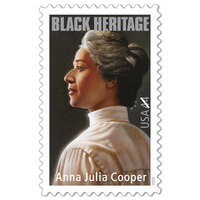
 Anna Julia Cooper is the 32nd person commemorated on a postage stamp in the U.S. Postal Service's "Black Heritage Series," June, 2009. Image courtesy of the United States Postal Service.
-
 churchawakens378
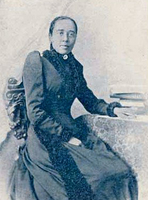
 Portrait Of Anna Julia Haywood Cooper, undated.
-
 churchawakens380
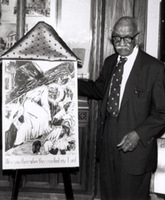
 Allan Crite exhibiting original drawings from his book Were You There When They Crucified My Lord, 2003. Photo courtesy of Washington National Cathedral.
-
 churchawakens467
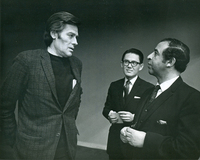
 William Johnson, President of Episcopal Churchmen for South Africa (ECSA), talks with Abdurrahim A. Farah (right), Chairman of the United Nations Special Committee Against Apartheid at the United Nations, 1971.
-
 churchawakens466
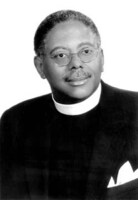
 The Reverend Canon Harold Lewis: advocate, educator, and author, c. 2000.
-
 churchawakens465
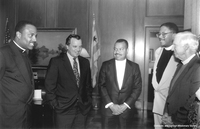
 The Rev. Canon Harold Lewis (second from right) and Presiding Bishop Edmond Browning (right) visit with Chicago Mayor Richard Daley (left center) and two local clergy, the Rev. Martini Shaw (left) and the Rev. Richard Tolliver (center), 1992.
-
 churchawakens464
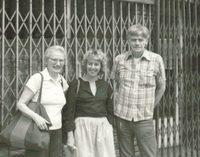
 Johnston in New York with Betsy Landis, Vice-President of the American Committee on Africa, and Namibian reporter Gwen Lister, c. 1984.
-
 churchawakens462
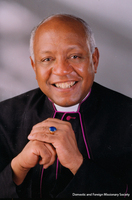
 The Reverend Canon Frederick Boyd Williams strongly advocated for civil rights and social justice in the United States and abroad, 1998.
-
 churchawakens461
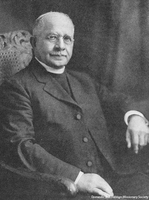
 Byron Rushing served for over thirty years in the Massachusetts Legislature, advancing the cause of civil rights, undated. Photo courtesy of Harvard University.
-
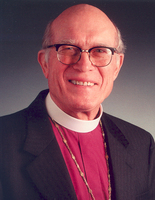 churchawakens460
 The Rt. Rev. Duncan Montgomery Gray, Jr. followed in his father's footsteps by also serving as the Bishop of Mississippi, undated.
-
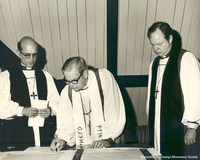 churchawakens459
 The Reverend Duncan Montgomery Gray, Jr. (left), Presiding Bishop John Hines (center), and Bishop of Mississippi John Allin (right) at Gray's consecration as bishop coadjutor, 1974.
-
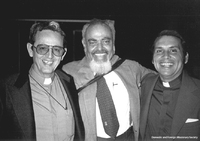 churchawakens458
 Dr. Charles Lawrence, President of the House of Deputies, is greeted by the Rt. Rev. Emilio Hernandez (left), the Bishop of Cuba, and the Rev. Juan Ramon Lopez (right), vicar-general, during his visit to Havana with a Church World Service delegation, 1983.
-
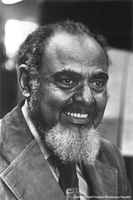 churchawakens457
 Dr. Charles Lawrence was the first Black deputy elected to President of the House of Deputies and only the third lay delegate, 1976.
-
 churchawakens456
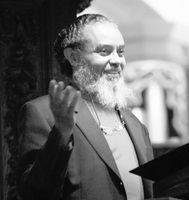
 Byron Rushing served for over thirty years in the Massachusetts Legislature, advancing the cause of civil rights, undated. Photo courtesy of Harvard University.
-
 churchawakens455
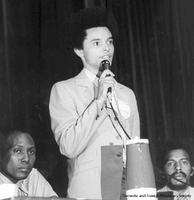
 Byron Rushing (center) with Leon Page (left), spokesperson for the United Front, and an unidentified man (right) at the 63rd General Convention in Houston, Texas, 1970.
-
 churchawakens454
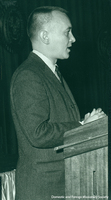
 William Stringfellow speaks at the third annual meeting of ESCRU, December 8, 1963.
-
 churchawakens452
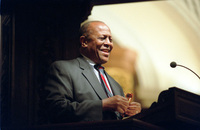
 Charles V. Willie remembers Martin Luther King, Jr. during a special service at the Memorial Church at Harvard University, 2002.
-
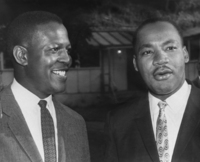 churchawakens451
 Charles V. Willie (left) prepares to introduce Martin Luther King Jr. at a rally at Syracuse University in the 1960s. The two men first met when both were teen-age students at Morehouse College.
-
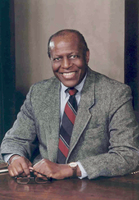 churchawakens450
 Charles V. Willie, sociologist and Charles William Eliot Professor of Education, Emeritus, Harvard University, undated.
-
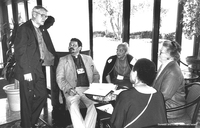 churchawakens449
 Byron Rushing served for over thirty years in the Massachusetts Legislature, advancing the cause of civil rights, undated. Photo courtesy of Harvard University.
-
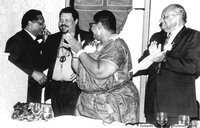 churchawakens448
 The Rev. Canon Edward Rodman (center) is honored by the Union of Black Episcopalians at its annual conference in Cincinnati, 1987. Making the presentation are the Rev. Franklin Turner, assistant to the Bishop of Pennsylvania (left), Dr. Deborah H. Hines, president of UBE (right), and Dr. Earl H. McClenney, UBE treasurer.
-
 churchawakens447
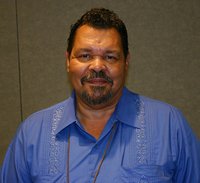
 The Rev. Edward Rodman at the 75th General Convention in Columbus, Ohio in 2006.
-
 churchawakens170
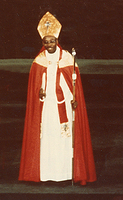
 Bishop Primo's consecrated at the Cathedral of St. James in 1972.
-
 churchawakens105
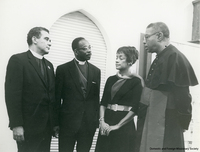
 Bishop Primo talks with Henry Stines and others, undated.
-
 churchawakens446
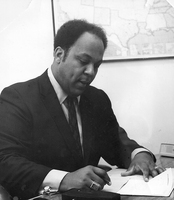
 Robert Powell at work with the National Council of Churches, c. 1979. Photo courtesy of the National Council of Churches.
-
 churchawakens445
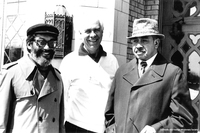
 Rev. Earl Neil with Rev. Martin R. Tilson (center) and Woodrow Carter (right), staff officer for Social Welfare at the Episcopal Church Center, at a national mission conference in 1979.
-
 churchawakens444
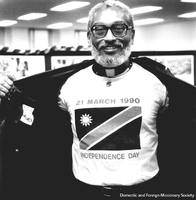
 The Rev. Earl Neil celebrates the independence of Nambia in 1990, a period during which he served as Executive for Advocacy, Witness, and Justice at the Episcopal Church Center, 1990.
-
 churchawakens443
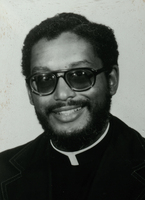
 Rev. Earl Neil spent nearly twenty years working for social justice as a member of the Executive Council of The Episcopal Church, undated.
-
 churchawakens442
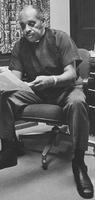
 Rev. Henry L. Parker, at Berea College in Kentucky, where he served as chaplain for over ten years, c. 1980
-
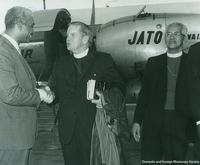 churchawakens441
 Cyril E. King, Virgin Island Government Secretary (left), and the Rt. Rev. Cedric Earl Mills (right) welcome Presiding Bishop Hines (center) to St. Thomas, Virgin Islands, c. 1970.
-
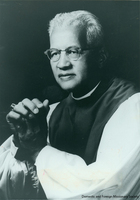 churchawakens440
 The Rt. Rev. Cedric Earl Mills was consecrated the first Bishop of the Virgin Islands in The Episcopal Church, c. 1964.
-
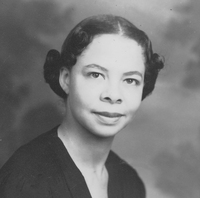 churchawakens439
 Fannie Pitt (Gross) Jeffery was a leader in religious education and dedicated to uplifting Black congregations, c. 1938.
-
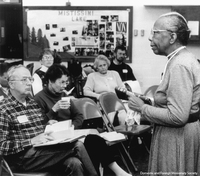 churchawakens437
 Verna Dozier leads a Bible study weekend at a parish in the Diocese of Massachusetts, 1992.
-
 churchawakens438
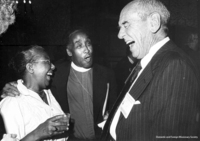
 Verna Dozier, Bishop John T. Walker, and Henry Rightor at the 66th General Convention in Denver, Colorado in 1979.
-
 churchawakens436
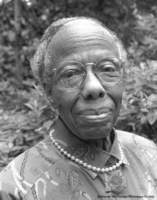
 Verna Dozier was an activist, author, and teacher, c. 1995.
-
 churchawakens435
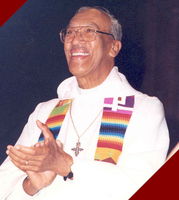
 The Rev. Solomon Napoleon Jacobs was an active member of the Civil Rights Movement in Mississippi and Georgia, c. 2001.
-
 churchawakens428
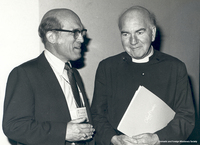
 Bishop Gray (left) and his mentor, Anglican theologian and Episcopal priest, Reverend Canon John Macquarrie, 1983.
-
 churchawakens434
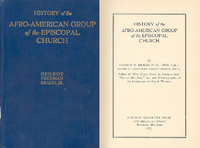
 History of the Afro-American Group of the Episcopal Church , George Bragg, 1922, Church Advocate Press, Baltimore, MD. View the full text of this volume at the University of North Carolina's "Documenting the American South" project.
-
 churchawakens433
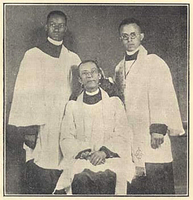
 The Reverend George Freeman Bragg and two of his "ministerial sons," 1922.
-
 churchawakens432
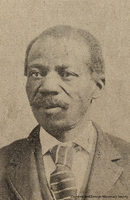
 Rev. George F. Bragg, 1908.
-
 churchawakens431
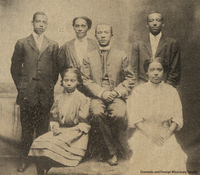
 The Church Advocate newspaper published in February of 1908, featured the Bragg family.
-
 churchawakens009
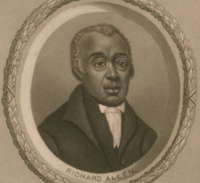
 Portrait of Richard Allen taken from a lithograph entitled "Bishops of the A.M.E. Church", c. 1876. Courtesy of the Library of Congress, Prints and Photographs Division.
-
 churchawakens427
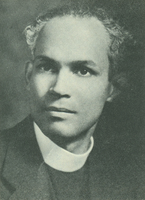
 The Rev. Kenneth de Poullain Hughes, one of the founders of the Union of Black Episcopalians, undated.
-
 churchawakens426
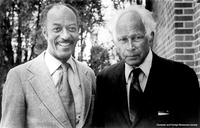
 The Rev. Kenneth de Poullain Hughes, keynote speaker for the Conference on Minority Recruitment and Equal Opportunity Employment, with Mr. William Rucker (right), conference Chairman, 1977.
-
 churchawakens425
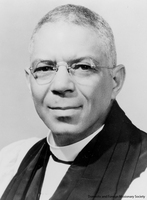
 Bravid Washington Harris was the first Black American consecrated Bishop of Liberia, undated.
-
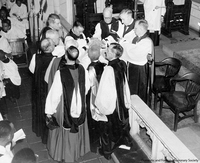 churchawakens424
 Consecration of Bravid W. Harris as the eighth Missionary Bishop of Liberia, April 17, 1945 in Norfolk, Virginia.
-
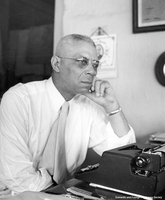 churchawakens423
 As Bishop of Liberia, Harris led one of The Episcopal Church's oldest missionary districts, 1951.
-
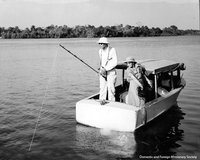 churchawakens422
 Bravid and Flossie Mae Harris fishing on the St. Paul River near Monrovia, Liberia, 1951.
-
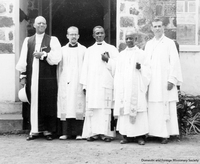 churchawakens421
 The clergy of Liberia, 1950 (left to right): The Right Rev. Washington Harris, Mr. Miller, The Rev. J.D.K. Baker of Monrovia, The Rev. J. G. Coleman (retired clergy from Robertsport), and The Rev. Edgar Robertson.
-
 churchawakens420
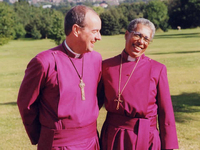
 Bishop Harris with Bishop M. Thomas Shaw, Bishop of Massachussetts, at Lambeth, 1998. Photo courtesy of James Solheim/Diocese of Massachusetts.
-
 churchawakens419
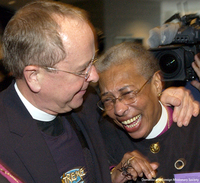
 Bishop Barbara Harris, retired Suffragan Bishop of Massachusetts, greeting Gene Robinson before his consecration service, November 2, 2003.
-
 churchawakens418
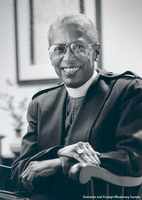
 The Right Reverend Barbara C. Harris was consecrated as the first female bishop in The Episcopal Church, 1999.
-
 churchawakens417
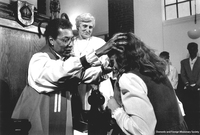
 Bishop Harris confirms a member of the Church of St. Stephen in downtown Boston during her first year as suffragan bishop of the Diocese of Massachusetts, 1989.
-
 churchawakens416
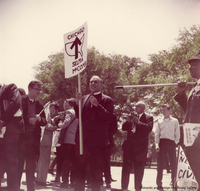
 Malcolm Boyd (holding sign) at the ESCRU demonstration in Chicago, Illinois, 1965.
-
 churchawakens028
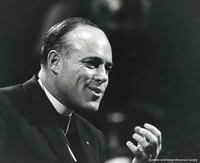
 Malcom Boyd, undated.
-
 churchawakens104
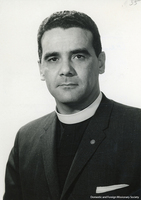
 The Rev. Henri A. Stines worked in the South during the Civil Rights Movement as ESCRU's Director of Southern Field Service , c. 1962.
-
 churchawakens415
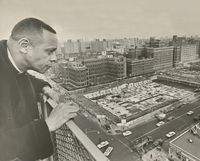
 M. Moran Weston overlooking Harlem. Photo courtesy of the Reverend M. Moran Weston Papers, Rare Book and Manuscript Library, Columbia University.
-
 churchawakens102
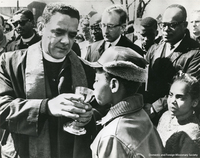
 Henri Stines, offers communion to a boy in Selma, Alabama, undated.
-
 churchawakens102
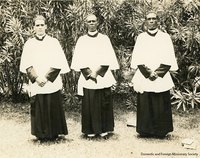
 Henri Stines ordination in Haiti, 1945.
-
 churchawakens414
-
 churchawakens174
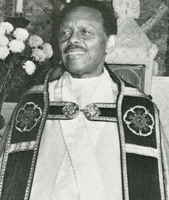
 The Rev. M. Moran Weston, Ph.D., sixth rector of St. Philip's Church, Philadelphia, PA.
-
 churchawakens413
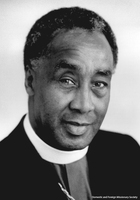
 Rt. Rev. John Walker focused on urban, ethnic, and ecumenical concerns as the sixth bishop of Washington and dean of Washington National Cathedral, c. 1989.
-
 churchawakens409
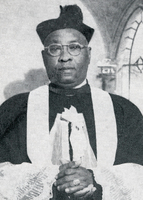
 Culmer was the priest and rector of St. Agnes', Miami, for 34 years, until his death in 1963.
-
 churchawakens407
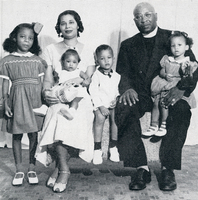
 The Reverend John E. Culmer and family, 1958.
-
 churchawakens406
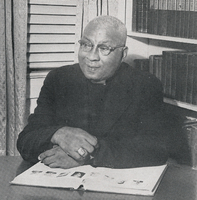
 The Reverend John E. Culmer was a popular writer and speaker as well as a civil rights activist, 1958.
-
 churchawakens405
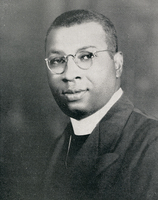
 The Reverend John E. Culmer served as priest and rector of St. Agnes' Church in Miami for 34 years, undated.
-
 churchawakens412
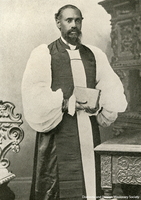
 The Right Reverend Samuel David Ferguson focused extensively on education as the first Black Bishop of Liberia, c. 1885.
-
 churchawakens410
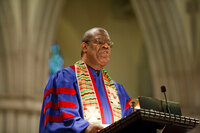
 The Rev. Dr. Kortright Davis preaching at the 14th annual Black Heritage Service at St. Paul’s, Bloor Street, Toronto, Feb. 22, 2009. Photo courtesy of Michael Hudson/The Anglican.
-
 churchawakens403
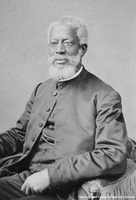
 The Reverend Alexander Crummell, abolitionist and founder of the Conference of Church Workers Among Colored People (CCWACP), 1877.
-
 churchawakens402
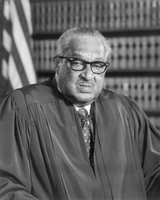
 The Honorable Thurgood Marshall won Brown v. Board of Education before the Supreme Court. He was appointed a justice thirteen years later, 1976.
-
 churchawakens175
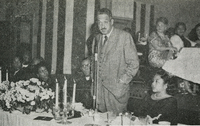
 Hon. Thurgood Marshall, future Supreme Court Justice, long-time St. Philip's member, addresses the Annual Parish Dinner audience in 1957.
-
 churchawakens401
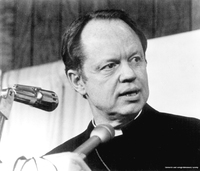
 Presiding Bishop-elect John Maury Allin at his first press conference, General Convention, 1973.
-
 churchawakens400
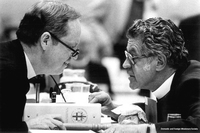
 Presiding Bishop John Allin (left) at the 1979 General Convention with Rt. Reverend Lloyd E. Gressle of Bethlehem.
-
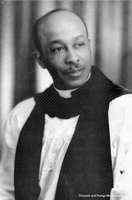 churchawakens399
 The Reverend Tollie L. Caution, educator and Civil Rights activist, c. 1965.
-
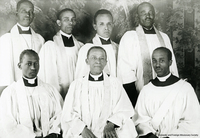 churchawakens398
 Black clergy at the ordination of the Reverend Tollie L. Caution, June, 1929. Front Row: Gustav H. Caution, Dr. George F. Bragg, Jr., Tollie L. Caution. Second Row: Edmund B. Trotman, David H. Croll, Cornelius R. Dawson and Arnold Hamilton Maloney, M.D.
-
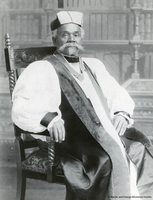 churchawakens397
 The Right Reverend James Theodore Holly of Haiti, the first Black bishop consecrated in The Episcopal Church, 1900.
-
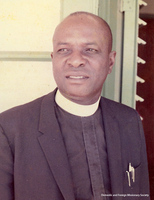 churchawakens396
 Rev. Canon Theodore Gibson was an active member of the Civil Rights Movement in Miami, Florida, undated.
-
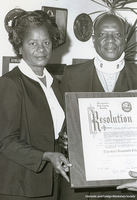 churchawakens395
 Theodore and Thelma Gibson receive a resolution from Miami-Dade County for their service to the community, c. 1981.
-
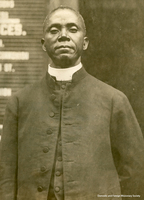 churchawakens394
 The Right Reverend Theophilus Momolu Fikah Gardiner, a priest and an educator, advocated for The Episcopal Church to honor Liberian culture in its Liberian diocese, 1921.
-
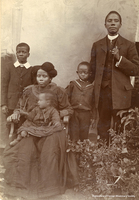 churchawakens392
 Gardiner family portrait, c. 1921.
-
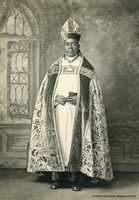 churchawakens391
 The Right Reverend Theophilus Momolu Fikah Gardiner was consecrated as the first native Suffragan Bishop of Liberia, c. 1921.
-
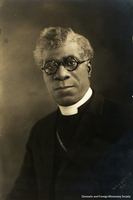 churchawakens137
 The Right Reverend E. T. Demby was consecrated the first Black Bishop Suffragan for Colored Work, serving the Diocese of Arkansas, undated.
-
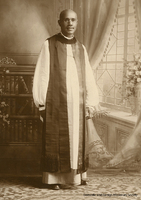 churchawakens141
 The Right Reverend Henry Beard Delany was consecrated the second Black Bishop Suffragan for Colored Work, serving the Diocese of North Carolina, c. 1920.
-
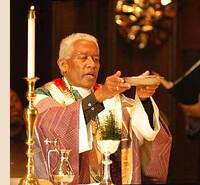 churchawakens390
 Rev. Casson celebrating the Eucharist at the Episcopal Church of St. Andrew and Matthew, 2005.
-
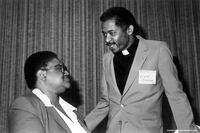 churchawakens389
 The Rev. Canon Lloyd Casson, president of the Episcopal Urban Caucus, and Dr. Deborah H. Hines, chairman of the Caucus energy task force, review the program before task force presentations at the second National Assembly of the Episcopal Church urban activist group, 1981
-
 churchawakens388
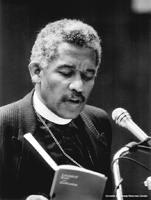
 Rev. Canon Lloyd Casson, chairman of the drafting committee of the Standing Liturgical Commission, presented progress report to the House of Bishops, on the process of developing inclusive language liturgies for church use, 1987.
-
 churchawakens387
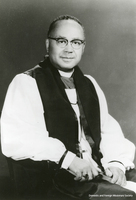
 The Right Reverend John Melville Burgess, c. 1970.
-
 churchawakens386
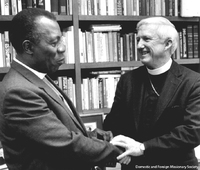
 The Most Rev. George Browne, Archbishop of West Africa and Bishop of Liberia, calls on the presiding bishop during a recent trip to the U.S. with other Liberian church leaders, 1990.
-
 churchawakens385
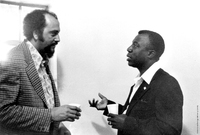
 The Rev. Douglass Bailey, rector of Calvary Episcopal Church, welcomes seminary mate Bishop George Browne of Liberia to Memphis's downtown parish.
-
 churchawakens384
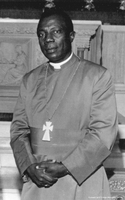
 Howard Quander (left) of the Committee on Human Development talks with Bishop George Daniel Browne of Liberia.
-
 churchawakens383
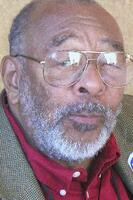
 R.P.M. Bowden, courtesy of Louie Crew Clay.
-
 churchawakens382
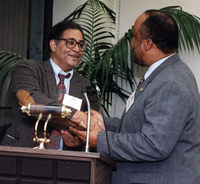
 The Reverend Harry Bowie with Rep. Bennie G. Thompson, a fellow Housing Assistance Council member and the Democratic chairman of the U.S. Homeland Security Committee. Photo courtesy of the Housing Assistance Council.
-
 churchawakens375
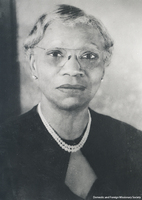
 Artemisia Bowden, educator and community activist.
-
 churchawakens374
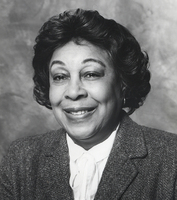
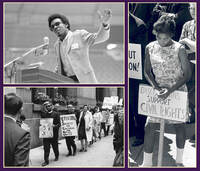
 Joyce Phillips Austin, attorney, public servant, and activist, balanced her long and often ground-breaking career with an extraordinary dedication to the work of the church, particularly in social welfare ministries in and around New York City.
-
 churchawakens336
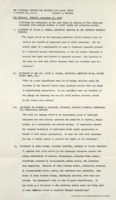
 Comments on the lawsuit (Pierson v. Ray) by civil rights activists, 1962.
-
 churchawakens335
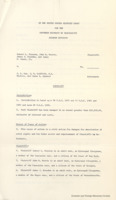
 The initial complaint filed in the Southern District of Mississippi in the case of Pierson v. Ray.
-
 churchawakens373
-
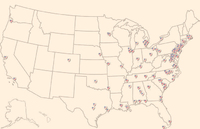 churchawakens372
-
 churchawakens371
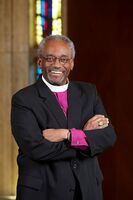
 Bishop Michael Curry, the first Black Presiding Bishop of The Episcopal Church.
-
 churchawakens338
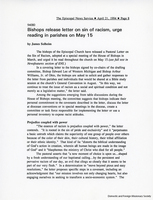
 Press release for the Pastoral Letter issued at the 1994 General Convention by the House of Bishops and addressed the sin of racism, 1994.
-
 churchawakens337
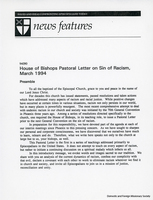
 The final version of the Pastoral Letter was issued at the 1994 General Convention by the House of Bishops and addressed the sin of racism, pinpointing the cause of racism as fear. The Bishops pledged to take steps to address the racism inherent within each of them and invited all Episcopalians to join them in this effort to confront and eradicate racism.
-
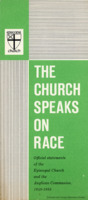 churchawakens333
 This booklet brings together key statements issued by the Episcopal Church on the subject of race and covers almost a quarter-century, 1940 to 1963.
-
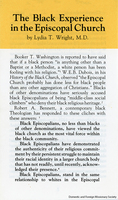 churchawakens332
 The Black Experience in the Episcopal Church, a Forward Movement Publication, written by Lydia T. Wright, 1986.
-
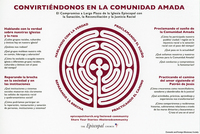 churchawakens331
 An informational flyer describing the vision of the Beloved Community, Spanish language version, 2018.
-
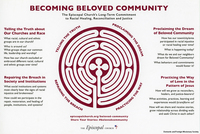 churchawakens330
 An informational flyer describing the vision of the Beloved Community, English language version, 2018.
-
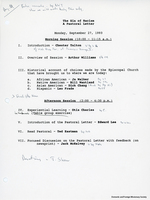 churchawakens329
 This is the daily agenda from the pastoral letter planning session at the House of Bishops meeting in Panama, 1993.
-
 churchawakens328
 Lectures and papers from a conference on reclaiming Black religious heritage as part of the Episcopal tradition, not a part from it, 1979.
-
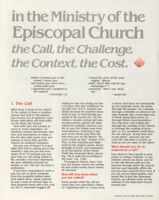 churchawakens327
 Black priests, including Barbara Harris and Michael Curry, describe their vocation in this informational brochure about ordained ministry, 1983.
-
 churchawakens326
 This booklet describes the mission, history and programs of the Black Ministries Office, 2012.
-
 churchawakens325
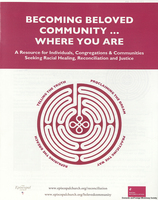
 This booklet describes the Beloved Community vision and offers readers core questions and strategies for racial truth-telling and reconciliation, 2018.
-
 churchawakens324
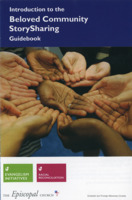
 This guidebook seeks to help faith communities and individuals share and receive stories of faith, race, and difference in the context of a Christian life and in your interactions with the world, 2018.
-
 churchawakens321
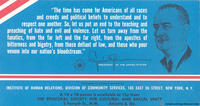
 Poster produced by ESCRU featuring President Lyndon B. Johnson’s position on racism, c. 1968.
-
 churchawakens320
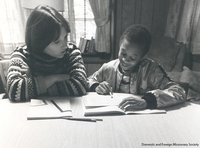
 A volunteer, Jane Bentley, of the Black Ministry Office’s Santa Fe Outreach Project assists Dwayne K. Jones, a 9th grade student at Lincoln Sr. High School, 1976.
-
 churchawakens319
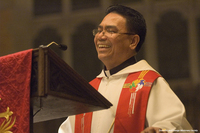
 The Rev. Dr. Winfred Vergara, Missioner for Asian American Ministries, preaches at a service for Hmong refugees, November 2005.
-
 churchawakens318
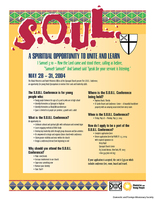
 Flyer from the S.O.U.L. Conference sponsored by the Black Ministries and Youth Ministries Offices of the Episcopal Church, 2004.
-
 churchawakens317
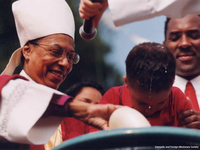
 Bishop Harris performs a baptism at St. John and St. James Church in Roxbury, Massachusetts, during the June 11, 2000 diocesan Pentecost Festival on Boston Common. Photo courtesy of Episcopal Times, Diocese of Massachusetts.
-
 churchawakens316
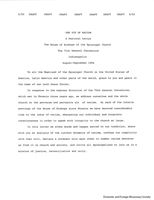
 Draft document of the House of Bishops’ pastoral letter on “The Sin of Racism,” introduced by the Bishop of Western Michigan at the September 1993 interim meeting of the House of Bishops.
-
 churchawakens315
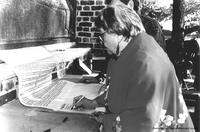
 Owanah Anderson, a Choctaw from Oklahoma and director of Native American Ministries, signs the New Jamestown Covenant, the church’s new covenant with Indigenous people, November 1997.
-
 churchawakens314
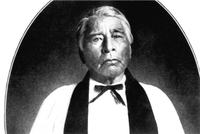
 Enmegahbowh (Ottawa), the first Indigenous person ordained in The Episcopal Church in 1859.
-
 churchawakens262
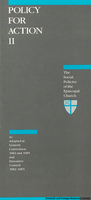
 Policy for Action II: The Social Policies of The Episcopal Church pamphlet, c. 1986.
-
 churchawakens212
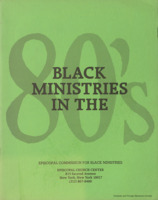
 Booklet that speaks to the agenda for Black Ministries in The Episcopal Church during the 1980s. Produced by the Episcopal Commission for Black Ministries, c. 1980s.
-
 churchawakens364
 An audio recording of highlights from the Special General Convention, 1969
-
churchawakens363
Excerpt from "The Saga of Selma," a March 1965 radio program produced by John Morris, Executive Director of ESCRU, documenting a confrontation in Selma, Alabama.
-
churchawakens362
"Eenie Meenie," a a public service radio announcement produced by the Executive Council of the Episcopal Church, turns the tables on a racist childhood chant.
-
churchawakens361
"Free, White and 21," a public service radio announcement produced by the Executive Council of the Episcopal Church, reminds listeners of the true meaning behind an often-repeated phrase.
-
churchawakens360
"Black and White," a public service radio announcement produced by the Executive Council of the Episcopal Church, explores the unspoken undertones of language.
-
churchawakens359
The Rev. Nathan Wright Jr. addresses the root cause of the "violence" in race riots, 1968.
-
churchawakens358
The Rev. Nathan Wright Jr. discusses the effect of unplanned urban growth and dislocation on urban black populations, 1968.
-
churchawakens357
Dr. Charles Willie, Professor of Sociology, explores the problem of growing urban diversity coupled with increasing neighborhood segregation, and discusses the interdependence of the races, 1969.
-
churchawakens356
Author Charles Wright contrasts the impossibility of coercion to sway hearts and minds with the possibility of necessary violence to effect positive change, 1963.
-
churchawakens355
Father Washington discusses the dehumanization experienced by the black community, and the importance and power of community organization, 1968.
-
churchawakens354
Drawing on his experience in baseball, Jackie Robinson explains his belief that there is no fundamental difference between the races that cannot be overcome by mutual respect and goodwill, 1964.
-
churchawakens353
Leon Modeste, the Director of the General Convention Special Program, maintains that integration is not a possibility in the near future, and discusses the GCSP's role and methods in improving the situation, 1968.
-
churchawakens352
Dr. C. Eric Lincoln, Professor of Sociology, offers his definition of racism as "a consensus which operates as a conspiracy," and considers the shortcomings and the possibilities of the role of the Church in ending discrimination.
-
churchawakens351
Father Kitagawa reflects on the ability of otherwise kind and rational people to be swayed by mob prejudices, connecting his own internment during World War II to the problem of racism in the 1960s, 1965.
-
churchawakens350
Dr. Martin Luther King Sr., minister and father of the assassinated Civil Rights leader, discusses his life in Christ and the importance of setting aside hate, 1970.
-
churchawakens349
Muhammed Kenyatta, vice-chairman of the Black Economic Development Conference, explains why he believes that the Black Manifesto cannot fail, and draws a distinction between religious conviction and political action, 1969.
-
churchawakens348
Senator Robert F. Kennedy reflects upon the disparity between America’s moral leadership in the world and the very real problems of inequity, poverty, and racism within America itself, 1968.
-
churchawakens347
Poet Langston Hughes reads two of his works, “The Feet of Jesus” and “My Lord,” and discusses the influence of spirituals on the rhythms of his poetry.
-
churchawakens346
Presiding Bishop Hines discusses the General Convention Special Program and the Church’s response to racial crisis, 1970.
-
churchawakens345
Bishop Hines considers the role and responsibilities of both clergy and lay ministry in the world, 1965.
-
churchawakens344
Bishop Hines predicts the issues that will be the focus of the 1967 General Convention in Seattle.
-
churchawakens343
Dr. James Cone, Professor of Theology and author of “Black Theology and Black Power”, explains the fundamental liberating message of “black theology” and the importance of an equality of power before reconciliation is possible.
-
churchawakens342
The Rev. Dr. John B. Coburn reflects upon his time in Harlem and on the resilience of the human spirit in even the worst environments, 1968.
-
churchawakens341
Musician James Brown talks about what it means to be “black and proud", 1969.
-
churchawakens340
The Rev. Malcolm Boyd discusses “the Establishment Church.”
-
churchawakens339
The Rev. Malcolm Boyd draws on his experiences as a university chaplain to explain youth culture and the challenges facing young people, and discusses the moral consequences of mass media, 1963.
-
 churchawakens334
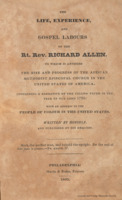
 The Life, Experience and Gospel Labors of the Rt. Rev. Richard Allen
-
 churchawakens277
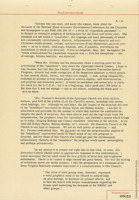
 Executive Council’s Response to the Black Manifesto, May 1969.
-
 churchawakens323
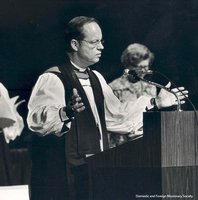
 Presiding Bishop John Allin speaking at the 1976 General Convention.
-
 churchawakens255
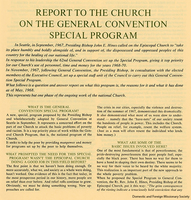
 Report produced by the Executive Council of the Episcopal Church updating Church members on the General Convention Special Program, 1968.
-
 churchawakens322
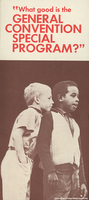
 “What Good is the GCSP?”, a brochure from the Executive Council about the Special Program.
-
 churchawakens302
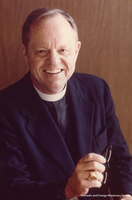
 Portrait of Presiding Bishop John Maury Allin, c. 1970s.
-
 churchawakens301
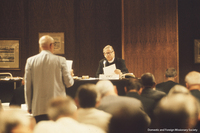
 Presiding Bishop John Hines speaks during a session in the House of Bishops during the 1970 General Convention.
-
 churchawakens300
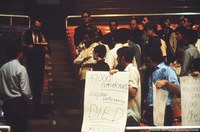
 Protesters in the observer's gallery hold signs regarding the number of deaths in the Vietnam War during the General Convention Special Program, 1969.
-
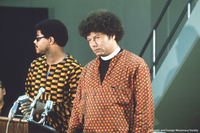 churchawakens299
 Muhammed Kenyatta, civil rights activist and organizer for the Student Nonviolent Coordinating Committee (SNCC), at left, and the Reverend James E. P. Woodruff at the Special General Convention, 1969.
-
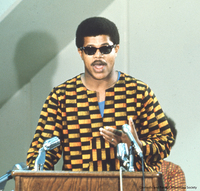 churchawakens298
 Civil rights activist Muhammed Kenyatta speaks at the General Convention Special Program, 1969.
-
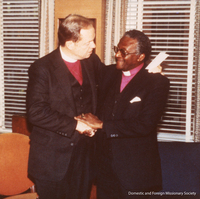 churchawakens297
 Presiding Bishop John Maury Allin with Anglican Archbishop Desmond Tutu in 1985.
-
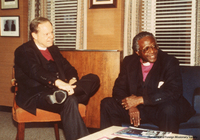 churchawakens296
 Presiding Bishop John Maury Allin embraces Anglican Archbishop Desmond Tutu in 1985.
-
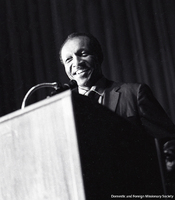 churchawakens295
 Leon Modeste speaking at the 63rd General Convention in Houston, Texas, 1970.
-
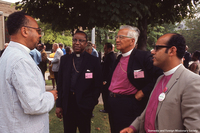 churchawakens294
 Bishops and clergy discuss the proceedings during a break at the 63rd General Convention in Houston, TX, 1970.
-
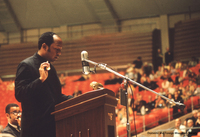 churchawakens293
 Rev. Frederick Williams speaks during the General Convention Special Program, 1969.
-
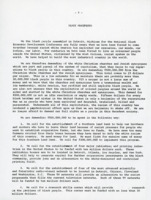 churchawakens292
 The Black Manifesto, the first major call for black reparations in the twentieth century, issued by the BEDC, April 26, 1969.
-
 churchawakens291
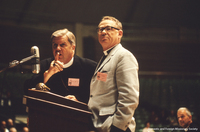
 Presiding Bishop John E. Hines speaking at the Special General Convention, 1969.
-
 churchawakens290
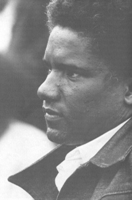
 James Forman, author of the "Black Manifesto" and spokesman for the Black Economic Development Conference, 1969.
-
 churchawakens289
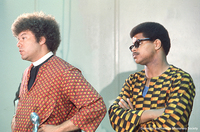
 Muhammed Kenyatta, at left, civil rights activist and organizer for the Student Nonviolent Coordinating Committee (SNCC), and the Reverend James E. P. Woodruff at the Special General Convention, 1969.
-
 churchawakens288
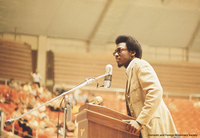
 Youth representative speaking at the Special General Convention, 1969. (color version)
-
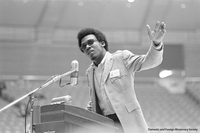 churchawakens287
 Youth representative speaking at the Special General Convention, 1969.
-
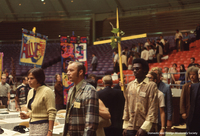 churchawakens286
 Youth representatives at the Special General Convention held in South Bend, Indiana from August 31 to September 5, 1969.
-
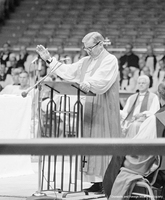 churchawakens285
 Presiding Bishop John E. Hines speaking at the Special General Convention, 1969.
-
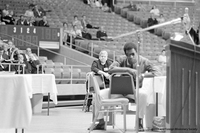 churchawakens284
 Presiding Bishop John Hines and youth representative at the Special General Convention, 1969.
-
 churchawakens283
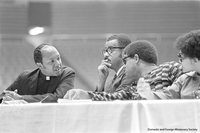
 Rev. Frederick Williams, Rev. Joseph Pelham, and Muhammed Kenyatta in conversation at the Special General Convention, 1969.
-
 churchawakens282
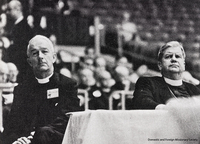
 President of the House of Deputies, Rev. John Coburn is seated with Presiding Bishop John Hines during the 1969 General Convention Special Program.
-
 churchawakens281
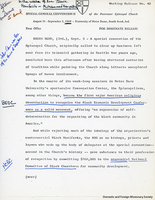
 Press Release entitled Special General Convention II, August 31-September 5, 1969.
-
 churchawakens280
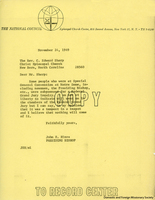
 Letter from Hines to Sharp regarding the General Convention Special Program subpoena for a Federal Grand Jury, November, 1969
-
 churchawakens279
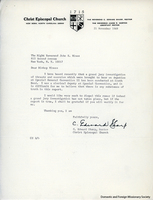
 Letter from Sharp to Hines regarding the General Convention Special Program subpoena for a Federal Grand Jury, November, 1969.
-
 churchawakens278
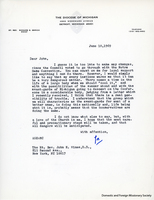
 Letter from Bishop Richard B. Enrich to John Hines regarding the Special General Convention, 1969.
-
 churchawakens276
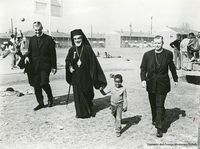
 Presiding Bishop Hines, on right, and Archbishop Iakavos touring Selma, Alabama in 1965.
-
 churchawakens275
 Archives Research Report on “The Question of Reparations to the African Americans,” 2005.
-
 churchawakens274
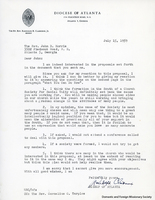
 Letter written to ESCRU Director John Morris from the Rt. Rev. Randolph R. Claiborne, Jr., Bishop of Atlanta, expressing his lack of support for ESCRU, July 1959.
-
 churchawakens239
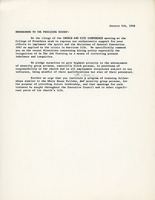
 Memo to the Presiding Bishop expressing support for the General Convention Special Program.
-
 churchawakens177
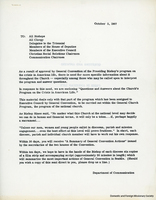
 Questions and Answers about the Church's Program on the Crisis in American Life produced by The Episcopal Church's Communication Department.
-
 churchawakens160
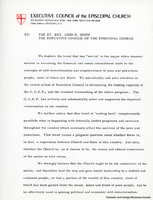
 Letter to Presiding Bishop Hines regarding budget cuts to GCSP.
-
 churchawakens111
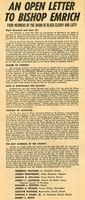
 An Open Letter to Bishop Emrich from member of the Union of Black Clergy and Laity, undated.
-
 churchawakens313
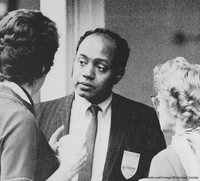
 Union of Black Clergy and Laity president Frederick Williams, speaks with individuals during the 1970 General Convention held in Houston, TX.
-
 churchawakens312
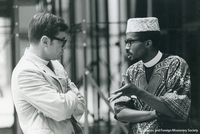
 Bishop of Guatemala, Rt. Rev. William Frey speaks with Rev. Orris G. Walker Jr., the Episcopal Associate from St. Mark's Eccumenical Parish in Kansas City, MO, during the 1969 General Convention Special Program.
-
 churchawakens311
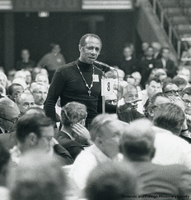
 Leon Modeste, Director of the General Convention Special Program, speaks on the floor during debate.
-
 churchawakens310
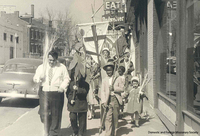
 A group from the integrated church of St. Stephen’s celebrating Palm Sunday in St. Louis, Missouri, 1957.
-
 churchawakens309
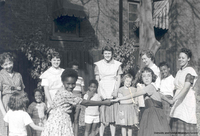
 Apprentices with children in Newark, New Jersey, at Youth Consultation Services, a member agency of the Episcopal Service for Youth, c. 1952.
-
 churchawakens308
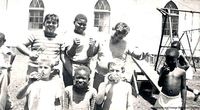
 An integrated group of children at St. Augustine’s Church Summer Camp in Galveston, Texas, 1947.
-
 churchawakens307
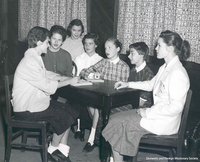
 An all-white study group at St. Mary’s Junior College in Raleigh, 1957.
-
 churchawakens306
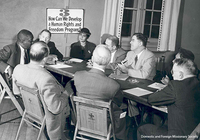
 The Ohio Department of Christian Social Relations, 1954.
-
 churchawakens305
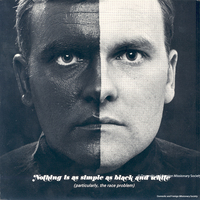
 Album cover for public service radio announcements on racism produced by the Executive Council of the Episcopal Church, 1969.
-
 churchawakens084
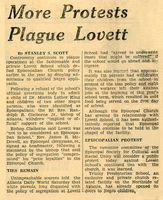
 An article from the Atlanta Daily World, reporting on the protests in response to the Lovett School's refusal to admit African American children.
-
 churchawakens304
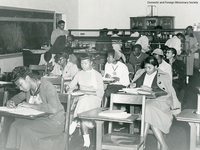
 Chemistry lab at Voorhees College, Denmark, South Carolina, 1954.
-
 churchawakens303
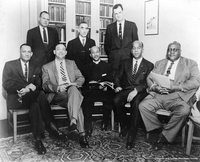
 The ACIN Board of Trustees, 1957. Seated left to right: Earl H. McClenney, Sr., St. Paul’s Polytechnic Institute; Jon F. Potts, Voorhees School & Junior College; Rev. Tollie Caution, ACIN Secretary; James A. Boyer, St. Augustine’s College; W. Milan Davis, Okolona College Standing left to right: Lindley M. Franklin Jr., ACIN Treasurer; JV Anderson, St. Augustine’s Business Manager; Rev. William G. Wright, Director of the Home Department and President of the ACIN Board of Trustees.
-
 churchawakens272
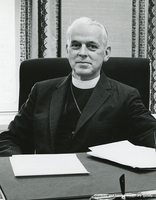
 Presiding Bishop Arthur Lichtenberger, c. 1960.
-
 churchawakens271
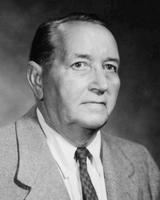
 Thomas Waring, ardent segregationist and critic of the civil rights movement, was awarded an honorary doctorate from Sewanee, April 1961. Photo courtesy of Sewanee Archives.
-
 churchawakens270
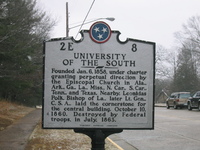
 A historic marker denoting the destruction of the central building at Sewanee, destroyed by Federal troops during the Civil War.
-
 churchawakens269
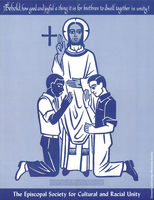
 A poster featuring the ESCRU logo.
-
 churchawakens268
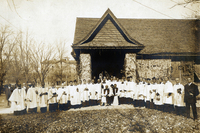
 The first two black bishops consecrated for the United States, the Right Reverend Henry B. Delany (seated left) and the Right Reverend Edward Thomas Demby (seated right), following Delany's consecration at St. Augustine's College, Raleigh, November 21, 1918. Photo courtesy of St. Augustine's College, Raleigh, North Carolina.
-
 churchawakens267
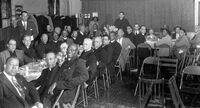
 Conference of Church Workers, early 1960s.
-
 churchawakens266
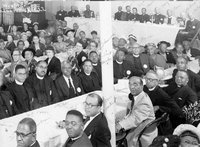
 National Conference of Church Workers, 1952.
-
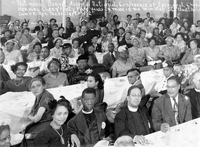 churchawakens265
 National Conference of Church Workers, 1952.
-
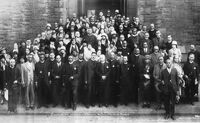 churchawakens264
 Conference of Church Workers, 1928.
-
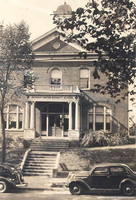 churchawakens263
 Bishop Payne Divinity School, c. 1930.
-
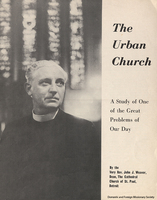 churchawakens261
 Written by the Very Rev. John J. Weaver, this leaflet describes the challenges of urban church work, 1960.
-
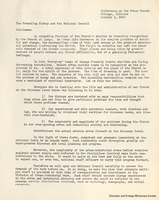 churchawakens260
 Letter addressed to the Presiding Bishop and the National Council from members of the Conference on the Urban Church, 1960.
-
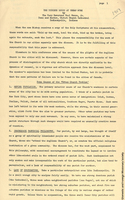 churchawakens259
 Statement by Bishop Paul Moore Jr., identifying challenges in urban church work, 1959.
-
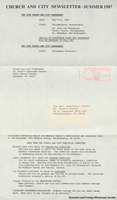 churchawakens258
 Church and City Conference Newsletter, 1987.
-
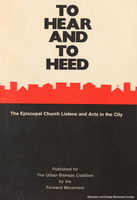 churchawakens257
 Book published by the Forward Movement for the Urban Bishops Coalition, 1978.
-
 churchawakens254
 An summary of an Episcopal opinion study conducted by the Department of Christian Social Relations from 1949-1951, c. 1953.
-
 churchawakens250
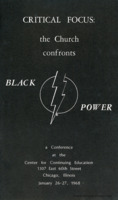
 Program from the church-sponsored conference “Critical Focus: The Church Confronts Black Power” held in Chicago, IL, January 26-27, 1968.
-
 churchawakens249
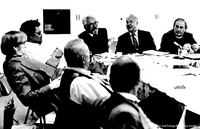
 Panel members meet following the Newark Urban Hearing, Francisco Reus-Froylan, Bishop of Puerto Rico; Malcolm Talbott, Newark; John S. Spong, Bishop Coadjutor of Newark; Edward Rodman, Hearings Coordinator; Hugh White, Project Director; John H. Burt, Bishop of Ohio; and George Rath, Bishop of Newark (clockwise from foreground).
-
 churchawakens248
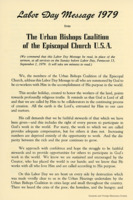
 Labor Day Message from The Urban Bishops Coalition, 1979.
-
 churchawakens247
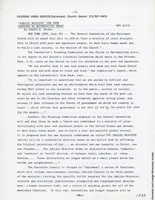
 Article from the Diocesan News Service “Jubilee Ministry for Poor Proposed by Metropolitan Group,” 1982.
-
 churchawakens246
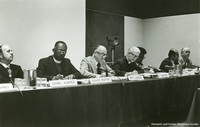
 A panel of bishops and lay persons heard testimony on the needs and concerns of the inner city during a public hearing in Chicago, IL. sponsored by the Urban Bishops Coalition of the Episcopal Church. Members of the panel are: The Rev. Daniel Alvarez of CASA Central, Chicago; Bishop Richard B. Martin, Executive for Ministries on the Episcopal Church Center staff, New York; Roy Larson, religion editor for the Chicago Sun-Times; Bishop John B. Coburn of Massachusetts, chairman; Ms. Mattie Hopkins, Chicago inner city school teacher; Bishop Jose Antonio Ramos of Costa Rica; and Peter Foote, officer for ecumenical affairs and the lay apostolate of the Roman Catholic Archdiocese of Chicago, 1977.
-
 churchawakens245
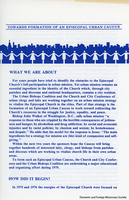
 Towards Formation of an Episcopal Urban Caucus, pamphlet.
-
 churchawakens243
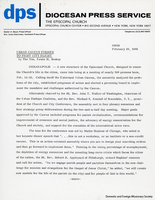
 "Urban Caucus Formed to Fight City Blight" Diocesan Press Service, 1980.
-
 churchawakens242
 Deliberative Document Report from the Urban Bishops Coalition, 1978.
-
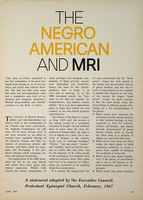 churchawakens241
 Article published in The Episcopalian regarding the church’s principle of “Mutual Responsibility and Interdependence”, adopted by Executive Council in February, 1967.
-
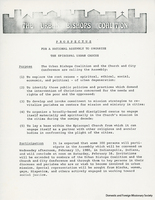 churchawakens240
 Prospectus for a National Assembly to Organize the Episcopal Urban Caucus, undated.
-
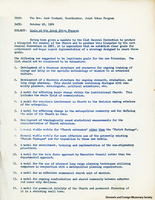 churchawakens238
 Goals of the Joint Urban Program as drafted by Coordinator Rev. Jack Woodard, October 26, 1964.
-
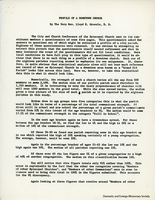 churchawakens237
 "Profile of a Downtown Church", by Bishop Lloyd E. Gessle presented at the Conference on the City and the Church, January 8, 1963.
-
 churchawakens236
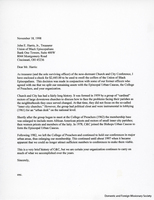
 Letter from F. Lee Richards to the Union of Black Episcopalians at the close of the Church and City Conference, November 18, 1998.
-
 churchawakens235
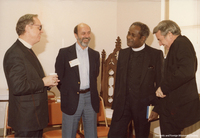
 Attendees at the Church and City Conference held in Atlanta, GA, 1983.
-
 churchawakens234
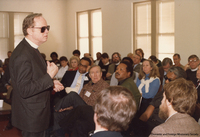
 Presiding Bishop Allin speaking to attendees at the Church and City Conference held in Atlanta, GA, 1983.
-
 churchawakens233
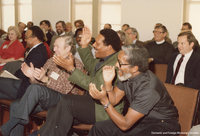
 Attendees at the Church and City Conference held in Atlanta, GA, 1983.
-
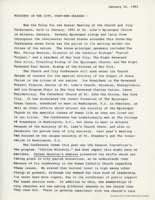 churchawakens232
 Ministry in the City, Post New-Orleans, 1983.
-
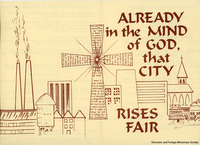 churchawakens231
 Service booklet from the 1986 Church and City Conference entitled “Articulating our Vision for Urban Work.”
-
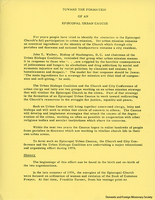 churchawakens230
 A pamphlet by the Urban Bishops Coalition, “Toward Formation of an Episcopal Urban Caucus,” 1979.
-
 churchawakens229
 "Renewal of Church in the City" by Bishop Wesley Frensdorff of the Diocese of Nevada, 1980.
-
 churchawakens228
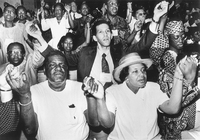
 Participants in the opening service at the 27th annual meeting of the Union of Black Episcopalians join hands during prayer, 1995.
-
 churchawakens227
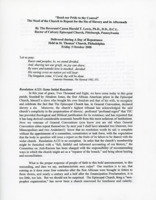
 "Bend Oue Pride to Thy Control," a sermon written by The Reverend Canon Harold T. Lewis and preached during a Day of Repentance in St. Thomas' Church, Philadelphia, 2008.
-
 churchawakens226
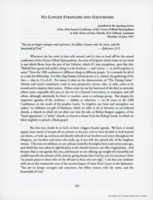
 "No Longer Strangers and Sojourners," a sermon written by The Reverend Canon Harold T. Lewis and preached at the opening service of the 23rd Annual Conference of the Union of Black Episcopalians, June 1991.
-
 churchawakens225
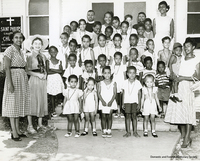
 An all-black bible school class in Dallas, 1950.
-
 churchawakens224
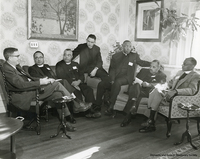
 Conference of College Workers, 1955.
-
 churchawakens223
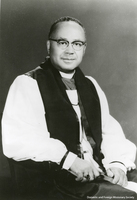
 In 1970, John Burgess became the first African American to be consecrated as an Episcopal bishop with jurisdiction over white congregants in the United States.
-
 churchawakens222
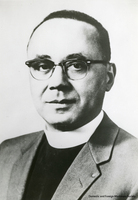
 Bishop John M. Burgess, c. 1967.
-
 churchawakens220
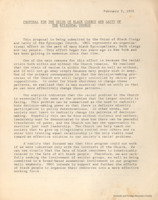
 Proposal submitted by the Union of Black Clergy and Laity calling for the redistribution of decision-making power in the church, 1970.
-
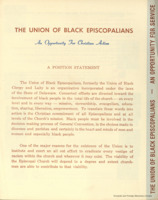 churchawakens219
 Leaflet produced by the Union of Black Episcopalians encouraging Black involvement in all aspects of the church , c. 1970s.
-
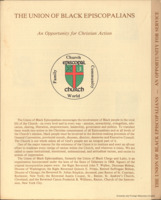 churchawakens218
 Leaflet produced by the Union of Black Episcopalians encouraging the involvment of Black people in the "total life of the Church," c. 1969-1975.
-
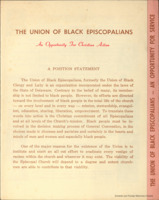 churchawakens217
 Leaflet produced by the Union of Black Episcopalians decrying the lack of parity of Black involvment in The Episcopal Church, c.1970s.
-
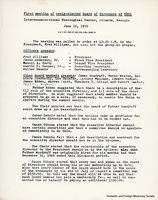 churchawakens165
 Minutes of Board of Directors of UBCL, 1970.
-
 churchawakens164
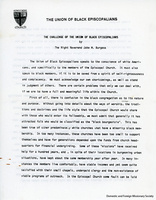
 “The Challenge of the Union of Black Episcopalians,” by Rt. Rev. John M. Burgess, undated.
-
 churchawakens162
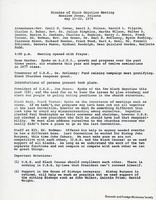
 Minutes of Black Deputies Meeting, ahead of 1976 General Convention.
-
 churchawakens161
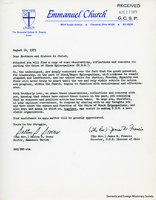
 Observations, Reflections and Concerns Regarding the Union of Black Episcopalians, 1973.
-
 churchawakens159
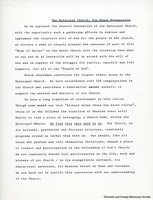
 A position paper drafted by Rev. Joseph Green for the 64th General Convention titled “The Episcopal Church: The Black Perspective,” 1973.
-
 churchawakens158
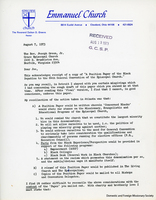
 Letter from Rev. Dalton Down to Rev. Joseph Green regarding a position paper Green drafted for the 64th General Convention, 1973.
-
 churchawakens157
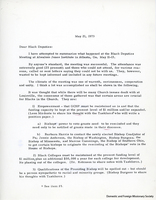
 Letter from Franklin Turner, Coordinator for the Committee of Concerned Black Episcopalians, to Black Deputies ahead of the 1973 General Convention.
-
 churchawakens113
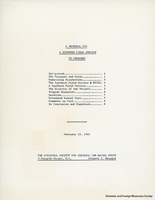
 A Proposal for a Southern Field Service to Churches, created by the Episcopal Society for Cultural and Racial Unity, 1963.
-
 churchawakens112
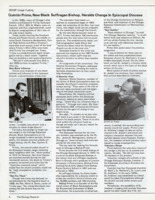
 A Chicago Reporter article on Bishop Quintin Primo. Bishop Primo was consecrated Suffragan Bishop of Chicago on September 30, 1972.
-
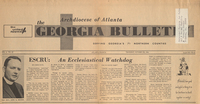 churchawakens256
 Article about ESCRU serving as a watchdog to the church, October, 1966.
-
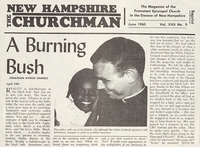 churchawakens199
 An article published in The New Hampshire Churchman written by Jonathan Daniels, June 1965.
-
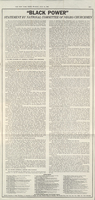 churchawakens198
 Statement by the National Committee of Negro Churchmen, published in the New York Times, July 31, 1966.
-
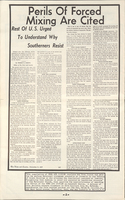 churchawakens136
 An article written by Thomas Waring espousing the dangers of integration as he saw them, 1957.
-
 churchawakens125
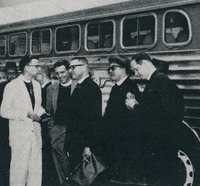
 Prayer Pilgrimage clergy gathered outside of their bus, 1961. Included among the 15 clergy arrested was Father Robert L. Pierson, the son-in-law of New York Governor Nelson Rockefeller.
-
 churchawakens124
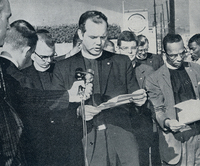
 The Reverend Robert Pierson reading a statement in front of the Jackson city jail following his release on bond. He is surrounded by 14 other Episcopal clergyman arrested along with him, September 19, 1961.
-
 churchawakens098
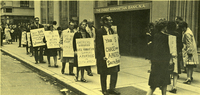
 A demonstration, sponsored by the Committee of Conscience Against Apartheid, held in front of Chase Manhattan Bank as part of the continuing campaign for withdrawal of accounts due to Chase’s direct financial support to the government of South Africa, 1966.
-
 churchawakens097
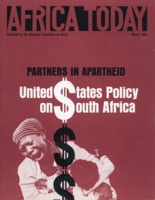
 A booklet published by the American Committee on Africa, one of the many organizations working to end apartheid in South Africa, March 1964.
-
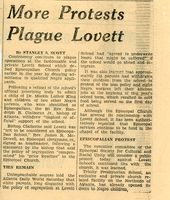 churchawakens084
 An article from the Atlanta Daily World, reporting on the protests in response to the Lovett School's refusal to admit African American children.
-
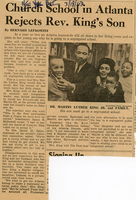 churchawakens083
 An article from the New York Post , March 18, 1963, reporting on the Lovett School's rejection of Martin Luther King, Jr.’s son.
-
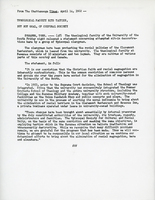 churchawakens080
 Sewanee Statement in Response to Sit-In, 1962.
-
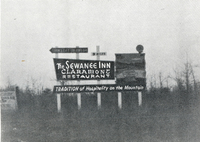 churchawakens079
 The Sewanee Inn and Claramont Restaurant. Ironically, the sign reads “Tradition of Hospitality on the Mountain."
-
 churchawakens078
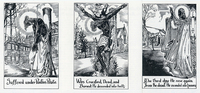
 Illustrations by African American artist and activist Allan Crite in response to discrimination he experienced while in Sewanee, c. 1952. The images were also used in ESCRU’s pamphlet on the 1961 Sewanee sit-ins.
-
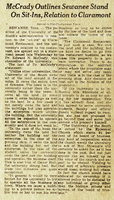 churchawakens076
 An article written by Sewanee Chancellor Dr. Edward N. McCrady outlining Sewanee's position on the sit-in at the Claramont Restaurant, 1962.
-
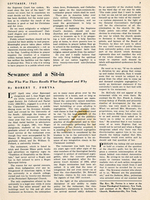 churchawakens075
 Article "Sewanee and a Sit-In" by Robert Fortna. Fortna was one of the clergy that attempted to dine at the Claramont Restaurant, 1962.
-
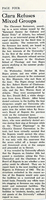 churchawakens074
 Article "Clara refuses mixed groups" from the Sewanee Purple Newspaper, Issue No. 163.
-
 churchawakens053
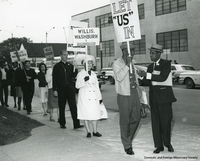
 ESCRU demonstration in Chicago, IL, 1965.
-
 churchawakens045
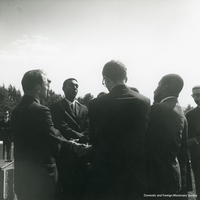
 A group gathers and, holding hands, prays near the gravesite. Stokely Carmichael is second from left, facing the camera, 1965.
-
 churchawakens017
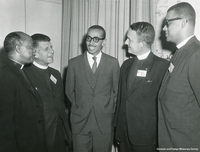
 ESCRU Third Annual Meeting held in Washington, D.C., 1963.
-
 churchawakens016
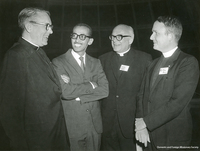
 ESCRU Third Annual Meeting held in Washington, D.C., 1963.
-
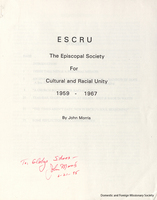 churchawakens200
 A history of The Episcopal Society for Cultural and Racial Unity, 1959-1967, written by Rev. John Morris, 1995.
-
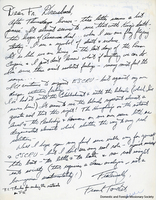 churchawakens180
 Francis Touchet letter to Father Dreisbeck.
-
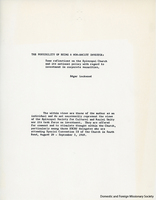 churchawakens179
 The Possibility of Bring a non-Racist Investor.
-
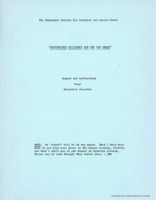 churchawakens178
 "Responsible Militancy and the Way Ahead" by Rev. John Morris.
-
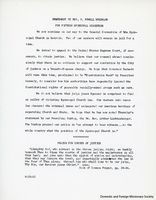 churchawakens135
 Statement by Rev. V. Powell Woodward after being released from jail in Jackson, Mississippi. Woodward was one of 15 clergy arrested, 1961.
-
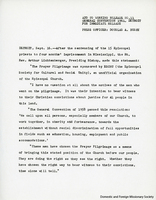 churchawakens134
 A statement released by Presiding Bishop Lichtenberger regarding the Prayer Pilgrimage, September 16, 1961.
-
 churchawakens133
 Two statements from the Prayer Pilgrimage to the 60th General Convention of the Episcopal Church, September 1961.
-
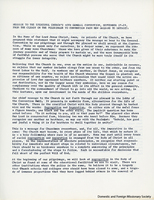 churchawakens132
 Message from ESCRU to the 1961 General Convention regarding the Prayer Pilgrimage, 1961.
-
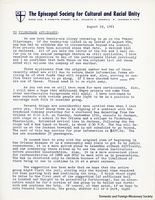 churchawakens130
 Letter prior to Prayer Pilgrimage planning protest.
-
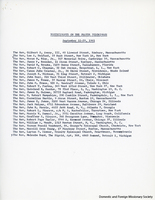 churchawakens129
 List of participantsin Prayer Pilgrimage.
-
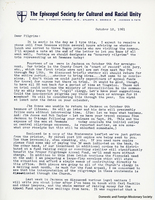 churchawakens128
 Letter to Pilgrim Priests after arrest.
-
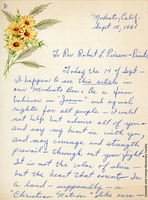 churchawakens127
 A letter expressing support for the prayer pilgrimage, September 15, 1961.
-
 churchawakens121
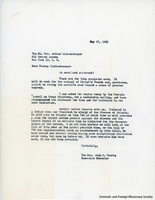
 Letter from Rev. John Morris to Presiding Bishop Lichtenberger applauding his statement on segregation, 1963.
-
 churchawakens120
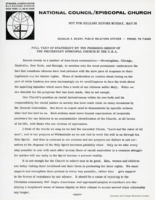
 Statement by Presiding Bishop Lichtenberger regarding segregation.
-
 churchawakens119
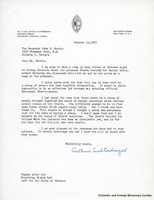
 Letter from Presiding Bishop Lichtenberger to Rev. John Morris regarding the establishment of ESCRU, 1959.
-
 churchawakens118
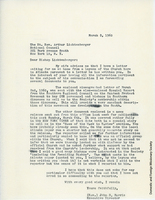
 Letter from Morris to Lichtenberger, 1960.
-
 churchawakens117
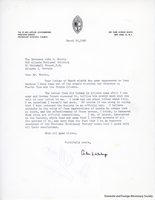
 Letter from Presiding Bishop Lichtenberger to Rev. John Morris regarding endorsement of ESCRU, 1960.
-
 churchawakens116
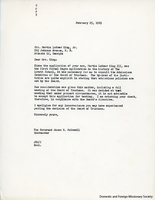
 Letter from the Lovett School to Mrs. Coretta King denying admission to her son, Martin Luther Kin, III, February 25, 1963.
-
 churchawakens115
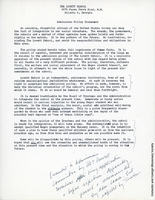
 The second version of the admission policy of Lovett School, 1963.
-
 churchawakens114
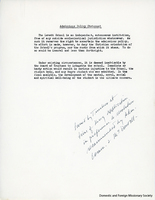
 Admission Policy of Lovett School, 1963.
-
 churchawakens110
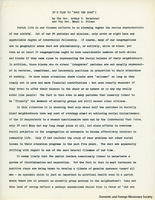
 It's Time to Rock the Boat, undated.
-
 churchawakens109
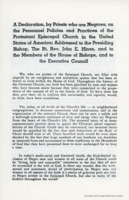
 Pamphlet entitled, "A Declaration, by Priests who are Negroes, on the Personnel Policies and Practives of the Protestant Episcopal Church in the United States of America,"which calls for equality in employment practices, c. 1960s.
-
 churchawakens108
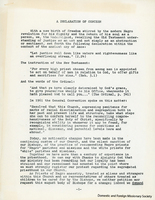
 A Declaration of Concern, undated.
-
 churchawakens103
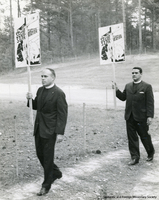
 ESCRU members, the Rev. Malcolm Boyd and the Rev. Henri A. Stines, picketing in front of Lovett School, 1963.
-
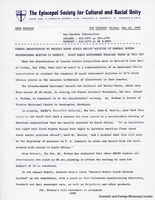 churchawakens100
 ESCRU Press Release regarding the General Motors Shareholder meeting, 1966.
-
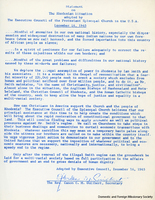 churchawakens099
 In 1966, Executive Council adopted a resolution on investments in South Africa, June 1966.
-
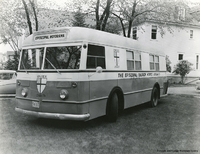 churchawakens096
 Episcopal Motorama, undated.
-
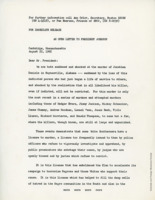 churchawakens095
 An open letter to President Lyndon Baines Johnson, signed by Civil Rights leaders, including ESCRU director Rev. John Morris, 1965.
-
 churchawakens094
 Statement from the Presiding Bishop regarding Jonathan Daniels murder and trial, 1965.
-
 churchawakens092
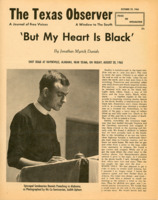
 Article written by Jonathan Daniels and published posthumously in The Texas Observer, October 29, 1965.
-
 churchawakens091
 Letter from Bishop of Atlanta to Morris restoring his license and reiterating that the work of desegragation should be done through and in cooperation with the Standing Committee.
-
 churchawakens090
 ESCRU Statement explaining "Why Protest" (specifically related to Lovett School).
-
 churchawakens089
 Statement from the Bishop of Atlanta regarding the Lovett School.
-
 churchawakens088
 ESCRU internal memo regarding Lovett School.
-
 churchawakens087
 ESCRU internal memo regarding Lovett School.
-
 churchawakens086
 Letter from John Morris to Rev. James McDowell, the headmaster at Lovett School, 1963.
-
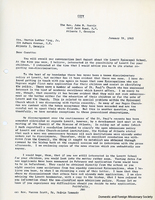 churchawakens085
 Letter from John Morris to Coretta King advising of the non-discrmination policy at Lovett School.
-
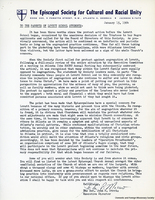 churchawakens082
 A letter from John Morris of ESCRU to the parents of Lovett School students, January 15, 1964.
-
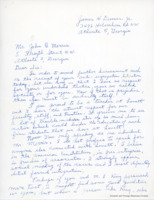 churchawakens081
 A letter from a teacher at the Lovett School objecting to ESCRU’s campaign against the school, 1964.
-
 churchawakens072
 James Breedman's response to the Watts riot in Los Angeles, CA, 1965.
-
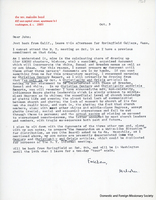 churchawakens071
 Letter from Malcolm Boyd to John Morris regarding Watts riot response, 1965.
-
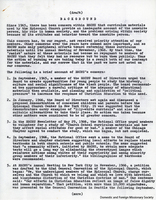 churchawakens070
 ESCRU Background Statement to the Lent Book Burning.
-
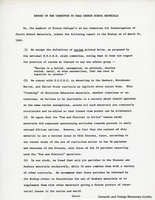 churchawakens069
 Report of the Committee to Read Church School Materials.
-
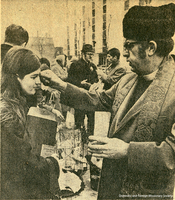 churchawakens068
 Rev. Joseph Dickson marks the forehead of a church member with ashes of burnt books in the yard of The Episcopal Cathedral of St. James.
-
 churchawakens067
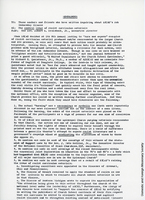
 ESCRU responds to objections regarding the Ash Wednesday Book Burning and explains its actions, 1969.
-
 churchawakens066
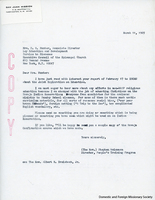
 Letter from Rev. Stephen Weissman, Director of People's Training Program, regarding Navajo training materials.
-
 churchawakens065
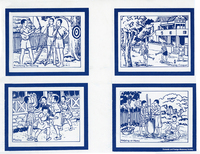
 ESCRU objected to the depiction of Africa and Africans in this pamphlet, calling it "patronizing" and "unreal."
-
 churchawakens064
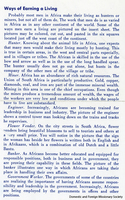
 ESCRU objected to the depiction of Africa and Africans in this pamphlet, calling it "patronizing" and "unreal."
-
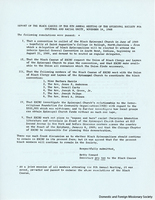 churchawakens063
 Report of the Black Caucus, 1968.
-
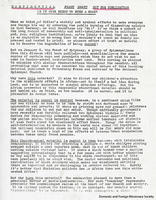 churchawakens062
 ESCRU press release asking and answering the question “Is it ever right to burn a book?”
-
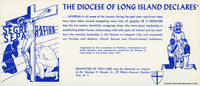 churchawakens061
 Card distributed in 1962 by the Long Island chapter of ESCRU to heighten awareness of St. John’s Hospital segregationist practice.
-
 churchawakens060
 ESCRU By-laws, c. 1960.
-
 churchawakens059
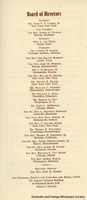
 ESCRU Statement of Purpose, outlining the tenets of the organization, c. 1960.
-
 churchawakens058
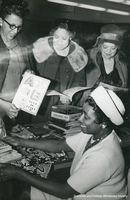
 ESCRU members and others from St. Thomas Parish, Minneapolis, MN, 1965.
-
 churchawakens057
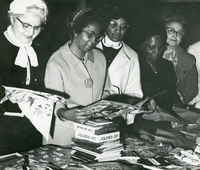
 ESCRU members and others from St. Thomas Parish, Minneapolis, MN, 1965.
-
 churchawakens056
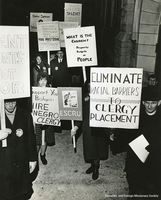
 A protest demanding the dissolution of racial barriers in the placement of clergy held in Minneapolis, MN, January 30, 1966.
-
 churchawakens055
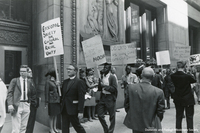
 Coordinating Council of Community Organization ESCRU Demonstration, Chicago, IL, c. 1965.
-
 churchawakens054
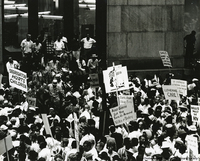
 An ESCRU organized demonstration at City Hall in Chicago, IL, c. 1965.
-
 churchawakens052
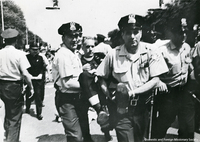
 Coordinating Council of Community Organization ESCRU Demonstration, Chicago, IL, c. 1965.
-
 churchawakens051
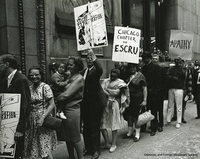
 Coordinating Council of Community Organization ESCRU Demonstration, Chicago, IL, c. 1965.
-
 churchawakens050
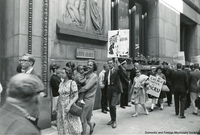
 Coordinating Council of Community Organization ESCRU Demonstration, Chicago, IL, c. 1965.
-
 churchawakens049
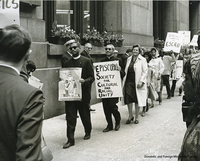
 Coordinating Council of Community Organization ESCRU Demonstration, Chicago, IL, c. 1965.
-
 churchawakens048
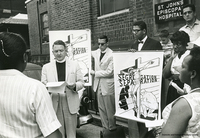
 John Morris and other ESCRU members protesting outside of St. John's Hospital, July 1962.
-
 churchawakens046
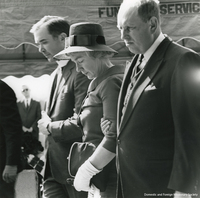
 Jonathan Daniels' family at his funeral; Jonathan's mother is in the center, 1965.
-
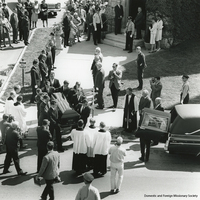 churchawakens044
 At Jonathan Daniels' funeral, more than a thousand mourners paid their respects, 1965.
-
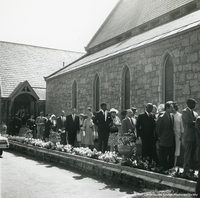 churchawakens043
 Mourners at Jonathan Daniel's funeral departing the church, 1965.
-
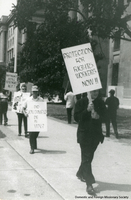 churchawakens042
 Protest and response to Jonathan Daniels' murder.
-
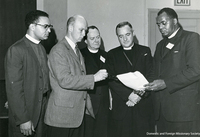 churchawakens041
 Five years after the "Prayer Pilgrimage" resulted in the arrest of 15 clergy, ESCRU held its 5th Annual Meeting in Jackson, MS, 1966.
-
 churchawakens040
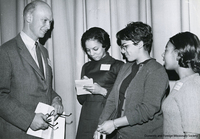
 Malcolm Peabody greets Chicago ESCRU members Marguerite White, 19; Dawn How, 16, and D. Murry, 17 (left to right) at the 5th Annual Meeting in held in Jackson, MS, 1966.
-
 churchawakens039
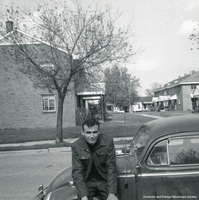
 Jonathan Daniels, undated.
-
 churchawakens038
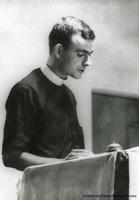
 Jonathan Daniels, undated.
-
 churchawakens037
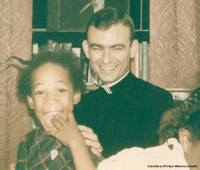
 Jonathan Daniels with members of the West family during his time in Selma, 1965.
-
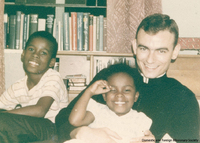 churchawakens036
 Jonathan Daniels was deeply moved by the hospitality he experienced when staying with the West family in Selma in 1965.
-
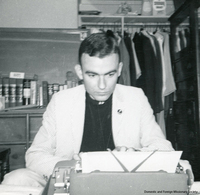 churchawakens035
 Jonathan Daniels, undated.
-
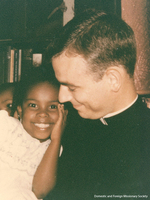 churchawakens034
 Jonathan Daniels, c. 1965.
-
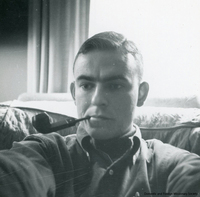 churchawakens033
 Jonathan Daniels, c. 1965.
-
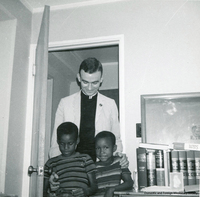 churchawakens032
 Jonathan Daniels, c. 1965.
-
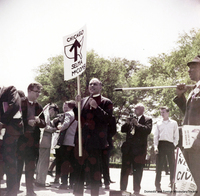 churchawakens031
 IL, Chicago. Coordinating Council of Community Organization ESCRU Demonstration
-
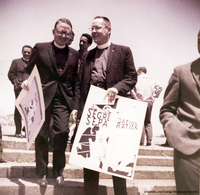 churchawakens030
 ESCRU protest in Chicago, IL, 1965.
-
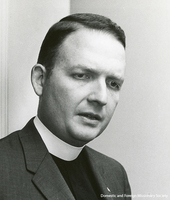 churchawakens027
 Rev. John Morris served as Executive Director of ESCRU from 1960-1967, c. 1960s.
-
 churchawakens026
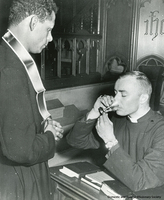
 Reverends Robert Hunter (left) and Albert Dreisbach (right) hold communion during their protest fast at St. Philip's Cathedral, June 1966.
-
 churchawakens025
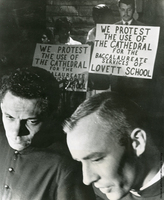
 Reverends Robert Hunter (left) and Albert Dreisbach (right) fast for 98 hours in St. Philip's Cathedral to protest its use for the Lovett School Baccalaureate service, June 1966.
-
 churchawakens024
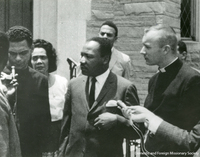
 Martin Luther King, Jr., accompanied by Mrs. Coretta Scott King and Andrew Young, speaks after his son was denied accepance to the Lovett School.
-
 churchawakens023
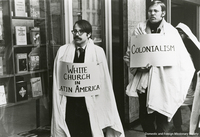
 ESCRU members protest colonialism and the church's presence in Latin America, 1967.
-
 churchawakens022
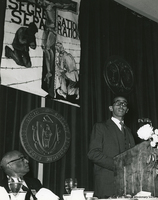
 ESCRU Third Annual Meeting held in Washington, D.C., 1963.
-
 churchawakens021
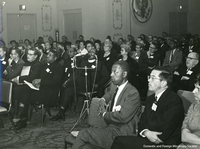
 ESCRU Third Annual Meeting held in Washington, D.C., 1963.
-
 churchawakens020
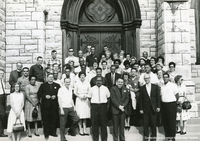
 ESCRU members gathered in front of a Cathedral in Chicago, Illinois, in 1962. John Morris is front row center.
-
 churchawakens019
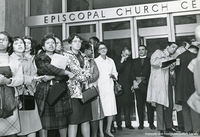
 ESCRU protesters holding hands in front of the Episcopal Church Center, 1966.
-
 churchawakens018
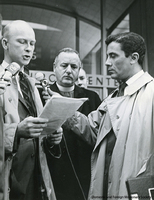
 Malcolm E. Peabody, Jr., ESCRU president, left, at a pray-in at Church Center reading a declaration assailing the Church's “heretical and blasphemous” race practices, November 1966.
-
 churchawakens015
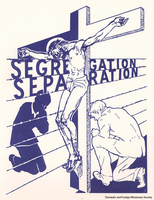
 Powerful imagery used by ESCRU, borrowed from the anti-apartheid movement.
-
 churchawakens014
 The Altar Cross used at The Episcopal Church's General Convention in St. Louis, MO., 1964. Designed by Mr. Robert Harmon of Arcadia, MO. The fish are ancient Christian symbols and on this cross also represent all of God's children, bound together by Jesus Christ.
-
 churchawakens013
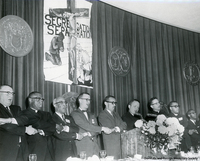
 ESCRU Third Annual Meeting held in Washington, D.C., 1963.
-
 churchawakens221
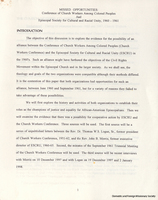
 Manuscript detailing the events occurring between the Conference of Church Workers Among Colored Peoples and the Episcopal Society for Cultural and Racial Unity, 1960-1961.
-
 churchawakens214
 A history of Black Ministry efforts in The Episcopal Church written by Tollie Caution, circa 1950s.
-
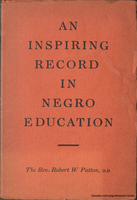 churchawakens213
 Report written by The Rev. Robert W. Patton entitled, "An Inspiring Record in Negro Education," that provides a summary ACIN's work and was delivered to the National Council in February, 1940.
-
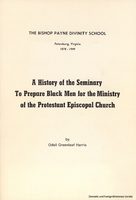 churchawakens211
 Written by Odell Greenleaf Harris in 1980, this book provides a history of The Bishop Payne Divinity School in Petersburg, Virginia.
-
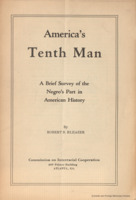 churchawakens210
 Pamphlet written by Robert Eleazer on behalf of the Commission on Interracial Cooperation, circa 1930s.
-
 churchawakens209
 Leaflet produced by the American Church Institute for Negroes, undated.
-
 churchawakens208
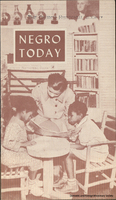
 Pamphlet published by The National Council that details the church's work among Black communities, circa 1950s.
-
 churchawakens207
 Pamphlet published by The American Church Institute for Negroes that details the work of the first six schools associated with the organization, circa 1910-1920s.
-
 churchawakens206
 Fundraising pamphlet for The American Church Institute for Negroes, circa 1920s-1930s.
-
 churchawakens205
 An account of the work of ACIN and its nine affiliated schools from June, 1940-December, 1942, c. 1943.
-
 churchawakens204
 Pamphlet produced by The American Church Institute for Negroes entitled, "An Opportunity in the Southland," that details the work of ACIN schools in the American South, 1927.
-
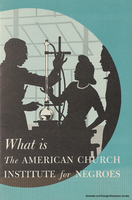 churchawakens203
 Informative pamphlet produced by The American Church Institute for Negroes about the organization, c. 1950s.
-
 churchawakens202
 Pamphlet produced by The American Church Institute for Negroes entitled, "Our Schools for Negroes," that provides a brief summary of the history, ideals, and work of the organization, undated.
-
 churchawakens197
 Report of the National Council, Division of Domestic Missions, entitled "The Church and the Negro," undated.
-
 churchawakens196
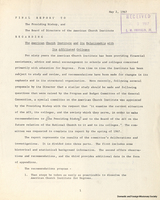
 Report to the Presiding Bishop and the Board of Directors of the American Church Institute, 1967.
-
 churchawakens195
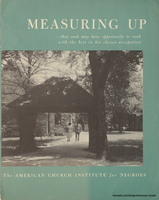
 American Church Institute for Negroes publication entitled, "Measuring Up," circa 1954.
-
 churchawakens194
 American Church Institute for Negroes publication entitled, "Acknowledgment of an Honest Debt: Negro Education," 1925.
-
 churchawakens193
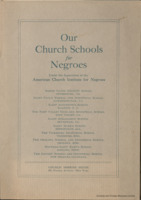
 American Church Institute for Negroes publication entitled, "Our Church Schools for Negroes," c. 1922.
-
 churchawakens192
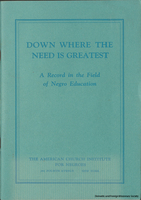
 American Church Institute for Negroes publication entitled, "Down Where the Need is Greatest: A Record in the Field of Negro Education," c. 1936.
-
 churchawakens191
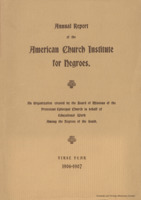
 Annual Report of the American Church Institute for Negroes, 1906-1907.
-
 churchawakens190
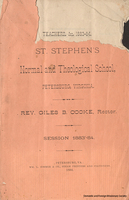
 St. Stephens Normal and Theological School Catalog, 1883-1884.
-
 churchawakens189
 Report, No. 12, of the Committee on Canons: On a Missionary Episcopate for the Colored People, undated.
-
 churchawakens187
 Minutes of Meeting of the Commission for Church Work among Colored People, 1894.
-
 churchawakens186
 Twelfth Annual Report of the Commission Home Missions to Colored People, 1876-1877.
-
 churchawakens185
 Eleventh Annual Report of the Commission Home Missions to Colored People, 1875-1876.
-
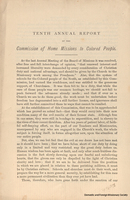 churchawakens184
 Tenth Annual Report of the Commission Home Missions to Colored People, 1874-1875.
-
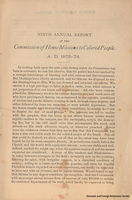 churchawakens183
 Ninth Annual Report of the Commission Home Missions to Colored People, 1873-1874.
-
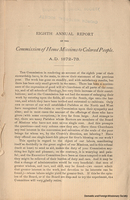 churchawakens182
 Eighth Annual Report of the Commission Home Missions to Colored People, 1872-1873.
-
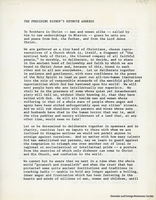 churchawakens176
 Presiding Bishop's Keynote Address
-
 churchawakens173
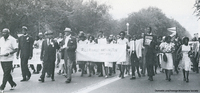
 Fr. C. Edward Harrison, Director of the Church School and devoted member of St. Philip's Church, leads the St. Philip's delegation during the March on Washington. (image from An Epic of the People of St. Philip's Church)
-
 churchawakens168
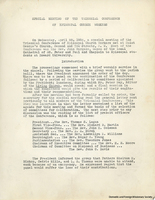
 Minutes from the Special Meeting of the Triennial Conference of Episcopal Church Workers, 1954.
-
 churchawakens163
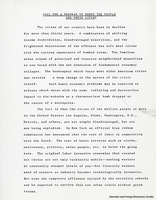
 Call for a Program to Renew the People and Their Cities
-
 churchawakens156
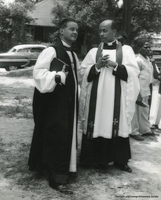
 Rev. Henri A. Stines (left) and Rev. Tollie Caution (right).
-
 churchawakens155
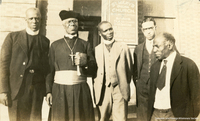
 For the Colored Churchman, St. Mary's, Hot Springs
-
 churchawakens154
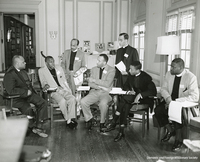
 Conference of College Workers, Seabury House, 1955.
-
 churchawakens153
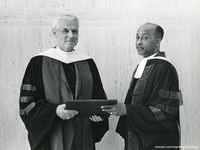
 The Rev. Tollie Caution, Associate Secretary for Negro Work of the Executive Council, presenting Presiding Bishop Lichtenberger with the Honorary L.H.D. from St. Augustine’s College, 1963.
-
 churchawakens152
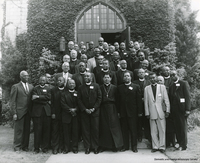
 Conference of College Workers, St. Cyperian's, Detroit, MI, 1961.
-
 churchawakens151
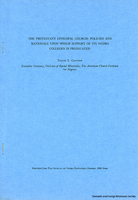
 Tollie Caution article, "The Protestant Episcopal Church: Policies and Rationale Upon Which Support of Its Negro Colleges is Predicated".
-
 churchawakens150
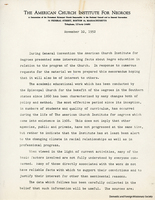
 ACIN handout following the 1952 General Convention.
-
 churchawakens149
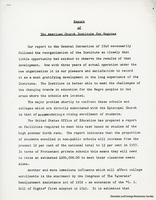
 ACIN report detailing the operations following a significant reorganization, 1949.
-
 churchawakens148
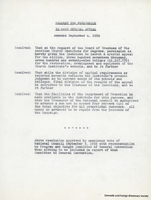
 In 1952, the Board of Trustees of ACIN submitted a request for approval to make a special appeal for $1,317,779 to facilitate restoration work with the ACIN schools. Executive Council Resolution approved the resolution on September 5, 1952.
-
 churchawakens147
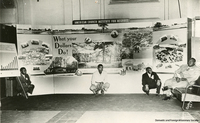
 Exhibit of American Church Institute for Negroes at General Convention, 1952.
-
 churchawakens146
 Logo for the American Church Institute for Negroes, 1906.
-
 churchawakens145
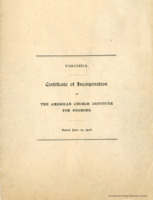
 ACIN was incorporated in Virginia in 1906, shown in this Certificate of Incorporation.
-
 churchawakens144
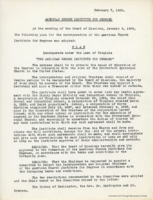
 The Board of Missions established American Church Institute for Negroes on January 9, 1908.
-
 churchawakens143
 American Church Institute for Negroes pamphlet, c. 1950.
-
 churchawakens140
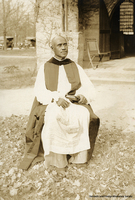
 In 1918, the Rt. Rev. Henry Beard Delany was elected the bishop for Negro Work in the Diocese of North Carolina. Delany was the first African American suffragan bishop in the United States, c. 1920.
-
 churchawakens139
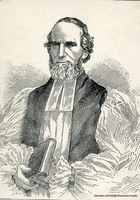
 The Rt. Rev. John Payne was the first Bishop of Liberia from 1851 to 1871.
-
 churchawakens138
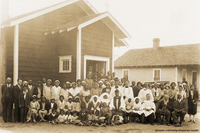
 The Rt. Rev. Edward Thomas Demby (seated in center) at the end of a preaching mission following the confirmation of 4 girls, 3 boys, and 4 adults in Forrest City, Arkansas, c. 1930.
-
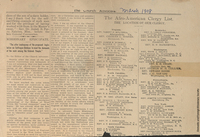 churchawakens216
 Issue of The Church Advocate newspaper featuring a list of Black Clergy in the United States, March, 1908.
-
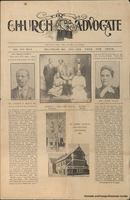 churchawakens215
 Issue of The Church Advocate newspaper published in February of 1908, featuring the Bragg family.
-
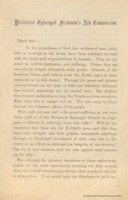 churchawakens188
 Protestant Episcopal Freedman's Aid Commission Circular, undated.
-
 churchawakens181
 Protestant Episcopal Freedman's Commision Occasional Paper, January, 1866.
-
 churchawakens006
 Sermon written and preached by The Reverend Canon Harold T. Lewis commemorating the life of Absalom Jones, June 1991.
-
 churchawakens005
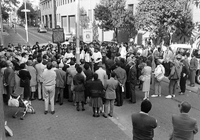
 Dedication at St. Thomas's African Episcopal Church celebrating Absalom Jones' birthplace, c. 2005.
-
 churchawakens004
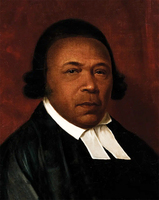
 This famous image of Absalom Jones was rendered by Philadelphia artist Raphaelle Peale in 1810. It is held in the Delaware Art Museum.
-
 churchawakens003
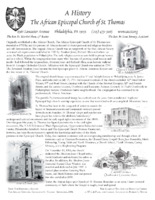
 "A History of the African Episcopal Church of St. Thomas," September, 2006. Courtesy of the Archives of the African Episcopal Church of St. Thomas.
-
 churchawakens001
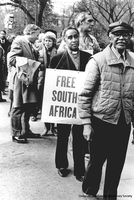
 Bishop John Walker of Washington marching at the South African Embassy in Washington, D.C., 1984. He was one of the first church leaders arrested.
-
 churchawakens370
 Silent film of Episcopal Society for Cultural and Racial Unity Gathering, 1964.
-
churchawakens369
Video featuring Pauli Murray, from TV series "On the Road", 1985.
-
churchawakens368
A 1920s-era silent tour of St. Paul’s College, with scenes of typical student life.
-
churchawakens367
A silent film tour of the campus, faculty, class work and student life at Fort Valley and Calhoun schools, c. 1920.
-
churchawakens366
A brief silent film looking at the campus, students and trustees of the Bishop Payne Divinity School, c. 1920.
-
churchawakens365
Attendees of the Conference on Afro-Anglicanism speak about the aims and outcomes of the gathering. October 29, 1985.